



Comprehensive Guidelines for the Safe Procurement of Battery Systems for Critical Infrastructure
Introduction
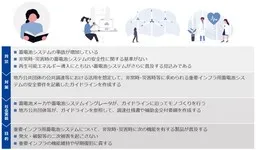
In the face of growing concerns regarding energy resilience, the National Institute of Technology and Evaluation (NITE) has unveiled a set of interim guidelines aimed at ensuring the safety of battery systems utilized in critical infrastructures. This announcement follows an alarming rise in battery-related incidents internationally, emphasizing the urgent need for robust safety standards, especially during emergencies and disasters.
Reason for Guideline Development
Our daily lives and economic activities are heavily supported by various infrastructures, crucially including administrative services, communications, and power supply. The potential consequences of any disruption to these vital services can be severe. Battery systems play a crucial role in maintaining these services, supplying backup power to communication stations and facilitating energy management as the adoption of renewable energy sources increases.
However, battery-related accidents are becoming commonplace both domestically and internationally. NITE's research has found that some battery systems can emit smoke simply from exposure to water, highlighting the serious risks they pose during natural disasters such as earthquakes and floods. The absence of established safety standards for battery systems in emergency situations adds to these concerns.
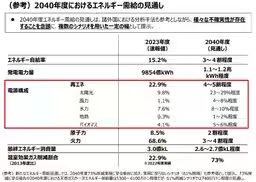
NITE, in response to the demands of the Ministry of Economy, Trade and Industry, is tasked with formulating guidelines by 2026 to enhance the safety and reliability of various stationary battery systems, beyond lithium-ion batteries alone. This initiative is particularly urgent as projections indicate that the share of renewable energy in Japan's power generation will rise to 40-50% by 2040, suggesting an increasing reliance on battery systems by local governments and energy-related facilities.
Overview of the Guidelines
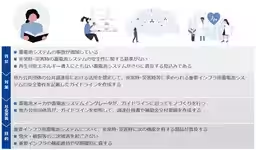
NITE’s interim guidelines are designed to promote the safe procurement of battery systems for public procurement and critical infrastructure use during emergencies. These guidelines can help ensure that battery systems do not trigger secondary disasters, such as fires or explosions, during adverse conditions such as earthquakes and typhoons.
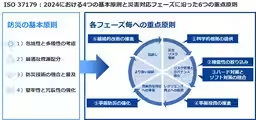
The guidelines reference the international standard ISO 37179:2024, which provides a framework for disaster risk reduction (DRR) and guidelines for planning, constructing, utilizing, and maintaining infrastructures with a focus on disaster prevention. The aim is to mitigate disaster risks and facilitate rapid recovery post-disaster.
Among the specific safety requirements outlined in the guidelines are tests for seismic impact resistance, categorized as follows:
- - Class 3: No incidents that could lead to fire, explosion, or harmful effects should occur after a seismic intensity of 7.
- - Class 2: No incidents should occur after a seismic intensity ranging between 6+ and 6-.
- - Class 1: Compliance with various regulations ensuring no incidents following seismic intensity of 5-.
Future Directions
The successful implementation of these guidelines hinges on collaboration between battery manufacturers, system integrators, and local governments. By adhering to these recommendations, it is anticipated that battery systems will achieve widespread acceptance and operational stability even under duress, thus sustaining administrative services, communications, and electricity during emergencies.
NITE has also established a committee to examine the future of the battery system industry in Japan. This committee formed two working groups to specifically focus on developing safety guidelines and testing methodologies for battery systems used in public procurement and critical infrastructure.
Local governments and infrastructure stakeholders are encouraged to integrate these interim guidelines into their procurement processes promptly. A finalized version, including a supplementary document detailing testing methods and judgment criteria, is expected to be released around May 2024.
Topics Energy)
【About Using Articles】
You can freely use the title and article content by linking to the page where the article is posted.
※ Images cannot be used.
【About Links】
Links are free to use.