



Innovative Safety Solutions Unveiled by Desay Battery at RE+ 2025
Desay Battery Showcases Cutting-Edge Safety Innovations at RE+ 2025
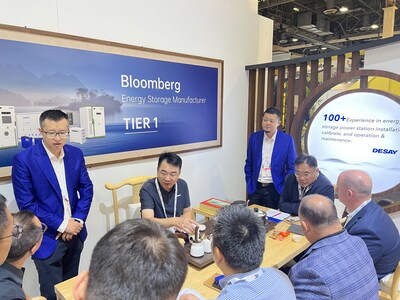
From September 8 to 11, RE+ 2025 proved to be a pivotal event for the renewable energy sector. One of the standout exhibitors was Desay Battery, a leading global provider known for its comprehensive energy storage solutions. The company unveiled a range of innovations, particularly focusing on enhancing safety in battery technology, a pressing concern within the industry.
Key Innovations
At the core of Desay Battery’s presentation was its proprietary active-safety cell and system technology. This groundbreaking approach is designed to mitigate risks associated with battery usage, a major issue that has plagued the industry. By leveraging extensive experimental data and correlation analyses, Desay has developed a system equipped with advanced temperature-pressure sensing integrated into an AI-enabled cell architecture. This technology allows for real-time monitoring throughout the lifecycle of the product, identifying risks such as overcharging, short circuits, or lithium plating before they escalate into serious issues.
A notable component of this technology is the newly constructed corrosion-resistant sensor, which plays a crucial role in collecting accurate data under challenging environmental conditions. By measuring variables such as voltage, internal temperature, and pressure, the so-called “data triangle” effectively drives Desay Battery’s next-generation Battery Management System (BMS). By incorporating this system with Energy Management Systems (EMS) and cloud-based AI solutions, the company is able to optimize cooling processes, refine charging techniques, and extend the overall lifespan of the battery systems.
Diverse Product Portfolio
In addition to the innovative safety technologies, Desay Battery showcased an impressive range of products including various lithium and sodium batteries, modules, and packs. They displayed lithium cell options such as the 100Ah, 280Ah, and 314Ah types and a 60Ah sodium cell. The company also presented modular battery systems and integrated storage options ranging from 215kWh to 344kWh. Among the larger-scale systems was a 5MWh liquid-cooled containerized solution, tailored for critical infrastructure applications, which stood out for its capability to address the energy demands of data centers effectively.
Desay Battery emphasized its adaptability to meet various market needs, providing solutions for both residential and industrial applications. An especially exciting development was their approach to tackle high energy costs for data centers by integrating photovoltaic generation with advanced battery storage, reducing the levelized cost of energy to an impressive 0.25 RMB/kWh, thus achieving savings of up to 79% during peak demand periods.
Strategic Collaboration
A significant highlight of Desay Battery’s participation at RE+ 2025 was the announcement of a strategic partnership with Shenzhen Hello Tech Energy, respected internationally as a leader in portable energy storage and mobile household storage technologies. This collaboration aims to harness the unique strengths of both companies to foster innovation in technology, streamline their supply chains, and enhance market access. This partnership reflects a shared vision of driving growth opportunities in the global market and delivering superior solutions to customers.
Looking Ahead
Desay Battery’s innovative approach, combining groundbreaking cell-level technology with fully integrated energy storage systems, positions them as a pioneer in the evolution of the energy sector. Their commitment to producing safer, smarter, and more sustainable solutions not only matches the pressing needs of consumers today but also sets a new standard for the future of energy storage technology. As they continue to evolve and adapt, Desay Battery is poised to lead the charge toward a more secure energy future.
As the energy landscape changes rapidly, Desay Battery's advancements and partnerships represent significant steps forward in creating a more sustainable and responsible energy ecosystem.
Topics Energy)
【About Using Articles】
You can freely use the title and article content by linking to the page where the article is posted.
※ Images cannot be used.
【About Links】
Links are free to use.