



Exploring the Blind Spots in Japan's Franchise Regulations: A Comparison with South Korea
Insights into Japan's Franchise System
The world of franchising is evolving rapidly, especially in countries like Japan and South Korea. While both nations are considered leaders in franchise development in Asia, they exhibit significant differences in institutional design, administrative regulations, and market structures. Under these circumstances, it's essential to explore potential blind spots in Japan's franchise regulations, especially when considering the evolving landscape across the Sea of Japan.
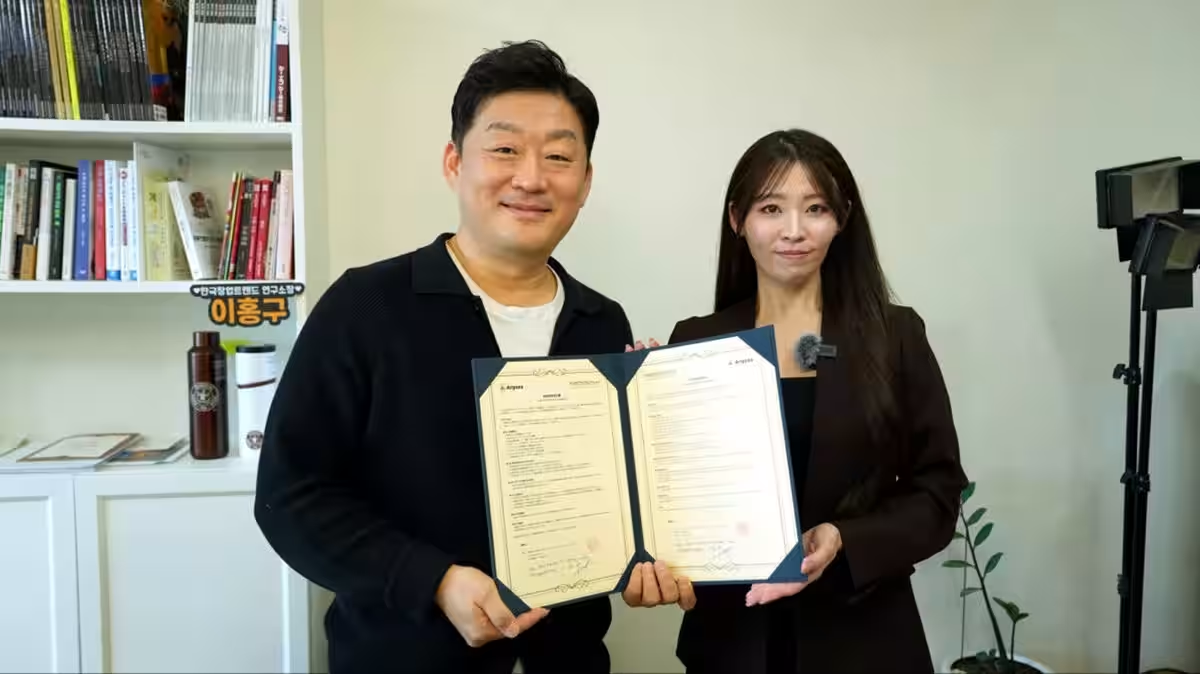
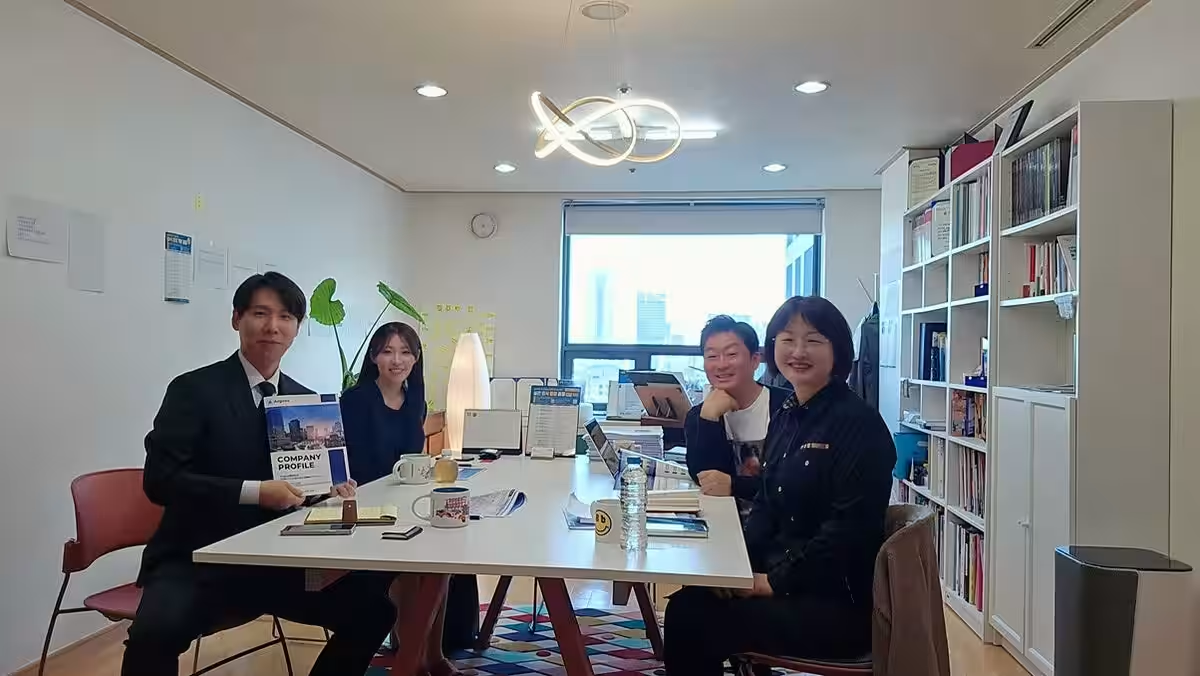
Recently, Argoza Inc., led by Ayaka Sone in Chiyoda, Tokyo, has joined forces with the South Korean Startup Trend Research Institute and CEO Le Hong to establish a Business Partner Agreement (BPA) aimed at fostering sustainable growth in the franchise sector by December 2025. The partnership seeks to implement practical franchise consulting solutions drawing on expertise from both nations to stimulate cross-border master franchise development and create a robust and sustainable franchise model.
Key Initiatives of the BPA
The BPA will facilitate several collaborative efforts aimed at enhancing the franchise ecosystem in both countries,
- - Joint support for master franchise expansion in Japan and South Korea.
- - Regular sharing of market trends and regulatory updates.
- - Collaborative lectures at joint events and seminars.
- - Educational and awareness activities targeting both headquarters and prospective franchisees.
Structural Vulnerabilities in Japan's Franchise Model
Despite being a sophisticated franchise market, Japan has been criticized for allowing the emergence of potentially dangerous franchise headquarters, often characterized as "not illegal but risky." Why do some franchise operations succeed, while others fail despite using similar frameworks? Insights from Le Hong help illuminate this critical question.
A key point of discussion is whether the failure of franchises stems from individual issues or from broader structural problems within the franchise model itself.
Qualification Evaluation: Japan vs. Korea
| Criteria | Japan | South Korea |
|---|---|---|
| :------: | :-: | :-----: |
| Qualifications for HQs | Not Required | Mandatory |
| Pre-registration | Not Needed | Required (Fines for Non-registered) |
|---|---|---|
| Operational Store Records | Optional | Required (2+1 system) |
In Japan, while the JFA guidelines and the Small Retail Business Promotion Act impose certain duties for information disclosure, there are minimal regulations governing the operation of franchise headquarters. As a result, many franchise operators may not even be aware of their required regulatory forms or may simply choose not to establish them, leading to confusion for prospective franchisees trying to assess potential partners.
Conversely, South Korea has implemented stringent regulations whereby potential franchise headquarters go through rigorous qualification evaluations. In 2021, the government introduced the 2+1 rule that stipulates the presence of two owned outlets with at least one year of operational experience. This regulatory framework has significantly influenced the growth of franchises in South Korea, becoming widely recognized as a more stable alternative for budding entrepreneurs compared to independent ventures.
From 2019 to 2024, South Korea's franchise brands soared from 6,353 to 12,377, nearly doubling in size.
Sector-specific Trends and Challenges
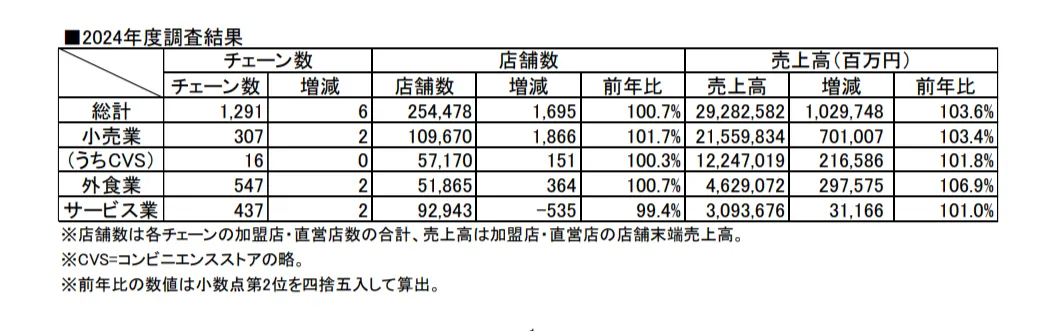
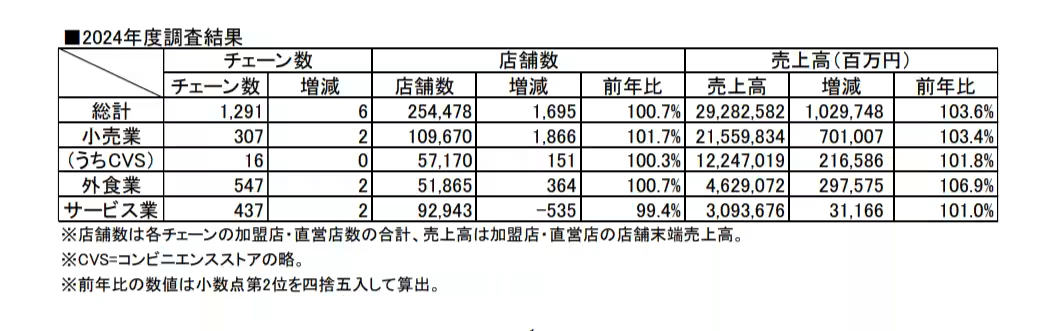
In assessing the types of franchise sectors, Japan exhibits a growing diversity in its market, where eating and service franchises are expanding alongside the historical dominance of convenience stores. The upward trend is perceived positively in comparison to the US market. South Korea’s food service franchises dominate, comprising about 80% of the sector, yet face challenges regarding their lifespan averaging just 5.7 years compared to the US average of 47.5 years.
Looking ahead, experts predict that trends favoring solo dining options and services adapted for an aging population will continue to flourish in Japan, presenting substantial opportunities for new entrants in the franchise industry.
Important Note: It is crucial to approach franchise data with caution, as they often rely on estimations rather than concrete figures. This statistic should be a point of discussion among potential franchise investors.
For those interested in entering the franchise business either as an operator or a franchisee, a lecture at the upcoming Business Expansion and Management Support Week will address crucial considerations for engaging with the franchise model. Details of the event include:
- - Dates: January 14-16, 2026
- - Location: Tokyo Big Sight, South Hall 1 and 2
- - Speaker: Ayaka Sone, CEO of Argoza Inc.
Lecture Schedule:
- - 10:30-11:00: Understanding Franchise Mechanisms and Features
- - 11:20-11:50: Evaluating Franchise Headquarters and Current Trends
- - 13:20-13:50: Keys to Success Post-Franchise Acquisition
- - Additional segments dealing with franchise system insights.
Throughout the exhibitions, consultation booths will be open for inquiries. [Booth No. 4-10]
Related Links
- - [Japanese-Korean Franchise Discussion on YouTube]
- - [YouTube Channel of Le Hong from the Startup Trend Institute]
- - [Inquiries for Talks, Interviews, and Features]


Topics Business Technology)
【About Using Articles】
You can freely use the title and article content by linking to the page where the article is posted.
※ Images cannot be used.
【About Links】
Links are free to use.