




Why Expensive English Coaching Fails to Deliver Results
The Reality of English Coaching: Why Investments Fail to Pay Off
Many business professionals are continuously investing significant sums, often around 100,000 to 150,000 yen per month, into expensive English coaching programs. Despite this financial backing, there are rampant complaints about the lack of tangible results, with learners echoing sentiments such as, "I took a three-month course, but I still can't use it effectively."
So, why aren’t learners experiencing the progress they desire despite their substantial investments? Surprisingly, it’s not due to a lack of effort on the part of the learners, but rather a structural issue with the coaching methods being utilized. Alpros, a company with over 20 years of experience in English education, explores the key differences between effective and ineffective English coaching based on expert insights and student feedback.
The Current Landscape of English Coaching: High Costs, Low Returns
As of August 2025, the standard cost for English coaching typically ranges between 50,000 to 60,000 yen for three months. This is not a trivial investment. However, when scrutinized, many coaching programs reveal that trainers merely create learning plans and monitor progress, leaving students engaged in solitary self-study.
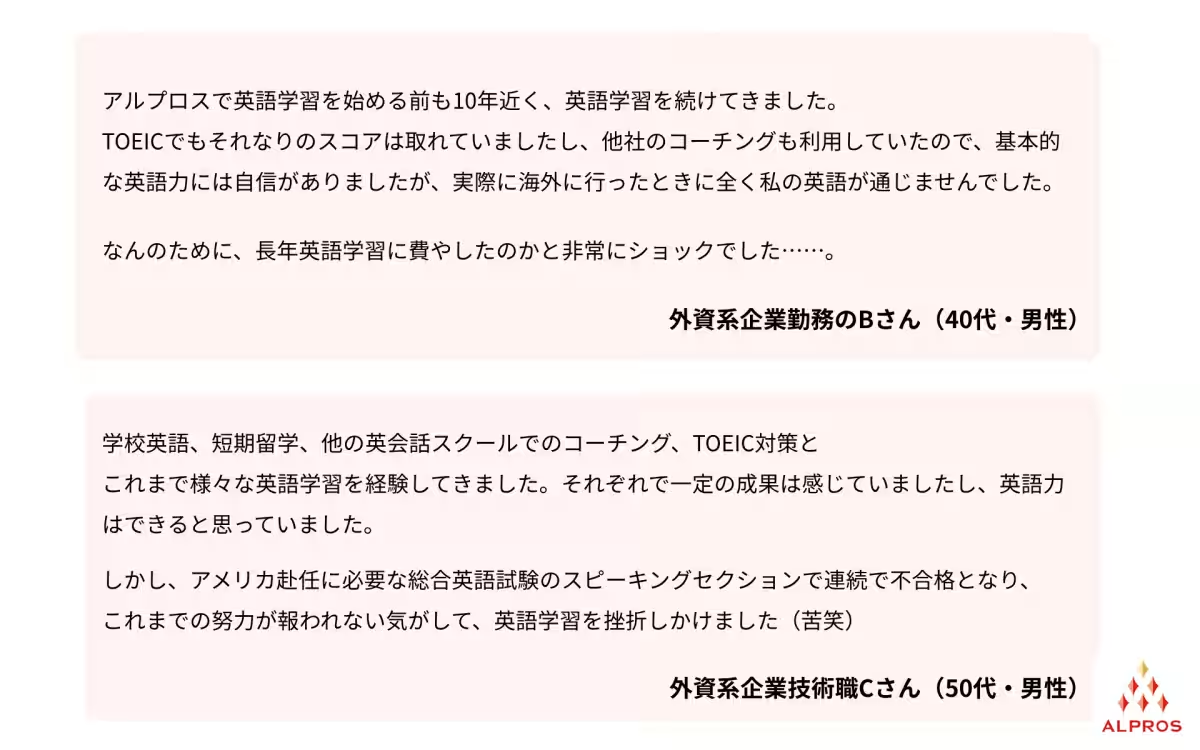
Insights from surveys conducted by Alpros on students who have previously enrolled in other programs highlight this contradiction: many learners have spent over a decade studying English, maintaining a basic competency in reading and writing but still struggle to communicate effectively in English. This raises the question—why is mastering English so difficult, leading to inadequate outcomes?
The core issue lies not in the complexity of the English language or in learners' lack of commitment. Rather, the problem is rooted in the “predictable” trajectory of English learning methodologies employed in Japan.
Understanding the Predictable English Learning Approach
A major struggle with predictable English learning is that it curtails the learning environment to predetermined exchanges. This can lead to cognitive stagnation, inhibiting the crucial skills of judgment and responsiveness required in real-world English conversations.
Often identified as “pattern practice” or “imitation learning,” this method closely mirrors traditional classroom experiences where students repeat after the teacher, following the same scripted dialogues. While this might seem efficient and straightforward, it denies learners the unexpected challenges and failures necessary to activate their innate language acquisition mechanisms.
A critical component missing in this approach is “negotiation of meaning,” an essential part of effective language learning.
The Importance of Meaning Negotiation in Language Learning
Negotiation of meaning involves the cognitive process activated when a learner realizes their message isn’t adequately communicated or isn’t understood. Questions such as, "Wait, was that clear?" or "How can I rephrase this?" trigger the mind to engage actively with the language.
This dynamic has significant implications for language learning. In traditional classrooms, where predictable interactions are the norm, such moments rarely occur, leaving learners merely mimicking answers instead of truly utilizing the language in practice.
Consequently, this lack of real-time response to unforeseen circumstances in business contexts discourages learners from developing the necessary skills to use English effectively when it matters.
The Role of Error Correction in Language Acquisition
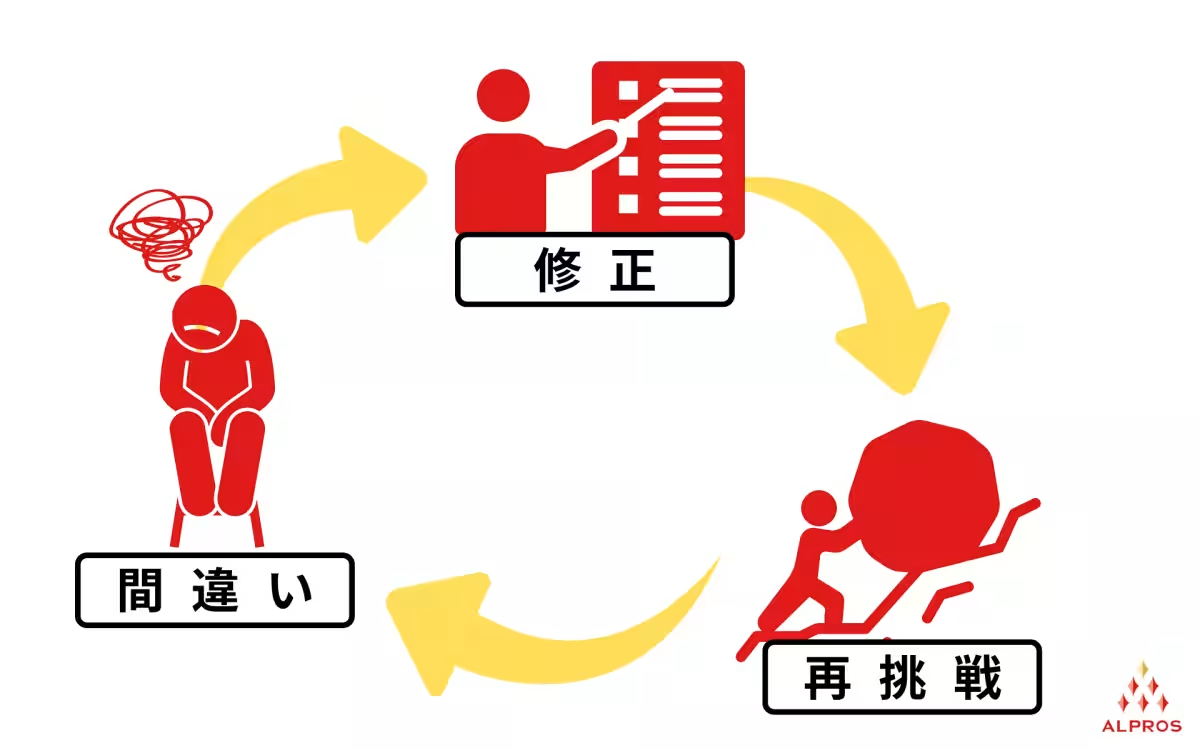
An essential concept in language learning is “Error Correction,” which refers to the learning cycle involving receiving feedback on one’s mistakes. This cycle—mistake, correction, and re-attempt—enables the learner to build a robust and practical understanding of language patterns over time.
Regrettably, conventional predictable learning fails to facilitate this experience. In an immersive English-speaking environment abroad, learners are often met with ridicule or misunderstanding due to grammatical errors or pronunciation mistakes. Oddly enough, these real-world corrections serve as profound stimuli for taking serious steps towards becoming language proficient rapidly.
Alpros: Cultivating an Environment for Empowered Learning
At Alpros, we believe that a supportive environment for making mistakes can greatly facilitate English learning. Many English coaching programs fail to deliver results due to their predictable structures and lack of error correction.
Reflect on your early language learning experiences—perhaps you were corrected by teachers, parents, or peers, which shaped your natural acquisition of Japanese. However, when it comes to learning English, the focus often shifts toward avoiding mistakes and neglects the essential process of natural learning.
This brings us full circle: with responsive exchanges and reliable feedback mechanisms, learners can become proficient in English, similar to their native language acquisition process.
Alpros offers a competitive online coaching service at approximately 30,000 yen monthly to replicate the immersive English learning environment. With Alpros, you can create a safe space to make mistakes and learn from them outdoors.
If you seek a different approach to truly effective English learning, why not try Alpros' online coaching?
Conclusion
Alpros is dedicated to helping you build a functioning command of English through robust environments that foster practice and error correction. Join us today to experience a learning journey where mistakes are not just accepted but embraced as part of effective language acquisition.
For more information, check out our special "Autumn Appreciation Festival Package"!


Topics Other)

【About Using Articles】
You can freely use the title and article content by linking to the page where the article is posted.
※ Images cannot be used.
【About Links】
Links are free to use.