



Livepass Showcases Revolution in Customer Engagement at Direct Agenda 2026
Livepass Showcases Revolution in Customer Engagement at Direct Agenda 2026
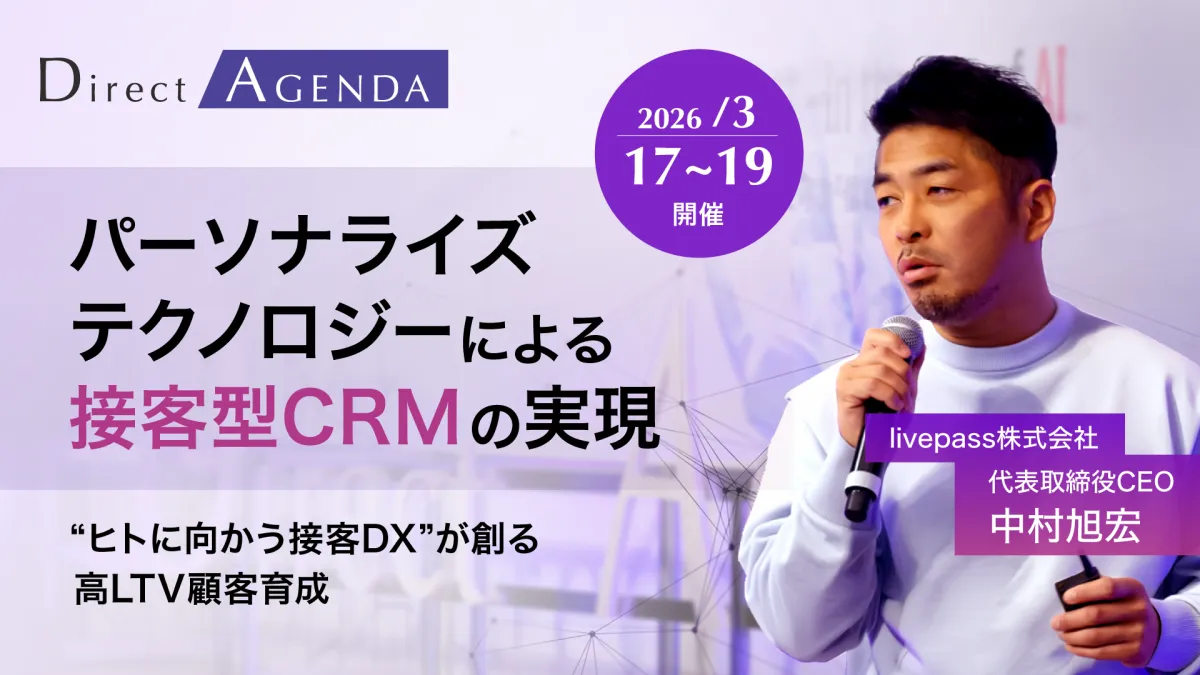
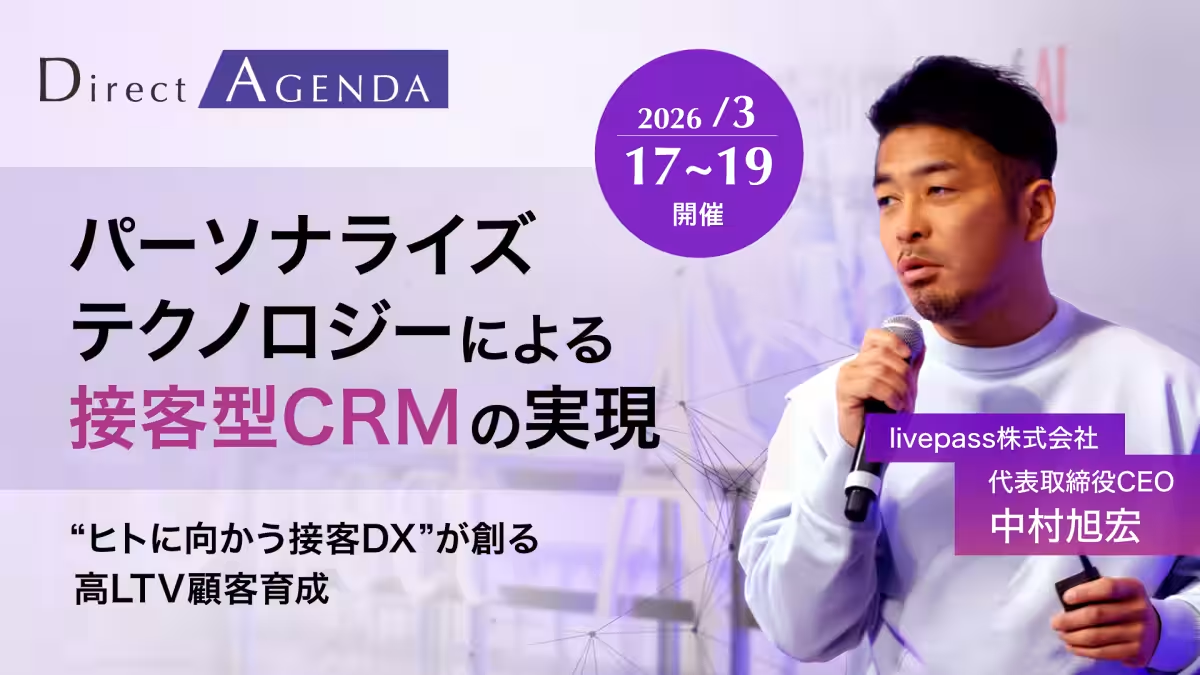
Livepass Inc., led by CEO Akihiro Nakamura, took the stage at the Direct Agenda 2026 marketing conference held in Kumamoto from March 17 to 19. The company introduced its innovative approach to customer relationship management (CRM) through personalized technology, often referred to as 'customer-oriented CRM'. This approach not only emphasizes the importance of maintaining customer relationships but also demonstrates significant results in customer lifetime value (LTV) cultivation.
Understanding the Shift in CRM Dynamics
The recent trends in direct business, particularly in online retail, indicate a notable shift in corporate focus. Companies are moving from merely acquiring new customers to nurturing existing ones to amplify their LTV. Despite this critical change, challenges abound. The customer interaction points, such as email, LINE, web, and call centers, remain fragmented. Often, businesses supply information based on their convenience rather than addressing actual customer needs, leading to inadequate interactions.
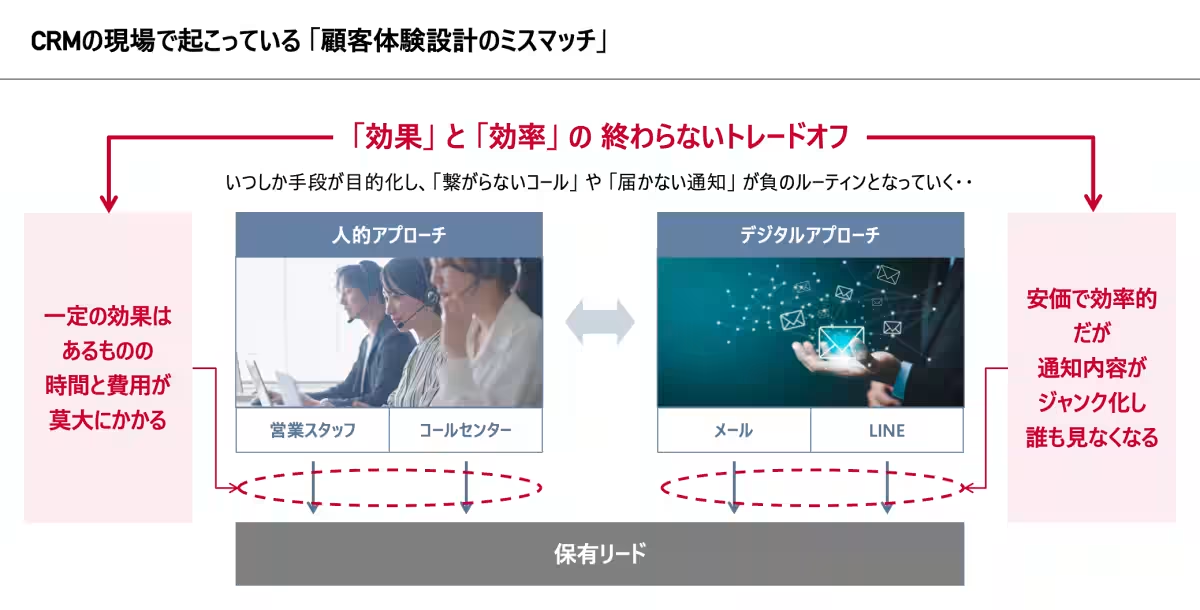
Currently, CRM efforts are primarily categorized into two main approaches:
- - Human Approach: While this method can yield significant results, it demands extensive time and financial resources.
- - Digital Approach: This is cost-effective and efficient but frequently leads to messages becoming mere spam, thus overlooked by customers.
As a result, the gap between businesses and customers widens, with 'unresponsive calls' and 'unread notifications' becoming commonplace, severely weakening customer relationships.
Livepass' Innovative Solution
In response to these CRM challenges, Livepass has developed an interactive personalized technology based on video content. This approach allows businesses to monitor individual customer engagement levels, interests, and potential disengagement signs while adapting communication accordingly.
By optimizing text and sequencing based on the customer's current state, Livepass successfully integrates the nuances of personal interaction with the efficiency of digital methods. This leads to the possibility of achieving a true
Topics Other)
【About Using Articles】
You can freely use the title and article content by linking to the page where the article is posted.
※ Images cannot be used.
【About Links】
Links are free to use.