



Share Medical Launches Japan's First Remote End-of-Life Care Service
Introduction
In a transformative step for healthcare in Japan, Share Medical, headquartered in Chiyoda, Tokyo, has recently announced the launch of the country's first remote end-of-life care service. This innovative approach combines their pioneering digital stethoscope, Nexsteth, with the medical messaging service, Medical Line Workplace, effectively bridging gaps in traditional medical practice, especially during crises.
Significance of the Launch
The announcement coincides with Japan's Disaster Prevention Day, emphasizing the need for uninterrupted medical services during large-scale disasters. In scenarios where roads are impassable and traditional medical institutions are incapacitated, this new service aims to provide a practical solution to ensure that medical professionals are able to confirm deaths remotely, thus relieving them of the physical burden while enhancing efficiency in emergency situations.
Addressing Regional Medical Issues
Japan faces critical regional healthcare challenges, including:
- - Expanding medical deserts: Areas without sufficient medical personnel, particularly in remote islands and mountainous regions, have been on the rise. These regions often report increased difficulties in obtaining medical assistance in a timely manner.
- - Aging medical workforce: The average age of doctors in local clinics has surged to 63.2 years, complicating their capacity to respond to urgent calls, particularly during off-hours. Furthermore, the anticipated shortage of healthcare professionals by 2040 highlights the urgent requirement for innovative solutions in medical staffing and access.
Enhanced Procedures for Death Confirmation
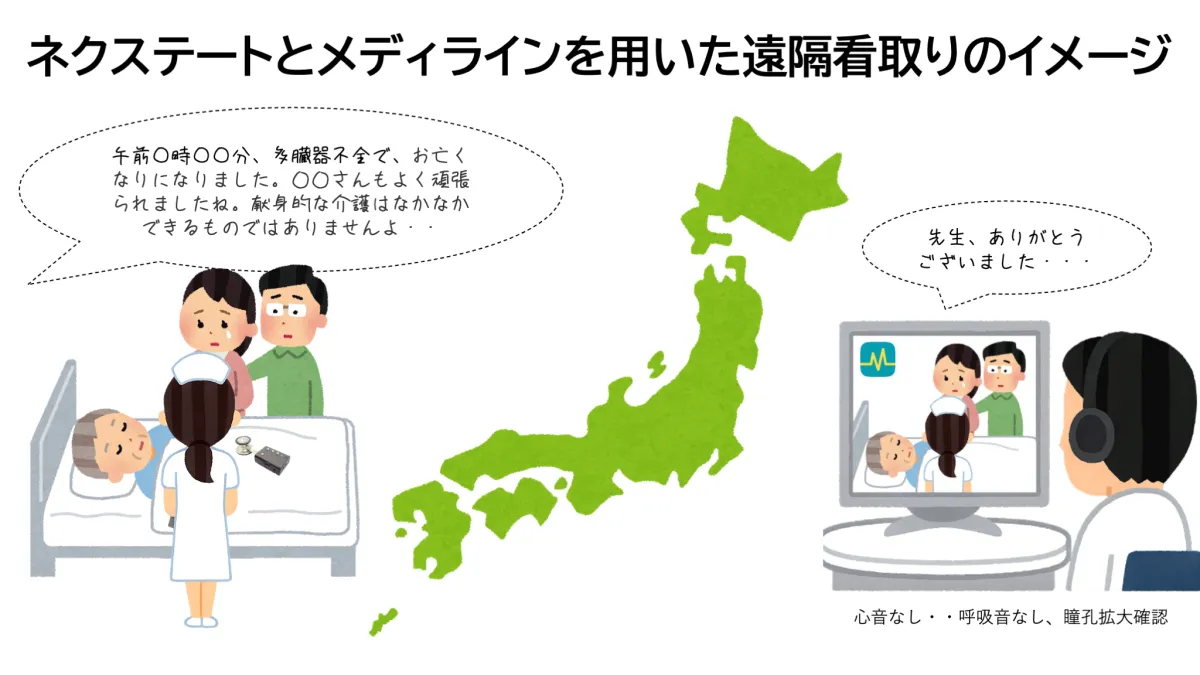
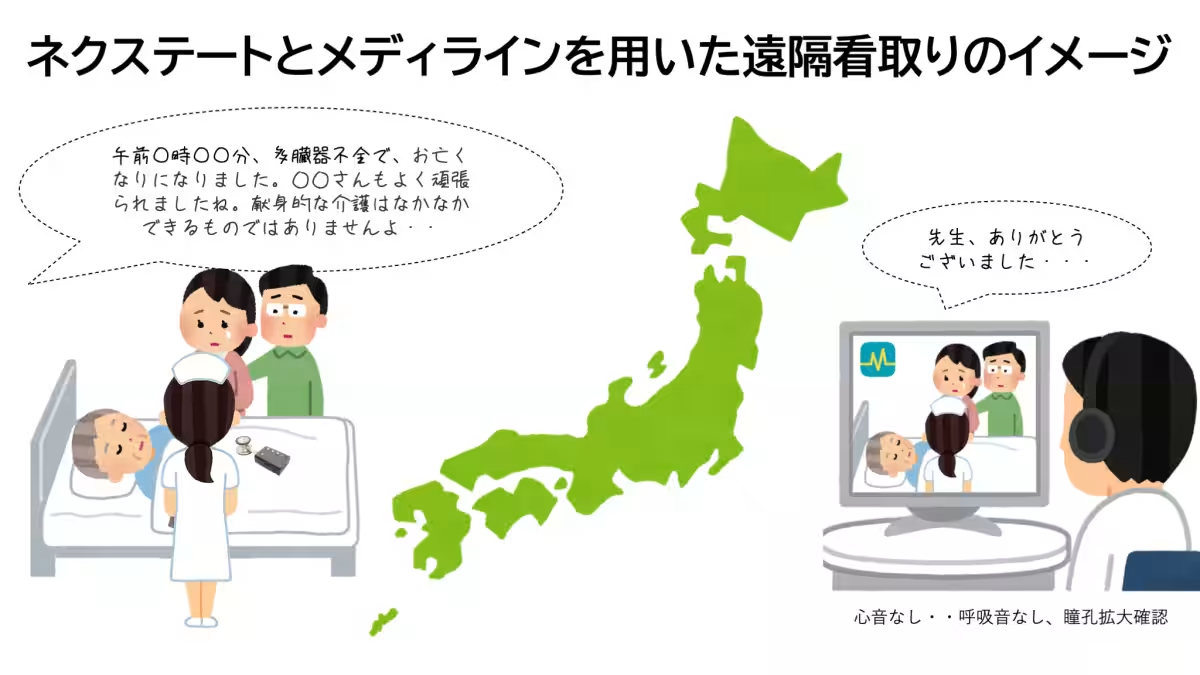
Traditionally, confirming death involves essential checks for vital signs, yet in rural areas, where monitoring equipment isn't commonly deployed, this can be a challenge. The remote death confirmation utilizes:
1. Pre-shared information: Nurses record patient conditions and pupil responses via a tablet and send it to doctors through Medical Line.
2. Real-time connections: The integrated telehealth tools allow doctors to connect and assess the patient remotely, effectively conducting a virtual examination.
3. Remote auscultation: Utilizing Nexsteth, nurses confirm their equipment is operational and utilize it to listen for heartbeats and breathing sounds, enabling remote checks by doctors.
4. Documentation of the death certificate: After confirming the patient’s death, doctors guide nurses to complete the necessary paperwork to notify the family, reinforcing a seamless process.
Trailblazing a New Approach
While the legal framework for remote death confirmation existed prior to this service, its practical application was lacking until now. Share Medical has pioneered the real-time remote auscultation system, effectively bringing remote end-of-life care into the mainstream healthcare practice, significantly expanding options available for terminal care.
Promoting Digital Transformation in End-of-Life Care
The Japanese government’s vision towards “Medical DX” underscores the significance of utilizing digital technology to elevate healthcare quality and efficiency. This service is strategically positioned to meet these goals by:
- - Addressing workforce shortages by effectively utilizing technology to optimize existing resources.
- - Bridging gaps in geographic disparities ensuring quality care across all regions.
- - Supporting dignified end-of-life experiences, allowing individuals to spend their final moments in familiar environments while providing essential care to longstanding patients.
About Medical Line Workplace
This proprietary messaging service facilitates efficient communication among healthcare professionals, including physicians, nurses, and care managers, aiming to enhance regional healthcare quality through seamless information sharing and collaboration. Its high security and unlimited user structure were executed to ease the operational burden faced by medical facilities.
About Nexsteth
Nexsteth stands as a next-generation digital stethoscope, amplifying acoustic signals with up to 1000 times the clarity. Such advancements allow healthcare professionals to optimize diagnostics, enhancing service delivery without the constraints typically posed by traditional devices, thus reinforcing the efficacy of remote healthcare practices.
Conclusion and Future Perspectives
Share Medical stands at the forefront of end-of-life care transformation, promising to tackle access issues in medically underserved regions, enhance the working conditions for healthcare providers, and ensure dignified care in aging societies. The introduction of this innovative service represents a significant leap forward in establishing a robust medical response system available during regular operations and emergency scenarios alike. The initiative showcases an enduring commitment to improving end-of-life care for patients, families, and medical professionals, aligning public health strategies with emerging technological capabilities.
For more information, visit Share Medical and Nexsteth.
Topics Health)
【About Using Articles】
You can freely use the title and article content by linking to the page where the article is posted.
※ Images cannot be used.
【About Links】
Links are free to use.