



Innovative Strategies for Utilizing Food Waste in Commercial Facilities
Quality Resource Utilization in Commercial Facilities
In recent years, the awareness of waste management has evolved significantly within commercial facilities and hotels. No longer are these entities merely focused on improving labor conditions; they are shifting their priorities towards comprehensive environmental responsibility. This change has sparked a stronger demand for innovative solutions to the ongoing issues of food waste management, particularly the treatment of food waste that is often discarded through incineration. While practices related to separation and effective use have advanced, many food waste materials still end up incinerated due to concerns relating to moisture content, hygiene management, and logistical constraints.
New Circular Initiatives
As stakeholders search for new circular initiatives, one of the critical requirements is to achieve economic rationality that at least equals that of incineration methods. The primary challenge, however, isn't merely to reduce the cost of processing; rather, the focus must be on adding value to the results of processing. This involves designing the processes of re-resourcing and determining the potential uses of the outcomes as part of a business model. A transformative approach towards resource utilization is pivotal in addressing these structural challenges.
Collaboration towards a New Circular Model
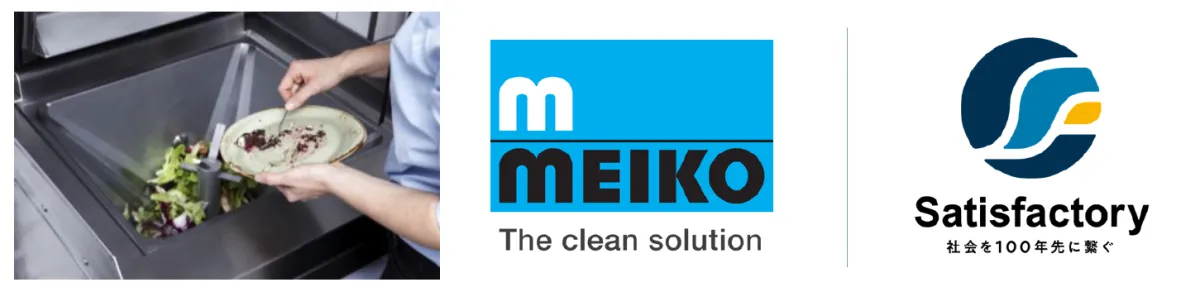
To tackle these challenges, the partnership between MEIKO Clean Solutions Japan and Satisfactory Factory offers promising directions. MEIKO, a leading manufacturer of food washing machines, has developed the automated food waste processing system “Bio Master,” which has proven success in Europe’s environmentally advanced enterprises. To introduce this system into the Japanese market, Satisfactory Factory is working to establish a nationwide circular infrastructure that manages the collection, transport, and recycling of food waste. By maintaining open dialogues with clients, Satisfactory Factory's directors help orchestrate necessary regulatory frameworks and commercial flow designs.
Moving Towards Implementation
After a year of field validation, specific needs have emerged, particularly in commercial settings and hotels, for alternative uses of food waste residues, which were previously relegated to energy recovery. These outcomes can serve dual purposes: generating energy while also contributing to agricultural replenishing efforts, each producing unique values. This growing demand has catalyzed concrete initiatives leading the current efforts towards implementation.
As part of this initiative, it is crucial to establish operational agreements with local governments, which face challenges related to updating incinerators and handling processing capabilities. The refinement of resource recycling demonstrates a shared theme of interest for municipalities that are also seeking solutions to their challenges. This initiative serves as a model for collaborative efforts between commercial enterprises and local authorities, both striving to enhance their waste management strategies.
Upcoming Presentation at International Hospitality and Restaurant Show 2026
On February 17, during the International Hospitality and Restaurant Show 2026, the current status and discussion points regarding this endeavor will be presented. The exhibit will feature an overview of the food waste processing system, alongside designs for resource recovery and the present progress of regulatory frameworks. This presents an opportunity for dialogue among stakeholders from commercial facilities, hotels, and local governments.
Satisfactory Factory aims to continue transitioning food waste management from mere ‘processing’ to ‘designing’ resources, fostering a model of resource circulation that allows both companies and municipalities to thrive.
Company Overview
MEIKO Clean Solutions Japan
- - Location: 1-22-13 Asahigaoka, Nerima, Tokyo
- - Representative: Kazushi Ozaki, CEO
- - Established: July 2019
Satisfactory Factory
- - Location: 3-12-8 HF Hatchobori Building 6F, Chuo, Tokyo
- - Representative: Takeshi Komatsu, CEO
- - Established: November 13, 1996
Topics Environment)
【About Using Articles】
You can freely use the title and article content by linking to the page where the article is posted.
※ Images cannot be used.
【About Links】
Links are free to use.