



Innovative Coating Technology to Enhance Kidney Transplant Success Rates
Groundbreaking Coating Technique for Kidney Transplants
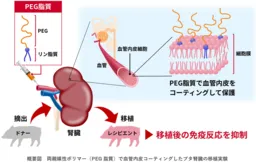
The recent advancements in renal transplant procedures highlight a significant breakthrough at the National Institute of Advanced Industrial Science and Technology (AIST) in Japan, in collaboration with Sweden's iCoat Medical and Uppsala University. Researchers have developed an innovative coating technology using amphiphilic polymers to cover the vascular endothelium of kidneys, which may effectively suppress immune reactions that typically arise during the transplant process. This innovation is poised to significantly enhance the long-term graft survival rates, particularly in human kidney transplants.
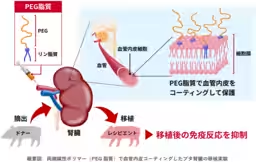
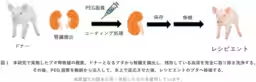
Kidney transplantation is often the only viable treatment for patients with severe kidney disease, helping them avoid artificial dialysis. The successful integration and long-term functionality of the transplanted kidney are crucial for patient recovery, making it imperative to mitigate the immune responses that can lead to organ damage during the transplant procedure. In their experiments on swine kidney models, the research team applied a coating of polyethylene glycol (PEG) lipid - a compound formed by linking PEG with phospholipids - to the endothelial surface of the kidneys. This effectively reduced the ischemia-reperfusion injury, an immune reaction commonly observed post-transplant.
The details of this innovative coating method are set to be published in the American Journal of Transplantation on September 24, 2025. The study clarifies optimal coating conditions that could be applicable for human kidney transplants, which are currently lacking effective pharmaceutical solutions to mitigate the ischemia-reperfusion injury that significantly diminishes graft survival rates.
The Need for Effective Kidney Treatments
As of 2022, approximately 20 million people in Japan suffer from chronic kidney disease (CKD), with around 350,000 requiring dialysis treatment. Patients undergoing dialysis face severe quality of life issues. They often require treatments that last four hours each, three times a week, and are at high risk for complications, including heart failure and diabetes, resulting in high healthcare costs for both individuals and the national treasury. Although kidney transplant offers an improved 10-year survival rate compared to dialysis, the demand for donated kidneys outstrips supply.
Preventing ischemia-reperfusion injury, known to lower graft survival, is critical. The complex immune response following transplantation requires novel approaches to effectively suppress immune activation, the coagulation response, and oxidative stress that lead to cell and tissue damage.
Research Journey and Methodology
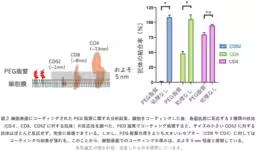
AIST has extensively researched PEG lipids for modifying tissues and organs to enhance compatibility and immune response management. To evaluate the coating technology's feasibility for human application, researchers focused on the swine kidney - notably similar to human physiology. They meticulously examined the molecular weight and lipid composition of the PEG lipid to establish its effectiveness as a coating agent.
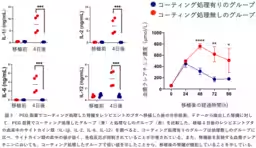
The polymer developed, known as PEG lipid, comprises a phospholipid component designed to interact hydrophobically with the cell membrane lipid bilayers. This interaction allowed for successful polymer coating of the cellular surfaces within the swine kidney. During the study, the transplantation of PEG lipid-coated kidneys demonstrated a significant reduction in immunological markers that typically indicate a strong immune response and clotting activity, which correlated with rapid recovery of kidney function as evaluated by plasma creatinine levels.
The application of this polymer coating creates a temporary barrier against immune attack, demonstrating potential to mitigate cellular damage caused by ischemia-reperfusion injury.
Future Prospects
Pending confirmation of the safety of this novel PEG lipid coating in clinical trials, its application could become a standard procedure immediately after kidney transplants, yielding better long-term success rates. This advancement could maintain the quality of life for patients while reducing the likelihood of returning to dialysis or requiring re-transplantation.
The researchers aim to utilize this PEG lipid solution in organ preservation fluids, improving the chances of successful clinical integration post-extraction from donors. Current Phase I/II trials in Sweden with patients are assessing the safety and effectiveness of the coating.
Looking ahead, the methodology developed here is not limited to renal transplants but may extend to other transplantation procedures and regenerative medicine applications, paving the way for broader impacts in the medical field.
Conclusion
This innovative research not only promises advancements in kidney transplantation but represents a pivotal step towards improving outcomes for patients with severe kidney diseases, reducing the global burden of chronic kidney disease.
For further details, refer to the press release from AIST here.
Topics Health)
【About Using Articles】
You can freely use the title and article content by linking to the page where the article is posted.
※ Images cannot be used.
【About Links】
Links are free to use.