



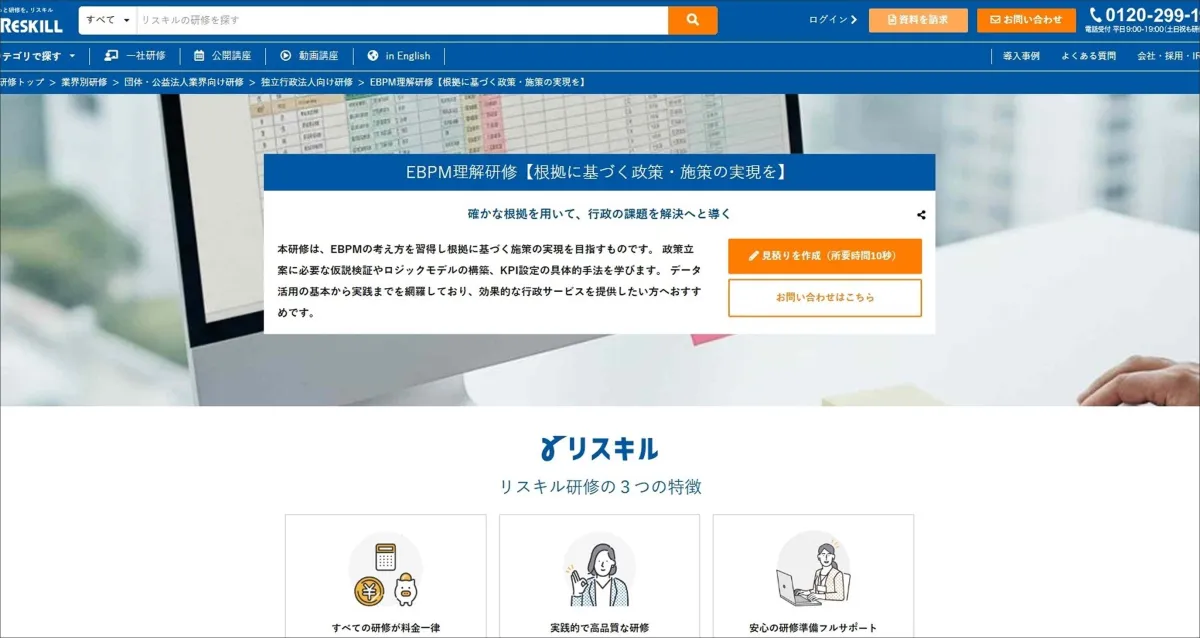
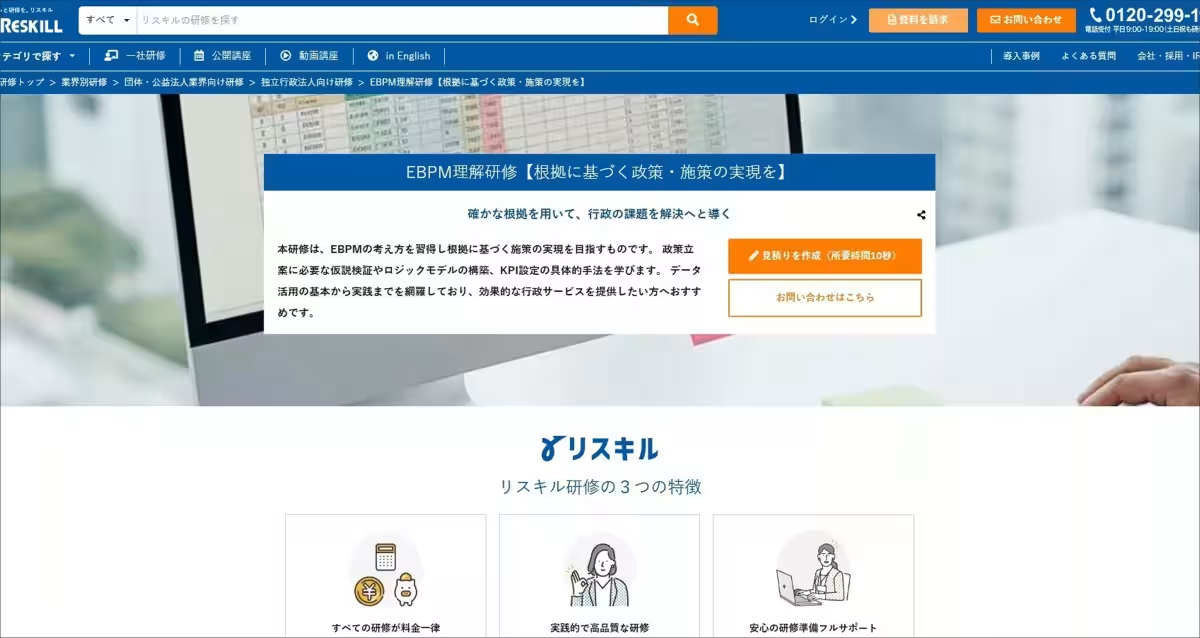
Introducing EBPM Understanding Training for Evidence-Based Policy Making in Organizations
EBPM Understanding Training: Empowering Evidence-Based Policy Making
In today's complex societal landscape, businesses and organizations face the pressing challenge of maximizing outcomes with limited resources. To address this, the company Risukiru has launched a comprehensive training program called "EBPM Understanding Training," aimed at enhancing policy formulation skills based on empirical data and statistics.
The Importance of EBPM
As the need for insightful and impactful policy-making rises, traditional decision-making based on experience or intuition has proven inadequate. Evidence-Based Policy Making (EBPM) offers a systematic approach to developing and implementing strategies grounded in objective evidence. However, many organizations struggle with challenges such as the effective handling of data and designing appropriate metrics to measure the outcome of their policies.
Training Objectives and Structure
The EBPM Understanding Training is tailored to equip all employees, particularly those involved in policy development, with the skills necessary for sound policy creation. By comprehensively covering practical techniques such as logical modeling and the SMART criteria for performance evaluations, this training aims to enhance decision-making capabilities through evidence-based strategies. Participants will learn how to appropriately utilize background data and self-design key performance indicators (KPIs) essential for evaluating the effectiveness of policies.
Key Training Features
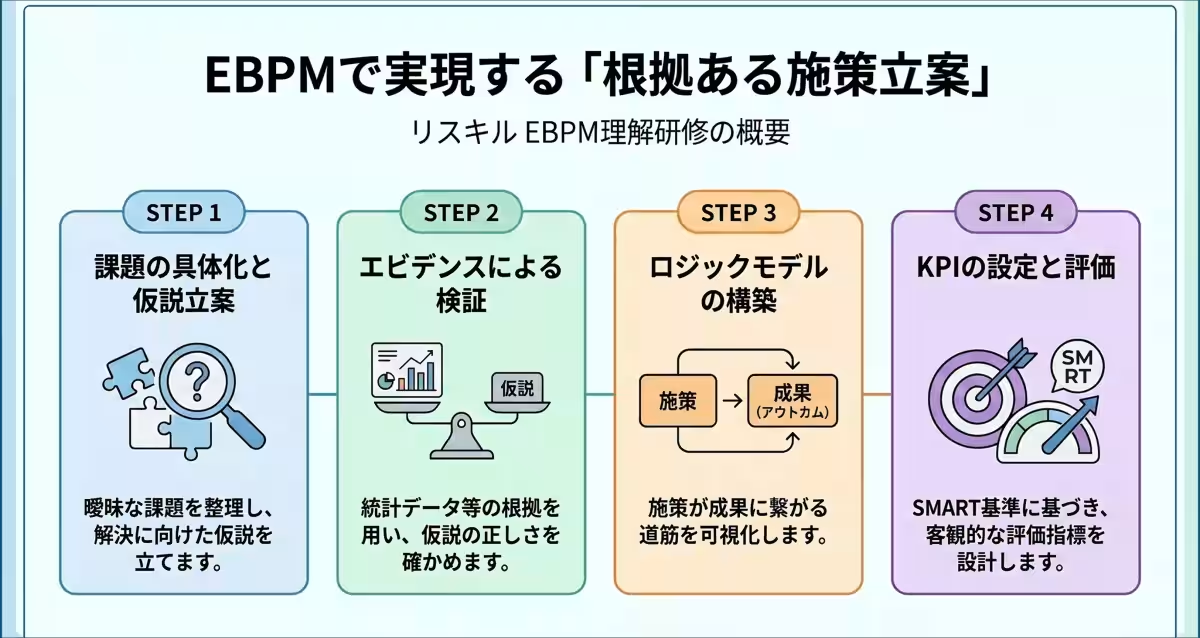
1. Handling Evidence: Participants will acquire skills on how to source reliable evidence and recognize the pitfalls of cherry-picking data that supports pre-existing beliefs.
2. Logical Modeling: The training incorporates methodologies for visualizing causal relationships through logical models, helping participants articulate a clear pathway from input activities and resources to desired outcomes.
3. KPI Development: A significant focus of the training is on designing measurable KPIs based on the SMART criteria, enabling objective assessments of policy effectiveness through interactive workshops.
Curriculum Overview
The curriculum is designed to develop a solid understanding of EBPM and its application in local government contexts. Important areas covered include:
- - Definition and necessity of EBPM in municipal settings.
- - Accurate problem setting and hypothesis formation for policy issues.
- - Evidence gathering and verifying hypotheses to avert cherry-picking.
- - Structuring components of policies using logical models to validate causality.
- - Setting and evaluating KPIs through SMART criteria.
- - Identifying barriers to EBPM implementation and fostering a culture of data utilization in organizations.
About Risukiru
Risukiru is committed to delivering business training with a transparent pricing structure that provides full support from preparation to implementation. They relieve the burden on staff by managing logistics such as material distribution while ensuring high-quality educational opportunities. The newly introduced EBPM Understanding Training also allows for customizable curricula based on organizational needs, as well as flexibility in delivery through online or hybrid formats at no additional cost.
As organizations aim for higher-quality administrative services rooted in evidence, the EBPM Understanding Training emerges as a potent solution to rethink policies for impactful outcomes. This program empowers employees, equipping them with the tools to harness data effectively and execute robust, evidence-based policies, ultimately fostering a culture of informed decision-making.
In conclusion, as we approach a future where the complexities of social issues escalate, organizations that prioritize data-driven policy-making through innovative training like EBPM Understanding Training will undoubtedly be at the forefront of effective governance and administration.
Topics People & Culture)
【About Using Articles】
You can freely use the title and article content by linking to the page where the article is posted.
※ Images cannot be used.
【About Links】
Links are free to use.