


Revolutionary Cyborg Insects Equipped with Diving Suits for Underwater Exploration
Introduction
Research teams from Waseda University and Nanyang Technological University in Singapore have unveiled a groundbreaking advancement: cyborg insects capable of underwater exploration using flexible diving suits. This innovative technology promises significant applications in disaster response scenarios and the inspection of submerged infrastructure.
Development of the Diving Suit
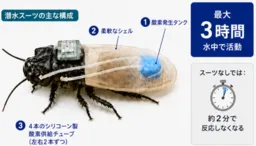
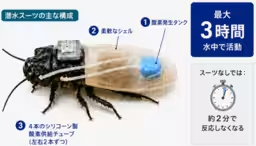
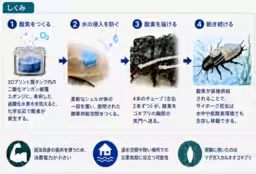
The newly developed diving suit is comprised of three essential components: an oxygen generation tank, a flexible waterproof shell, and silicone tubes, which supply oxygen directly to the insect's respiratory openings. In experiments, cyborg insects equipped with this suit managed to operate for up to three hours underwater, compared to only two minutes without it.
Potential Applications
The potential applications for these cyborg insects are vast, particularly in disaster areas following heavy rains or floods, where traditional robots may face limitations. In such environments, navigating through debris-filled spaces and underground passages is challenging. The ability to deploy these cyborg insects can enhance rescue operations by accessing areas that are typically inaccessible to humans and conventional machines.
Innovative Technology
The oxygen generation tank utilized in the diving suit was 3D-printed using transparent resin and designed to efficiently produce oxygen by decomposing hydrogen peroxide through a manganese dioxide catalyst. The suit successfully fulfills the need for a supply of oxygen while keeping water away from the insect's respiratory system.
Research Findings
Testing involved Madagascar hissing cockroaches due to their size and durability. Notable results indicated that the suit significantly prolonged underwater activity, highlighting the efficacy of this advancement. This allows the insects to operate efficiently in both terrestrial and aquatic environments, redefining their capabilities as a versatile tool in challenging conditions.
Future Implications
The implications of this research extend beyond immediate disaster recovery. With the ability to function in submerged, low-oxygen, and hazardous environments, these cyborg insects can contribute to a wide range of missions, including search and rescue operations, inspections of flooded infrastructures, and environmental monitoring in restricted access areas.
Broader Applications
The principles applied in this study may also be transferable to other terrestrial insects. Given that many insects breathe through spiracles, which allow oxygen entry into their bodies, future developments could lead to similar adaptations in other species like beetles and grasshoppers.
Challenges and Future Directions
Despite the promising results, additional testing in environments that mimic real disaster scenarios is necessary. Challenges remain in ensuring the durability and waterproofing of the suits, along with integrating sensors and communication technologies for operational effectiveness. The prospects of remote monitoring in hazardous areas hinge on these developments.
Researcher Insights
The researchers emphasize that enhancing the natural capabilities of insects while extending their operational area to include underwater engagement marks a significant milestone in robotics. This advancement is anticipated to ease access to challenging environments, improving rescue strategies drastically.
Conclusion
The creation of these diving suits presents a vital advancement in the use of cyborg technology for real-world applications. As research and development continue, the potential for cyborg insects to revolutionize disaster response and infrastructure inspections grows more tangible each day.
References
The detailed findings of this study are published in the prestigious journal, Nature Communications, scheduled for release on June 29, 2026.
For further details, refer to the original publication at Nature Communications.
Topics Other)

【About Using Articles】
You can freely use the title and article content by linking to the page where the article is posted.
※ Images cannot be used.
【About Links】
Links are free to use.