



New Mechanism Discovered for Robust Tunneling Nanotube Formation in Cells
Understanding Tunneling Nanotubes and Their Significance
Recent research has shed light on a fascinating aspect of cellular communication: tunneling nanotubes (TNTs). These unique structures, which allow cells to connect and exchange important molecules directly, play a critical role in various cellular functions, including stress responses and disease mechanisms. This article explores the latest findings on the protein CCT4, which promotes the formation of TNTs with microtubules, enhancing our understanding of their role in cellular communication.
What are Tunneling Nanotubes?
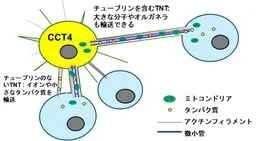
Tunneling nanotubes are fine, tube-like structures that facilitate direct communication between cells, allowing for the exchange of ions, proteins, and even organelles like mitochondria. Comprising primarily of actin filaments, some TNTs also contain microtubules, which provide a faster and more directional transport route for cellular materials. Despite their known importance in cellular communication, the molecular mechanism responsible for the formation of TNTs containing microtubules had perplexed scientists until now.
Discovery of CCT4
In a breakthrough study led by researchers from Tokyo Metropolitan University, a team including graduate student Miyu Enomoto and Assistant Professor Akiko Asada, discovered that the protein CCT4 facilitates the formation of TNTs. Cells expressing CCT4 exhibited an increase in TNT production, specifically notable for their thicker structures that contained microtubules. This fundamental finding not only identifies a new player in the formation of TNTs but also marks an essential step in unraveling how these structures determine the directionality of molecular transport between cells.
The Mechanism Behind TNT Formation
CCT4, a member of the chaperonin family known for assisting protein folding, also plays a significant role in the cellular cytoskeleton. When researchers utilized live imaging techniques to observe CCT4-expressing cells, they noted a significant abundance of TNTs connecting these cells with their neighbors. The observed TNTs, suspended in the medium and linking various cells, confirmed their functionality as direct communication channels. Moreover, CCT4-expressing cells were capable of transporting proteins and organelles across these tunnels, providing new insights into how TNTs operate.
To investigate the relationship between CCT4 and microtubule formation, the team tracked the localization of CCT4 alongside tubulin, the building block of microtubules. They found that both CCT4 and tubulin moved within the TNTs simultaneously, with some CCT4 molecules co-localizing with EB1, a marker of microtubule growth. This indicated that CCT4 may be involved in the polymerization of microtubules, highlighting its crucial role in the development of TNTs.
Implications of the Research
Understanding the formation mechanisms of TNTs has significant implications for cellular biology, particularly for studying stress responses and disease processes. Research suggests that TNTs might facilitate the transfer of toxic aggregated proteins between cells, potentially exacerbating neurological conditions. Conversely, they may enable healthy cells to receive functional mitochondria from surrounding cells, offering therapeutic potential in neurodegenerative diseases.
While the transport mechanisms of TNTs have been identified, the broader implications of how they selectively carry materials or determine transport direction remain largely unknown. However, the recent discovery of CCT4 as a facilitator of microtubule-rich TNT formation provides a valuable foundation for future investigations.
Conclusion
This research not only identifies critical proteins involved in the formation of tunneling nanotubes but also opens new avenues for exploration in understanding the complexities of intercellular communication and potential therapeutic strategies against various diseases. By further dissecting how these structures work, researchers may pave the way for breakthroughs in regenerative medicine and novel treatment approaches for degenerative disorders.
References
- - Enomoto, M., Asada, A., Saito, T., & Ando, K. (Year). CCT4 promotes tunneling nanotube formation. FEBS Letters. DOI:10.1002/1873-3468.70190
Topics Health)
【About Using Articles】
You can freely use the title and article content by linking to the page where the article is posted.
※ Images cannot be used.
【About Links】
Links are free to use.