


Examining Career Patterns of Married Women and Factors Influencing Their Employment Decisions in Japan
Understanding Career Patterns of Married Women in Japan
A recent empirical analysis conducted by Yi-Jun Nie, a doctoral candidate at Japan Women’s University, sheds light on the complex career patterns and employment decisions of married women in Japan. The research, part of Nie’s doctoral dissertation in the Graduate School of Human Sciences, utilized data from the Nationwide Employment Status Panel Survey conducted from 2016 to 2023.
Key Findings of the Research
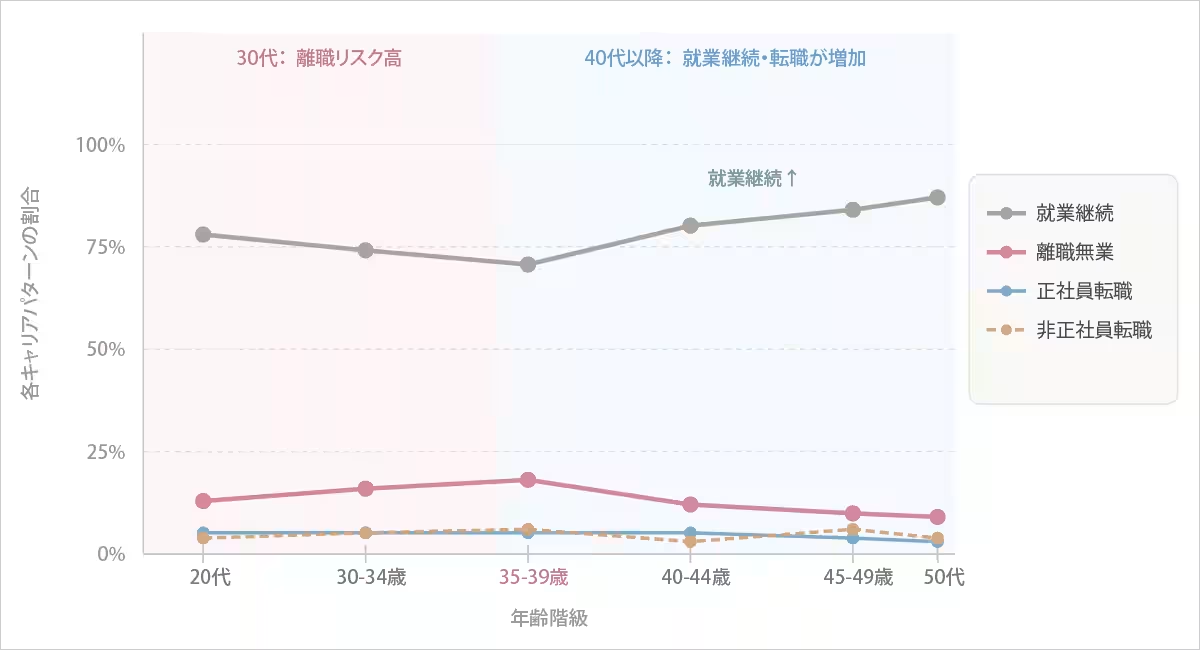
The study revealed several important trends concerning the employment behavior of married women. Notably, it identified a rising risk of job separation during the ages of 30 to 39. Conversely, the 40s marked a notable increase in the likelihood of continued employment, alongside a diversification in job transitions, revealing that employment patterns evolve significantly with age.
A critical factor influencing these employment patterns is the women’s participation in social insurance programs, particularly the employment insurance scheme, which provides income security. The study illuminated the importance of educational training and self-directed learning behaviors, emphasizing their crucial roles in shaping women’s career trajectories.
Employment Transitional Patterns
Among the various age groups studied, the transition rates from employment to unemployment were particularly high for women with children aged 0 to 5 years. In contrast, women aged 40 and above demonstrated a higher proportion of continued employment and frequently explored both full-time and part-time job changes. The results indicate that the timing of life events like childbirth directly correlates with career choices, where younger mothers tend to move towards unemployment.
Institutional Support and Its Importance
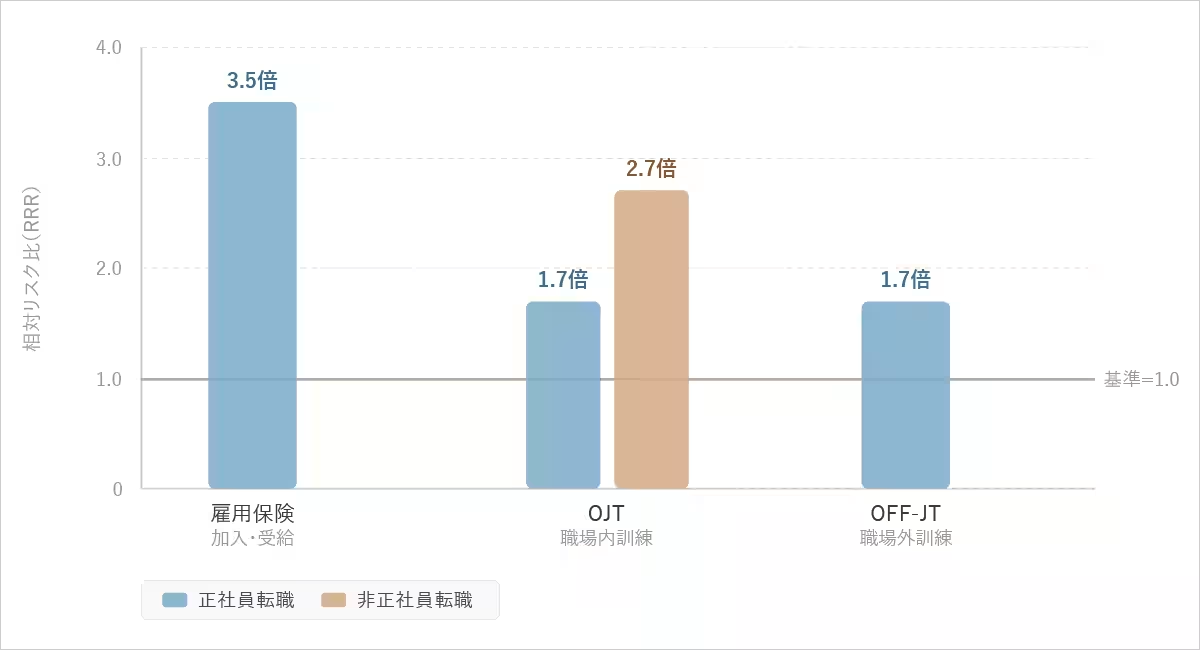
The relationship between participation in employment insurance and career progression was particularly strong. It was found that women who received insurance benefits and utilized educational training programs had approximately 3.5 times higher chances of transitioning into full-time positions compared to those who remained employed.
Interestingly, the training received in workplace settings had a dual effect. While external training (OFF-JT) increased the likelihood of obtaining full-time jobs by about 1.7 times, internal training (OJT) had a troubling paradox where it increased non-regular employment by approximately 2.7 times. This suggests that while both training types are essential, the nature of the training received can lead to varied employment outcomes.
Implications for Future Support Strategies
The findings of this study not only contribute to the academic discourse on women’s employment but also serve as a foundation for actionable strategies to improve career support services for married women. The establishment of the JWU Career Life Center in 2026 aims to provide integrated support for students and graduates in their career development and life design, aligning with the study’s insights.
Nie’s research underscores the necessity of comprehensive policy formulations that take into consideration both institutional support systems and individual career aspirations, fostering an environment where women can thrive despite life transitions.
Methodology and Data Analysis
The empirical analysis was carried out using a mixed-effects multinomial logistic regression model, allowing for the examination of various employment categories such as continued employment, unemployment, transition to full-time, and part-time jobs. The dataset comprised 45,822 observations of married women aged 20 to 59, enabling a robust analysis of career decision-making factors.
Conclusion
As Japan strives to create a society where married women can pursue their careers without compromising their personal lives, the significance of policy-driven support cannot be overstated. This research highlights the interplay between women’s employment patterns and life circumstances, advocating for systemic changes that respect and adapt to women's diverse career paths.
Future Directions
While the quantifiable analysis of career patterns has revealed essential insights, it is vital to consider qualitative factors such as workplace culture, flexibility in work arrangements, and familial responsibilities in future studies. Understanding the perceived quality of job transitions and the long-term stability of employment will be crucial in enhancing women’s career paths.
Overall, this study serves as both a scholarly contribution and a guide for policy implementation aimed at alleviating the challenges faced by married women in their pursuit of fulfilling careers in Japan.
Topics People & Culture)





【About Using Articles】
You can freely use the title and article content by linking to the page where the article is posted.
※ Images cannot be used.
【About Links】
Links are free to use.