



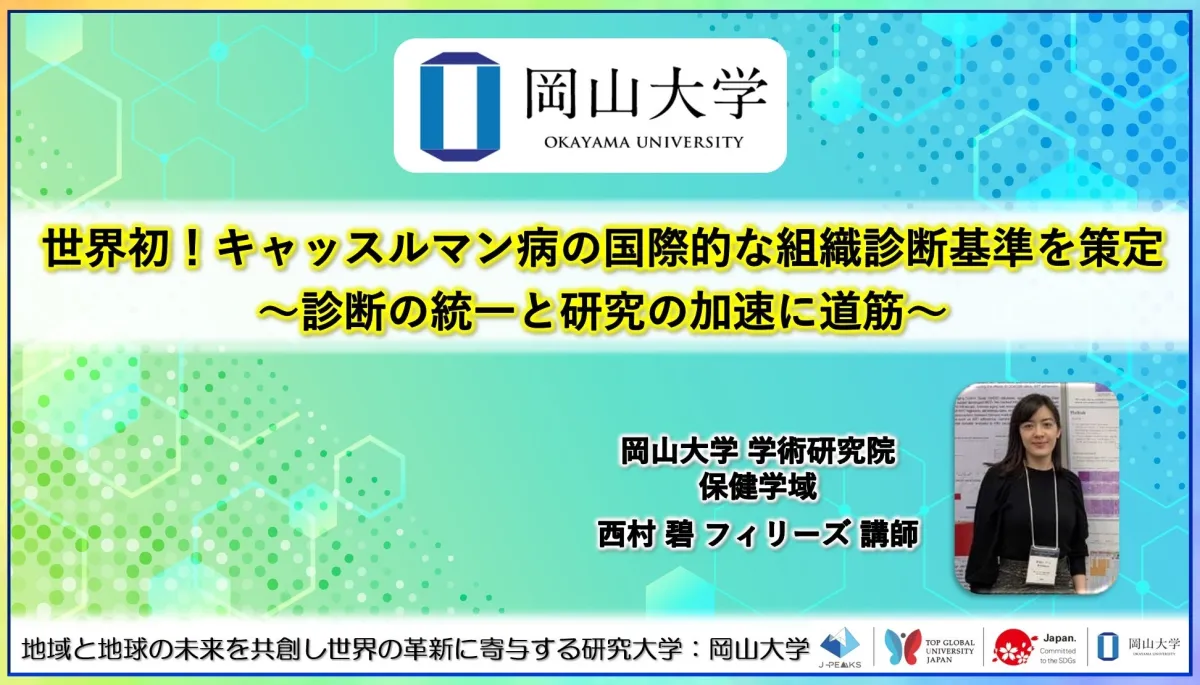
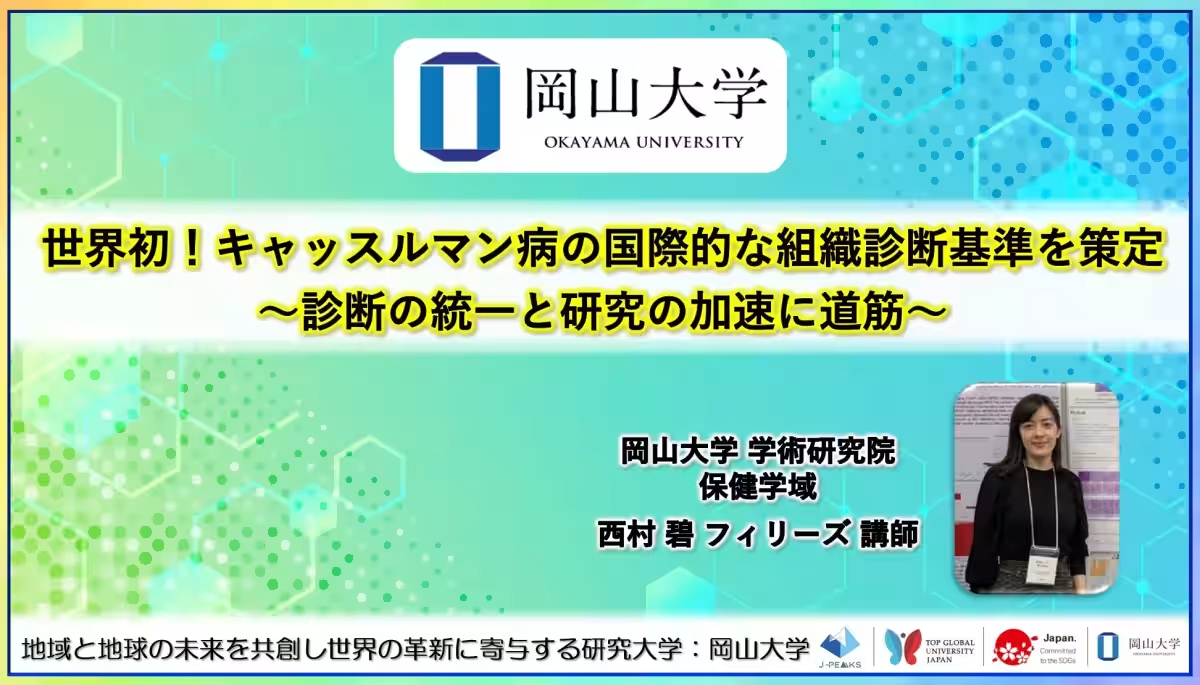
Okayama University Establishes Global Diagnostic Criteria for Castleman Disease
In a groundbreaking advancement, researchers at Okayama University have established the world's first international diagnostic criteria for idiopathic multicentric Castleman disease (iMCD). This disease is classified as designated intractable and rare, characterized by systemic lymph node swelling, fever, and fluid retention. The absence of objective diagnostic standards has historically complicated both clinical treatment and research efforts.
The institution, led by Dr. Aoi Nishimura and Professor Yasuharu Sato from the Graduate School of Health Sciences, collaborated with specialists from Japan, the USA, and Europe. This coalition focused on defining the histological subtypes of iMCD, which were previously vague due to the disease's complexity. In this collaborative effort, they identified five distinct histological findings necessary to differentiate between the various subtypes of the disease. By applying scoring methods and machine learning techniques, they validated the reproducibility and reliability of these diagnostic standards.
This innovative achievement signifies a significant enhancement in diagnostic quality on a global scale. The criteria aim to accelerate not only the clarification of disease mechanisms but also the development of novel treatment options. Following its publication on June 20, 2025, in the American Journal of Hematology, the global research community can utilize this standard to evaluate cases using consistent pathological indicators. As a result, researchers will likely improve diagnostic precision, thus laying foundational work for future studies targeting treatment strategies that could directly relate to the specific subtypes of iMCD.
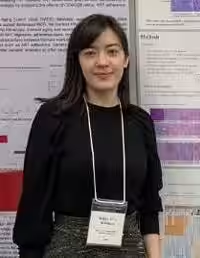
Dr. Nishimura expressed her satisfaction regarding the establishment of these standards, noting, "As a pathologist, diagnosing in the absence of clear criteria was quite challenging. The established histological standards do correlate well with variations in symptoms and treatment responses, indicating their potential usefulness in therapeutic decision-making. I am thrilled that we were finally able to realize this after rigorous discussions with international experts."
The implications of these new diagnostic criteria go far beyond mere classification; they serve as a prompt for further research that seeks to understand the underlying causes of idiopathic multicentric Castleman disease. With this unified diagnostic approach, scientists anticipate a greater alignment in research findings across different regions, fostering collaboration and information sharing that could lead to breakthroughs in treatment options.
Research funding for this project came from the Ministry of Health, Labour and Welfare in Japan and the Japan Society for the Promotion of Science. Their generous financial support has underpinned the efforts of this remarkable team and facilitated this invaluable research.
This landmark achievement from Okayama University is a testament to the university's dedication to advancing medical research and enhancing patient outcomes on a global scale. In the broader context, it underscores the importance of international collaboration in addressing complex health challenges faced by medical researchers and healthcare professionals alike.
For further details on the research, you can access the official website of Okayama University. Additionally, to explore more research related to Castleman disease, the department of Molecular Pathology at Okayama University provides valuable resources and findings.
As a proud institution supporting the United Nations Sustainable Development Goals (SDGs), Okayama University continues its mission of creating a sustainable future through innovative research and collaboration with global partners. As they enhance their standing as a leading research university, the hopes for advancements in medical science are brighter than ever.
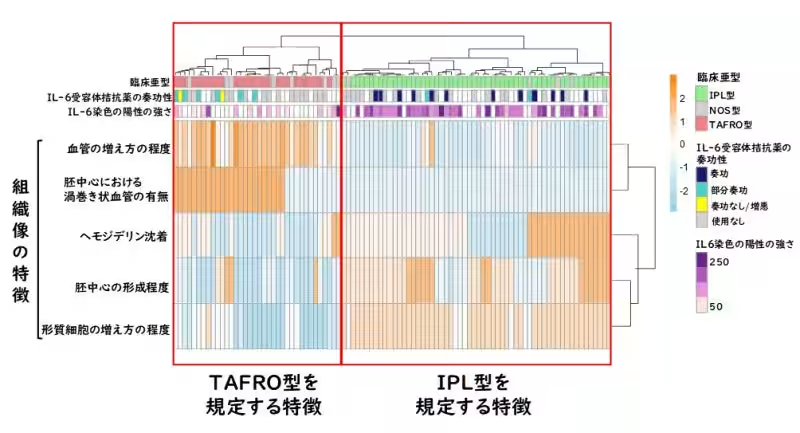

The institution, led by Dr. Aoi Nishimura and Professor Yasuharu Sato from the Graduate School of Health Sciences, collaborated with specialists from Japan, the USA, and Europe. This coalition focused on defining the histological subtypes of iMCD, which were previously vague due to the disease's complexity. In this collaborative effort, they identified five distinct histological findings necessary to differentiate between the various subtypes of the disease. By applying scoring methods and machine learning techniques, they validated the reproducibility and reliability of these diagnostic standards.
This innovative achievement signifies a significant enhancement in diagnostic quality on a global scale. The criteria aim to accelerate not only the clarification of disease mechanisms but also the development of novel treatment options. Following its publication on June 20, 2025, in the American Journal of Hematology, the global research community can utilize this standard to evaluate cases using consistent pathological indicators. As a result, researchers will likely improve diagnostic precision, thus laying foundational work for future studies targeting treatment strategies that could directly relate to the specific subtypes of iMCD.
Dr. Nishimura expressed her satisfaction regarding the establishment of these standards, noting, "As a pathologist, diagnosing in the absence of clear criteria was quite challenging. The established histological standards do correlate well with variations in symptoms and treatment responses, indicating their potential usefulness in therapeutic decision-making. I am thrilled that we were finally able to realize this after rigorous discussions with international experts."
The implications of these new diagnostic criteria go far beyond mere classification; they serve as a prompt for further research that seeks to understand the underlying causes of idiopathic multicentric Castleman disease. With this unified diagnostic approach, scientists anticipate a greater alignment in research findings across different regions, fostering collaboration and information sharing that could lead to breakthroughs in treatment options.
Research funding for this project came from the Ministry of Health, Labour and Welfare in Japan and the Japan Society for the Promotion of Science. Their generous financial support has underpinned the efforts of this remarkable team and facilitated this invaluable research.
This landmark achievement from Okayama University is a testament to the university's dedication to advancing medical research and enhancing patient outcomes on a global scale. In the broader context, it underscores the importance of international collaboration in addressing complex health challenges faced by medical researchers and healthcare professionals alike.
For further details on the research, you can access the official website of Okayama University. Additionally, to explore more research related to Castleman disease, the department of Molecular Pathology at Okayama University provides valuable resources and findings.
As a proud institution supporting the United Nations Sustainable Development Goals (SDGs), Okayama University continues its mission of creating a sustainable future through innovative research and collaboration with global partners. As they enhance their standing as a leading research university, the hopes for advancements in medical science are brighter than ever.
Topics Health)
【About Using Articles】
You can freely use the title and article content by linking to the page where the article is posted.
※ Images cannot be used.
【About Links】
Links are free to use.