



MOL and Itochu Forge Strategic Environmental Pact for Decarbonization
Strategic Environmental Partnership for Decarbonization
Mitsui O.S.K. Lines (MOL), led by President Tsuyoshi Hashimoto, has established a strategic partnership with Itochu Corporation, represented by President Keita Ishii, aiming to leverage environmental attribute certificates to promote decarbonization in the transportation sector. This groundbreaking memorandum of understanding marks a significant effort towards achieving lower carbon emissions, particularly concerning Scope 3 emissions which are indirectly associated with a company’s operations.
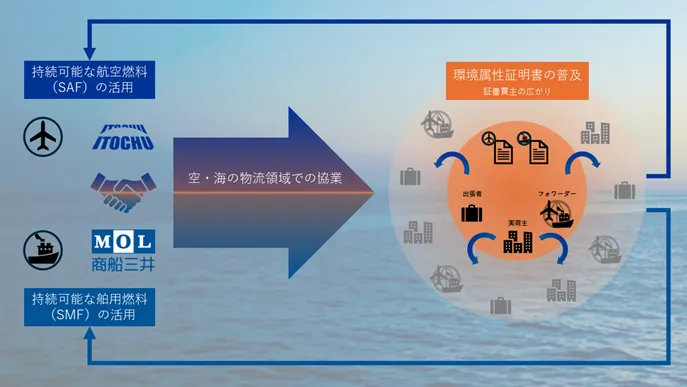
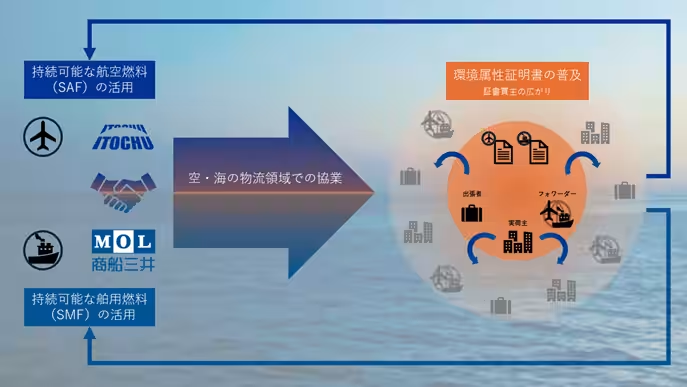
By collaborating, MOL and Itochu plan to popularize environmental attribute certificates, which serve as a means for companies utilizing transport services to reduce their Scope 3 emissions. This partnership is indicative of a new model for decarbonization in Japan, breaking down silos in the industry and promoting cooperation across shipping and air transport sectors.
An Innovative Exchange of Environmental Certificates
As part of this initiative, the two companies engaged in mutual trading of environmental attribute certificates aimed at fulfilling their respective emissions reduction targets.
Overview of Transactions
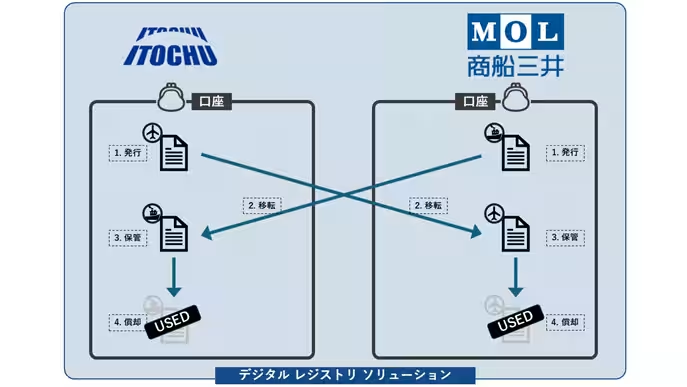
MOL purchased air transport-related certificates generated by Itochu to counteract greenhouse gas emissions arising from employee air travel (Scope 3 Category 6). Conversely, Itochu acquired ocean transport-related certificates created by MOL for reducing emissions from maritime transportation services (Scope 3 Category 4).
These transactions were facilitated through a platform provided by 123Carbon, a Dutch environmental tech firm. 123Carbon's platform ensures rigorous audits throughout the issuance, transfer, preservation, and retirement of environmental certificates, thereby guaranteeing traceability and reliability in the transactions performed. The foundation of this collaboration promotes high transparency that aligns with global standards.
Navigating the Challenges of Scope 3 Emissions
Reducing Scope 3 emissions remains critical in addressing climate change, especially given the complex nature of supply chains that often complicate achieving traceability. MOL aims to incorporate low-carbon fuels in inland shipping while Itochu is focusing on Sustainable Aviation Fuels (SAF). By merging their strengths in marine and air logistics, both companies are working towards creating a supportive framework for businesses that rely on their transport services, thereby enhancing their collective efforts to achieve substantial Scope 3 reductions throughout the transportation supply chain.
Committing to a Sustainable Future
MOL Group has outlined its commitment to achieving net-zero emissions in its ‘Environment Vision 2.2,’ identifying the construction of a business model that facilitates net-zero as one of its action points. They have set plans in motion for the launch of the 'BLUE ACTION NET-ZERO ALLIANCE' by February 2025, aimed at supporting carbon inset and Book and Claim programs.
This strategic collaboration with Itochu is a prime example of cooperative efforts under this initiative, illustrating a practical case of co-creation with related stakeholders necessary for advancing decarbonization across supply chains effectively.
As industries globally steer towards greener practices, this partnership serves as a model of how corporations can work synergistically towards achieving formidable environmental goals, illustrating commitment to a sustainable future for transportation and beyond.
References
- - Environmental Attribute Certificates: These are formal acknowledgments of net reductions in greenhouse gas emissions achieved through supply chain activities.
- - Scope 3 Emissions: These types of emissions arise indirectly from a company’s value chain operations, including 15 defined categories.
- - 123Carbon: An innovative Dutch firm providing a digital platform to expedite the decarbonization of the transport and logistics sectors.
To know more about the initiatives and actions, visit the BLUE ACTION NET-ZERO ALLIANCE official site for comprehensive details on how these programs will support the transition towards net-zero.
Topics Environment)
【About Using Articles】
You can freely use the title and article content by linking to the page where the article is posted.
※ Images cannot be used.
【About Links】
Links are free to use.