



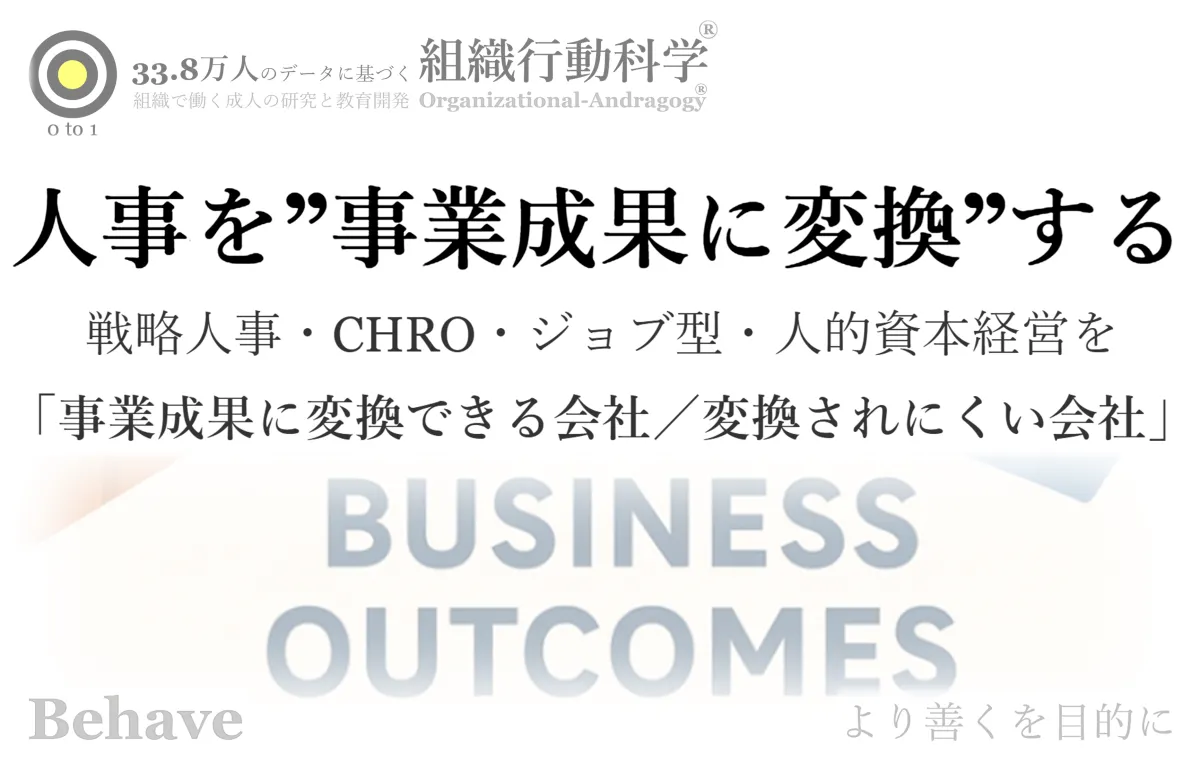
Transforming HR: Structural Insights into Business Outcomes
Transforming HR: A New Perspective on Business Outcomes
In today's corporate landscape, the effectiveness of human resources (HR) strategies is often called into question. Despite organizations implementing modern HR practices like strategic HR, CHRO roles, and job-type management, many companies struggle to realize tangible business outcomes. This issue is not solely a matter of flawed systems or operational shortcomings; rather, it stems from a fundamental mismatch between the value creation structures embedded within these HR frameworks and the actual dynamics of the business environment.
Understanding the Disconnect
The key focus of the recent report series by Request Inc., a company based in Shinjuku, Tokyo, is to diagnose this disconnect. The series, which analyzes data from over 338,000 individuals across 980 companies, identifies the structural causes that inhibit HR practices from translating into concrete business results. The findings emphasize the necessity of aligning HR operations with actual organizational structures to ensure effectiveness.
Organizational Behavior Science® serves as the foundation of this analysis, illustrating why certain HR systems fail to produce measurable outcomes. This series aims to guide businesses in rethinking their HR strategies, fostering a more integrated approach that combines HR capabilities with business functions.
The Report Series Overview
The series is structured into three distinct yet complementary reports, each addressing different facets of the HR-business outcome relationship:
1. The Limits of Strategic HR
2. Applying Human Resource Systems in Japanese Companies
3. Conditions for HR Systems to Function in Business
1. The Limits of Strategic HR focuses on why expectations for strategic HR to fulfill its role are often unmet. It posits that the failure is not a result of human resources' capabilities but rather a systemic misunderstanding of their role in the larger organizational framework. The report suggests that expecting HR to shoulder too much responsibility without the requisite business collaboration leads to underperformance in business results.
2. Applying Human Resource Systems in Japanese Companies addresses the criteria that distinguish companies where HR practices drive business outcomes from those where they don't. A critical observation is that many HR systems are predicated on an internally focused value creation model, while most Japanese companies operate within an external collaboration framework. This misalignment can create barriers to productivity and profitability.
3. Conditions for HR Systems to Function in Business acts as a culmination of the preceding findings, offering actionable insights into how HR practices can be effectively implemented. The report delineates conditions under which HR systems integrate seamlessly into business operations, forecasting their likelihood of contributing to desired outcomes.
Conclusion: Insights and Recommendations
This series underscores a pivotal conclusion: the success of HR systems is not simply a function of their sophistication but rather their alignment with the company's underlying value creation structure. For strategic HR, CHRO roles, and job-based management systems to be effective, organizations must understand where and how these practices fit within their specific business contexts.
Who Should Explore These Insights?
- - Executives: If you've established HR systems yet find a lack of measurable business outcomes, this series will provide insight and clarity.
- - HR Leaders: Those feeling constrained by the limitations of HR operations will benefit from understanding the broader structural implications.
- - Business Strategists: If you're looking to delineate which HR functions to delegate and which to manage directly, the reports offer valuable frameworks.
For further inquiries regarding the OrgLogLab® and Human Capital Development Planning Center, please reach out. Request Inc., under the leadership of Tomoyasu Kouhata, aims to enhance organizational effectiveness based on data from a workforce of 338,000 individuals. Our research is committed to clarifying the reasons for behaviors in organizations and creating strategies that promote better outcomes.

Topics People & Culture)

【About Using Articles】
You can freely use the title and article content by linking to the page where the article is posted.
※ Images cannot be used.
【About Links】
Links are free to use.