




Yamato Group's Initiative to Hire Vietnamese Truck Drivers in Japan
Yamato Group's Innovative Hiring Approach
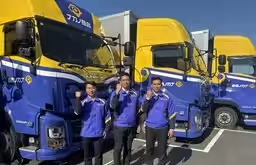
Yamato Holdings Co., Ltd., a major player in Japan’s logistics industry, has recently set a groundbreaking precedent by hiring three Vietnamese medium truck drivers under the Specified Skilled Worker program. This initiative is vital as Japan faces a serious shortage of truck drivers, with the average age of large truck drivers reaching 50.9 years, which is about 6.8 years older than other industries. Impending workforce shortages in the logistics sector have led to significant changes in recruitment strategies.
A Step Towards Global Integration
The recruitment kickoff took place on February 2, 2026, with a welcoming ceremony for the new drivers at Nakano Shokai, a subsidiary of Yamato Holdings based in Edogawa, Tokyo. Over the next few months, these drivers, aged between 20 and 30, will undergo extensive training to familiarize themselves with Japanese traffic rules and cultural practices. They will also support Japanese truck drivers, helping them gain hands-on experience before officially starting their roles in June 2026. This recruitment strategy marks the first time that the Yamato Group has utilized the Specified Skilled Worker program to hire foreign drivers, signaling a shift towards a more inclusive workforce solution.
Enhancing Skills and Support Mechanisms
Since the Japanese government will be adding the “Automotive Transportation Industry” category to the Specified Skilled Worker visa program starting March 2024, Yamato recognizes the urgency of establishing robust training and support frameworks not just for the employees, but also for their Japanese counterparts. Candidates must demonstrate proficiency in driving skills and Japanese language to ensure they can perform efficiently in their roles. The introduction of comprehensive support systems to help these international drivers adapt to life in Japan as community members is also essential.
Training Overview
1. Pre-Employment Training in Vietnam (February 2025 - January 2026):
- Collaboration with Japanese language schools to enhance communication skills.
- Workshops focused on obtaining Vietnamese truck driving licenses (equivalent to Japan's medium vehicle licenses).
- Monthly online meetings to address any concerns about working life in Japan.
2. Post-Employment Training in Japan (January 2026 - June 2026):
- Orientation sessions facilitated by Japanese and Vietnamese employees regarding Japanese culture and living standards.
- Support for transitioning driving licenses from Vietnamese to Japanese.
- Practical training with Japanese truck drivers to gain firsthand transport experience.
3. Training for Japanese Employees (January 2026 - February 2026):
- Lectures on residency and labor conditions relevant to foreign workers.
- Safety education tailored to cultural differences and communication barriers.
Employee Testimonials
The newly hired drivers shared their thoughts on this opportunity:
- - Fat (28 years): Having worked as a trainee in manufacturing for three years, I hope to leverage my skills in a new field. The pre-training in Vietnam helped me pass the required tests. I am eager to become a qualified medium truck driver and later, mentor others while exploring Japan's culture.
- - Thuyen (37 years): My background includes supporting truck driving operations. The assistance I receive monthly from Nakano Shokai’s team has eased my transition into this new role. I admire the diligence of Japanese people and look forward to experiencing Japan's beautiful scenery.
- - Tin (33 years): I spent three years in automotive parts manufacturing. The organization’s commitment to diversity and inclusion, especially given the presence of experienced Vietnamese staff, drew me here. I aspire to challenge myself further by obtaining advanced qualifications in transport management.
Future Outlook
Yamato Group's strategy entails not only the recruitment and training of Vietnamese truck drivers but also aims to enhance operational efficiency in logistics. The company is also investigating the potential hiring of drivers from other Southeast Asian countries, such as Indonesia and Cambodia, thereby internationalizing its workforce even further. As Vietnam continues to provide skilled individuals eager to integrate and contribute, Yamato’s innovative approach could serve as a model for other companies in Japan facing similar workforce challenges.
This initiative underscores the importance of addressing Japan’s pressing truck driver shortage while fostering an inclusive and diverse working environment in the logistics sector. The future looks promising as Yamato Group continues to pave the way for international cooperation within Japan’s labor market.


Topics Business Technology)
【About Using Articles】
You can freely use the title and article content by linking to the page where the article is posted.
※ Images cannot be used.
【About Links】
Links are free to use.