



Unveiling a New Biological Pesticide: A Trojan Horse Pathogen Targeting Insect Gut Symbionts
Unveiling a New Biological Pesticide: A Trojan Horse Pathogen Targeting Insect Gut Symbionts
Recent advancements in pest control have led to the discovery of a unique pathogen that mimics the gut symbionts of stink bugs. Conducted by a collaborative research team from the National Institute of Advanced Industrial Science and Technology (AIST), the University of Electro-Communications, and Akita Prefectural University, this discovery promises a revolutionary approach to biological pesticides.
Background of the Study
Pests are an inherent challenge in agriculture, demanding effective control methods. Among these pests, stink bugs are notorious for their resilience against chemical pesticides, primarily due to their reliance on gut symbionts for nutrition and survival. These symbionts provide essential nutrients that would otherwise be scarce in their diet.
The stark competition for survival means that discovering a method to exploit their symbiotic relationships could lead to targeted pest control strategies, reducing reliance on harmful chemical pesticides.
Discovery of the Pathogen
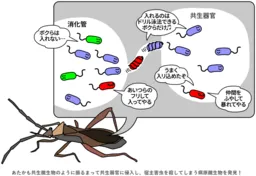
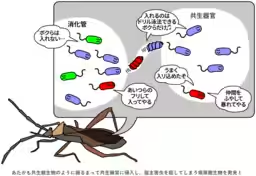
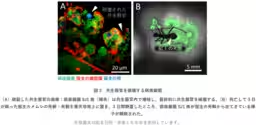
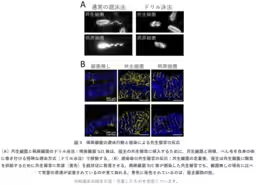
The research team identified a pathogen that infiltrates the stink bug's gut using tactics similar to those of their symbiotic bacteria. This pathogen, after entering the digestive tract from the soil, employs a unique movement strategy known as the “drill swimming motion” to navigate through the viscous environment. This allows it to invade and proliferate quickly within the gut's symbiotic organ.
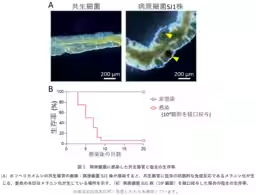
Once established, this pathogen begins abnormal reproduction, causing septicemia which ultimately leads to the host’s demise—almost 100% mortality within ten days. This groundbreaking revelation marks the first known instance of a pathogen mimicking symbiotic microorganisms to execute a lethal attack on its host.
Implications for Biological Pest Control
The significance of this discovery extends to its potential application as a biological pesticide. With a high level of specificity to its host, the pathogen could be employed effectively against agricultural pests like stink bugs without harming other surrounding organisms, making it an environmentally friendly alternative to traditional pesticides.
Given the current challenges of pesticide resistance and environmental degradation caused by chemical treatments, utilizing such specific pathogens could provide a sustainable solution for pest control, promoting the health of ecosystems and agricultural productivity.
Future Directions
As researchers continue to explore this pathogen's mechanisms and the possibility of deploying it in agricultural settings, the excitement surrounding this discovery indicates a promising future for innovative pest control techniques. Published in the Proceedings of the National Academy of Sciences of the United States of America (PNAS), this study emphasizes the need for ongoing research into environmentally conscious alternatives to conventional pest treatments.
The research also highlights how crucial understanding the symbiotic relationships within pests can open new avenues for developing effective biological control strategies. This is especially important in a world increasingly focused on sustainability and reduced chemical use in farming practices.
Conclusion
This discovery underscores the urgent necessity of developing new biological pesticides that can address pest problems while minimizing environmental impact. The Trojan horse-like pathogen offers a glimpse into a future where intricate biological interactions serve as powerful tools for sustainable agriculture, potentially reshaping the landscape of pest management for good.
As more research unfolds, this innovative approach to pest control may very well lead to safer, more effective agricultural practices. Researchers will continue to monitor and refine these methods, paving the way for a new era in agricultural science.
For further details regarding this study, refer to the AIST press release and the published paper in the Proceedings of the National Academy of Sciences.
Topics Consumer Products & Retail)





【About Using Articles】
You can freely use the title and article content by linking to the page where the article is posted.
※ Images cannot be used.
【About Links】
Links are free to use.