



Groundbreaking Treatment for Male Sexual Dysfunction Using Intranasal Oxytocin Revealed
Dual-Action Intranasal Oxytocin: A Breakthrough in Treating Male Sexual Dysfunction
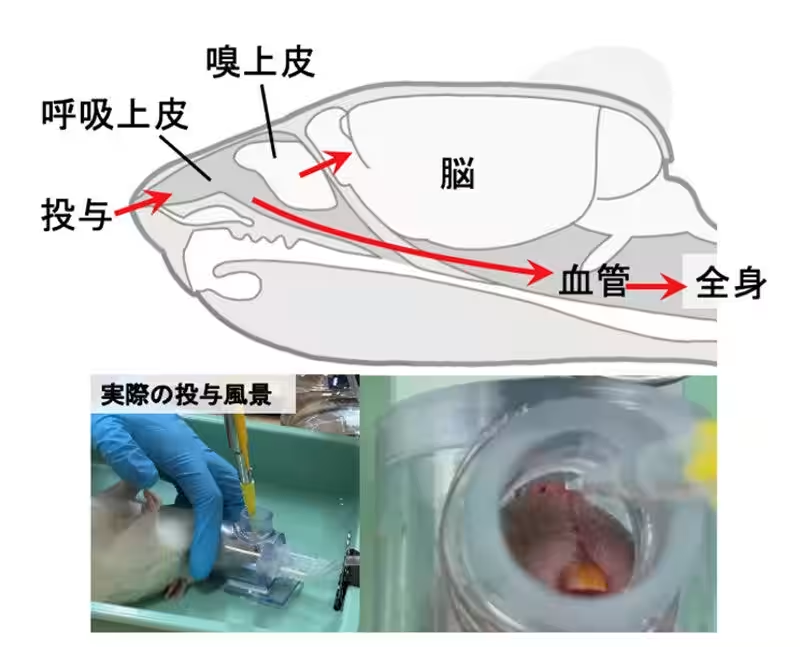
Recent studies conducted jointly by Okayama University and Hiroshima University have unveiled a revolutionary treatment method targeting male sexual dysfunction. By administering oxytocin via the nasal route, researchers have successfully demonstrated not just an increase in sexual motivation but also improvements in sperm functionality. This research offers a dual-action mechanism that could change the landscape of male sexual health treatments.
Overview of the Research
The breakthrough was led by graduate student Chica Enomoto from Okayama University's Graduate School of Environmental Life Science, alongside Professor Hirotaka Sakamoto and Associate Professor Takumi Oti. Collaborating with Professor Masayuki Shimada from Hiroshima University, they explored oxytocin's effects on male rats. Their findings indicate that oxytocin, commonly known as the 'love hormone,' can activate neurons in the hypothalamus, boosting sexual motivation while simultaneously improving testicular function and accessory gland activity.
This study is significant as previous treatments for male sexual dysfunction often focused on either central sexual desire reduction or peripheral reproductive function alone, lacking a comprehensive approach. The findings indicate that oxytocin administration not only enhances motivation but also positively affects sperm motility, forward movement rates, and overall sperm counts, marking a significant advancement in treatment strategies for sexual dysfunctions.
Key Findings
An extraordinary highlight of this research is the observation that even male rats with no previous experience of ejaculation exhibited natural sexual behaviors after being administered oxytocin. This aspect of the study has opened doors to novel treatment strategies that address the complex interrelation of reduced sexual desire and sexual function difficulties simultaneously—an area previously regarded as challenging by health professionals.
According to Professor Sakamoto, traditional male sexual dysfunction treatments often present a binary dilemma of choosing between addressing brain-related issues or bodily dysfunctions. The introduction of oxytocin as a dual-action treatment mechanism heralds a transformative approach that could revolutionize the field of male sexual health.
Chica Enomoto, commenting on the promising findings, expressed her surprise at achieving such positive results in her initial research endeavor and gratitude for the opportunities extended to present the findings in an international academic journal.
Study Publication
This significant study has been published in the electronic version of The Journal of Sexual Medicine on September 19, 2025. The title of the research paper is 'Dual-action intranasal oxytocin enhances both male sexual performance and fertility in rats.'
Research Funding
This work has received support from various organizations, including the Japan Society for the Promotion of Science (JSPS) and the Okayama University Next-Generation Research Base Formation Support Project.
Additional Context
For more detailed information regarding this groundbreaking treatment, readers can refer to the original press release on Okayama University’s official website. Here is the link to the full paper for those who wish to explore the findings in depth: Journal of Sexual Medicine.
Research have implications for broader discussions around male sexual health and potential treatment avenues in clinical settings. The interconnections between emotional factors and physical health are now being understood more comprehensively, suggesting that future therapeutic designs may need to consider these dual aspects. With the evolving understanding of hormones like oxytocin and their wide-ranging effects on human behavior and physiology, more innovative solutions may soon be on the horizon, offering hope to many struggling with sexual dysfunction.

Topics Health)
【About Using Articles】
You can freely use the title and article content by linking to the page where the article is posted.
※ Images cannot be used.
【About Links】
Links are free to use.