



Pioneering UV LED Technology Safely Disinfects Large Concert Halls
Revolutionary Technology in Concert Hall Disinfection
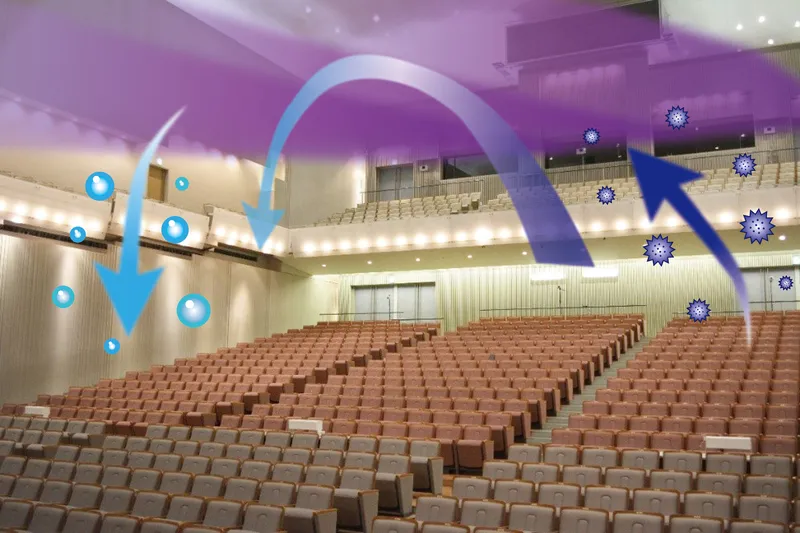
A team of researchers led by Shinichiro Inoue at the National Institute of Information and Communications Technology (NICT) has developed a world-first deep UV LED disinfection system that effectively inactivates airborne viruses in large spaces such as concert halls. The innovative design selectively illuminates the upper regions of a large space with high-intensity deep UV light, ensuring rapid disinfection while maintaining high safety standards for individuals present.
Achievements of Deep UV LED Technology
The research group has precision-engineered the beam angle of high-intensity deep UV LEDs to focus the light specifically on the upper sections of the venue. This method not only ensures a safe environment for concertgoers below but also accomplishes the swift inactivation of viruses within a spacious area, such as a concert hall. Compared to traditional mercury lamps, the new system reduces the time needed to achieve 99.9% inactivation of airborne viruses (specifically the human coronavirus) by an impressive 72%.
The deep UV LED disinfection system was successfully installed in the Kumagai Cultural Creation Center in Japan's Saitama Prefecture, where it functioned safely during events with an audience in attendance.
Implications of Successful Disinfection
This development marks a significant breakthrough in utilizing deep UV LEDs for large space disinfection, addressing a crucial need for public health and safety. The system's ability to provide high-speed sterilization in areas that typically see high foot traffic could prove invaluable in combating airborne infections that spread through aerosols. As societies prepare for potential future pandemics, this technology represents a proactive step towards ensuring public safety in enclosed spaces.
Background Context
Increasing interest in deep UV LEDs stems from their potent germicidal properties against viruses and bacteria. The NICT research team has been at the forefront of developing and implementing these technologies. They have consistently pushed the boundaries by setting records for output intensity and demonstrating efficacy comparable to traditional lighting solutions. Past studies have highlighted the effectiveness of a specific wavelength of deep UV light (265 nm) in inactivating the SARS-CoV-2 virus within aerosol environments.
In traditional applications, deep UV LEDs were typically used within shielded modules that included air suction and filtration systems, which limited their efficiency in large spaces due to airflow restrictions. Therefore, establishing a safe and effective method for disinfecting large venues has remained a significant challenge, especially considering the risks posed by aerosol transmission of respiratory infections.
Description of the New System
The newly developed disinfection system employs a sophisticated module that allows for selective irradiation of UV light. Air containing viruses is drawn up towards the upper section where the deep UV LEDs are active. This treatment ensures that after exposure to deep UV light, the air is then circulated back into the lower areas of the venue, effectively providing a cycle of clean air while maximizing safety for any occupants.
This new design utilizes a multi-chip implementation of deep UV LED technology, achieving a remarkable output of 1.1 Watts while maintaining high directionality (FWHM of 2°). This ensures that audiences seated below are not directly exposed to deep UV light while benefiting from its disinfecting properties in the upper regions of the venue. The installation and operation of the system have confirmed its effectiveness, with testing revealing a disinfection time of about 42 minutes to achieve a 99.9% inactivation rate.
Future Prospects
Looking ahead, NICT is committed to further developing this deep UV lighting technology and expanding its societal applications. By enhancing this existing technology, it aims to contribute to the establishment of a safer, healthier environment for society, particularly in light of future public health challenges. This innovative system not only represents a technical achievement but also emphasizes the importance of proactive measures in public health policy, particularly as we face potential health crises in the future.
Previous Related Announcements
This recent achievement is built upon NICT’s previous successes, such as the 2022 announcement of a high-output portable deep UV LED device, further solidifying their leadership in the application of UV technology for public safety.
Topics Health)
【About Using Articles】
You can freely use the title and article content by linking to the page where the article is posted.
※ Images cannot be used.
【About Links】
Links are free to use.