



Exploring Mitochondrial Distribution Mechanisms in Early Embryo Development
Unraveling the Mystery of Mitochondrial Distribution in Early Embryos
On August 11, 2025, groundbreaking findings from a collaborative research effort involving Okayama University's Associate Professor Takuya Wakai and other esteemed scholars were published in the scientific journal eLife. These findings provide crucial insights into the mechanisms of mitochondrial distribution during the early stages of embryo development—a process vital for successful reproduction.
Mitochondria, known as the powerhouse of the cell, are essential organelles responsible for energy production through cellular respiration. They are particularly abundant in oocytes (egg cells) and play a crucial role when fertilization occurs. After fertilization, these organelles undergo a process of division and distribution, a phenomenon that ensures each daughter cell receives a fair share of mitochondria, which are inherited maternally.
Key Findings of the Study
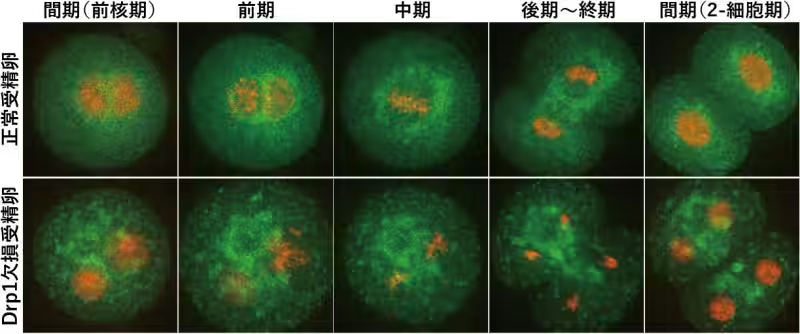
The study highlighted the role of the protein Drp1, which is instrumental in regulating mitochondrial fission. When Drp1 levels were depleted, an abnormal aggregation of mitochondria was observed within the zygote. This resulted in uneven distribution between daughter cells during the first cleavage—ultimately affecting the embryo's viability.
Implications of Mitochondrial Abnormality
The significance of these findings extends beyond the mitochondria themselves. Abnormalities in mitochondrial distribution triggered by Drp1 depletion also influenced the segregation of other cellular organelles, such as the endoplasmic reticulum and chromosomes. As a consequence, the developmental milestones of the embryo were prematurely halted, which suggests that proper mitochondrial dynamics are critical for successful embryogenesis.
Moreover, similar structural anomalies within human in vitro fertilization embryos have been observed, underscoring the potential impact of this research on assisted reproductive technologies (ART). By enhancing the safety and efficacy of these techniques, the findings could pave the way for significant advancements in reproductive medicine.
Visual Insights
The study presents striking visuals depicting the dynamics of mitochondria and chromosomes during the initial cleavage. In normal fertilized eggs, mitochondria are symmetrically distributed around chromosomes and divide equally between two daughter cells. In stark contrast, fertilized eggs lacking Drp1 exhibit a clustering of mitochondria, leading to asymmetrical division and the formation of atypical daughter cells characterized by abnormal nuclear structures.
A Reflection from Associate Professor Takuya Wakai
Professor Wakai expressed his enthusiasm about the research, likening the equitable distribution of mitochondria during early cleavage to the inheritance of wealth from a mother to her offspring—an essential aspect for the offspring's development. He emphasized the collaborative efforts of graduate students who played a significant role in the practical experimentation phases of the research, as well as the invaluable contributions from partners in the project.
Conclusion
This research not only expands our understanding of the essential role of mitochondria in embryonic development but also suggests potential improvements for ART practices. By delving deeper into the intricacies of mitochondrial behavior, scientists can better address various reproductive challenges faced in clinical settings today.
For more detailed insights about this research, please visit the link: Okayama University Press Release and explore the rich academic environment at Okayama University.
References
- - Haruna Gekko et al., Redistribution of fragmented mitochondria ensures symmetric organelle partitioning and faithful chromosome segregation in mitotic mouse zygotes, eLife.
- - Okayama University's Agricultural Research Institute: Okayama University Agriculture




Topics Health)
【About Using Articles】
You can freely use the title and article content by linking to the page where the article is posted.
※ Images cannot be used.
【About Links】
Links are free to use.