



New Insights into Stanniocalcin-1 as a Potential Treatment for IPAH Revealed by Research
New Findings on Stanniocalcin-1 in IPAH
Introduction
Idiopathic Pulmonary Arterial Hypertension (IPAH) is a challenging and often severe condition characterized by abnormal proliferation of smooth muscle cells in the pulmonary arteries. As these cells multiply excessively, the blood vessels narrow, leading to elevated blood pressure in the lungs. This condition puts a significant strain on the heart and can eventually result in heart failure and reduced oxygen supply to the body. Recent collaborative research involving Tokyo Medical University and Okayama University has unveiled interesting insights into how Stanniocalcin-1 (STC1), a mechanosensitive protein, may play a crucial role in alleviating the effects of IPAH.
Key Research Findings
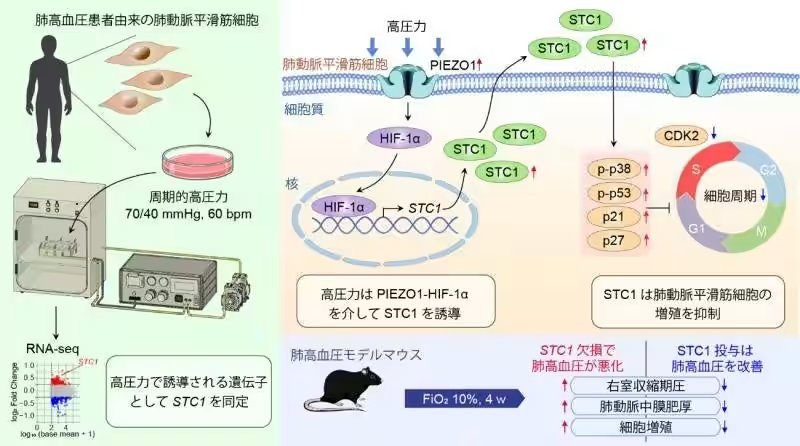
The research team led by Professor Utako Yokoyama and Assistant Professor Mariko Kogami used a unique pressure-culture system to study pulmonary artery smooth muscle cells derived from IPAH patients. They discovered that when these cells experienced high pressure, the production of STC1 increased significantly. This process occurs through the activation of the mechanosensitive receptor PIEZO1 and the transcriptional regulator HIF-1α.
One of the pivotal findings of the study is that STC1 can inhibit the progression of the cell cycle, thereby preventing the abnormal proliferation of smooth muscle cells. This points to STC1’s protective capability in the context of elevated pulmonary arterial pressure.
The researchers further explored this phenomenon in animal models of pulmonary hypertension. They found that the absence of STC1 led to a worsening of the condition, whereas the administration of STC1 directly into the airways resulted in an improvement of the pathological features associated with IPAH. These results indicate that STC1 functions as a defense factor that not only responds to high pressure but also helps protect the pulmonary vasculature from harmful remodeling.
Implications for Treatment
The study presents a paradigm shift in understanding how high pulmonary arterial pressure is not merely harmful but can trigger protective responses within the pulmonary vasculature. The findings suggest that harnessing the vascular protective role of STC1 could pave the way for novel therapeutic strategies for treating IPAH. The inhalation therapy of STC1 emerges as a promising approach that merits further investigation.
Conclusion
Published in the esteemed journal Circulation Research on September 9, 2026, this groundbreaking research signifies a shift in the landscape of IPAH treatment. By revealing the protective mechanisms of STC1, the study opens new avenues for innovative treatment options, representing hope for patients suffering from this debilitating disorder. The focus now shifts to translating these laboratory findings into clinical applications to enhance patient care outcomes for those with IPAH.
References
- - Kogami, M., et al. (2026). "Mechanosensitive Stanniocalcin-1 Suppresses Pulmonary Artery Smooth Muscle Cell Proliferation and Attenuates Experimental Pulmonary Hypertension." Circulation Research. DOI: 10.1161/CIRCRESAHA.125.327869.
- - Tokyo Medical University Press Release.
- - Okayama University Press Release.



Topics Health)

【About Using Articles】
You can freely use the title and article content by linking to the page where the article is posted.
※ Images cannot be used.
【About Links】
Links are free to use.