




How Increasing Yogurt Intake Can Reduce Healthcare Costs for Type 2 Diabetes in Japan
Introduction
Recent research conducted by the National Institutes of Biomedical Innovation, Health and Nutrition (Osaka) and Meiji Co., Ltd. (Tokyo) explored the relationship between yogurt consumption, Type 2 diabetes, and healthcare costs in Japan. The results of this simulation study, published on July 9, 2025, in the international academic journal "Nutrients," indicate that increasing yogurt intake to recommended levels could lead to a notable reduction in diabetes-related healthcare expenses.
Study Overview
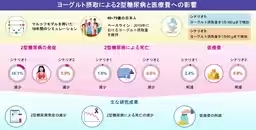
The study aimed to quantify the potential healthcare savings generated by increased yogurt consumption among the Japanese population aged 40 to 79. Utilizing data from this demographic, the researchers simulated the outcomes of two different yogurt intake scenarios: 160 grams and 80 grams per day. These amounts align with the dietary guidelines suggesting the intake of dairy products.
Key Findings
The findings from the simulation revealed substantial economic benefits.
- - With a daily consumption of 160 grams of yogurt:
- This reduction could lead to a decrease in diabetes-related healthcare costs by approximately 2.4%, amounting to around 144 billion yen.
- - With a daily consumption of 80 grams of yogurt:
- This reduction could result in healthcare cost savings of around 0.9%, equating to about 52 billion yen.
Background Context
In Japan, it is estimated that around 20 million people are affected by diabetes or are at risk. Diabetes significantly increases the risk of other serious health conditions, such as heart disease and stroke, and contributes to rising healthcare costs. Therefore, preventive measures are crucial in combating this growing health issue.
The onset of Type 2 diabetes is often influenced by both genetic predispositions and lifestyle factors, such as poor diet and lack of physical activity. Previous studies have indicated a connection between yogurt consumption and a lower risk of developing Type 2 diabetes, prompting further investigation into yogurt's potential impact on healthcare costs.
Methodology
The research utilized a Markov model to simulate the potential economic effects of increased yogurt consumption on diabetes incidence, based on the National Health and Nutrition Survey data. The average daily intake of yogurt among individuals aged 40 to 79 years was reported to be between 24.5 to 51.4 grams, which is significantly less than the recommended 160 grams to meet dietary guidelines.
By calibrating the model to incorporate these varying consumption levels, the study highlights the disparity between current average intake and recommended levels.
Conclusion
Integrating yogurt into daily diets is posited as a beneficial health strategy that could significantly lower diabetes incidence and associated healthcare costs in Japan. However, it is important to emphasize that excessive yogurt consumption in the long term could lead to nutritional imbalances, so moderation is key.
Conflict of Interest
This research project was supported by the National Institutes of Biomedical Innovation, Health and Nutrition, with financial contributions from several private companies, including Ajinomoto Co., Ezaki Glico Co., Kagome Co., Kikkoman Co., Zensho Holdings Co., Nissin Foods Holdings Co., and Meiji Co.
For more details, refer to the original research published in "Nutrients": Nutrients 2025, DOI: 10.3390/nu17142278.


Topics Health)
【About Using Articles】
You can freely use the title and article content by linking to the page where the article is posted.
※ Images cannot be used.
【About Links】
Links are free to use.