




AI Job Creation SaaS Unveils Patent Application and Major Update
AI Job Creation SaaS Innovations: Patent and Updates
AI Job Creation, a prominent SaaS company based in Shibuya, Tokyo, has made headlines with two major announcements: a patent application and substantial updates to its job posting platform. In an effort to revolutionize the hiring sector through AI integration, the company has also hosted a seminar for around 50 firms in collaboration with Circus.
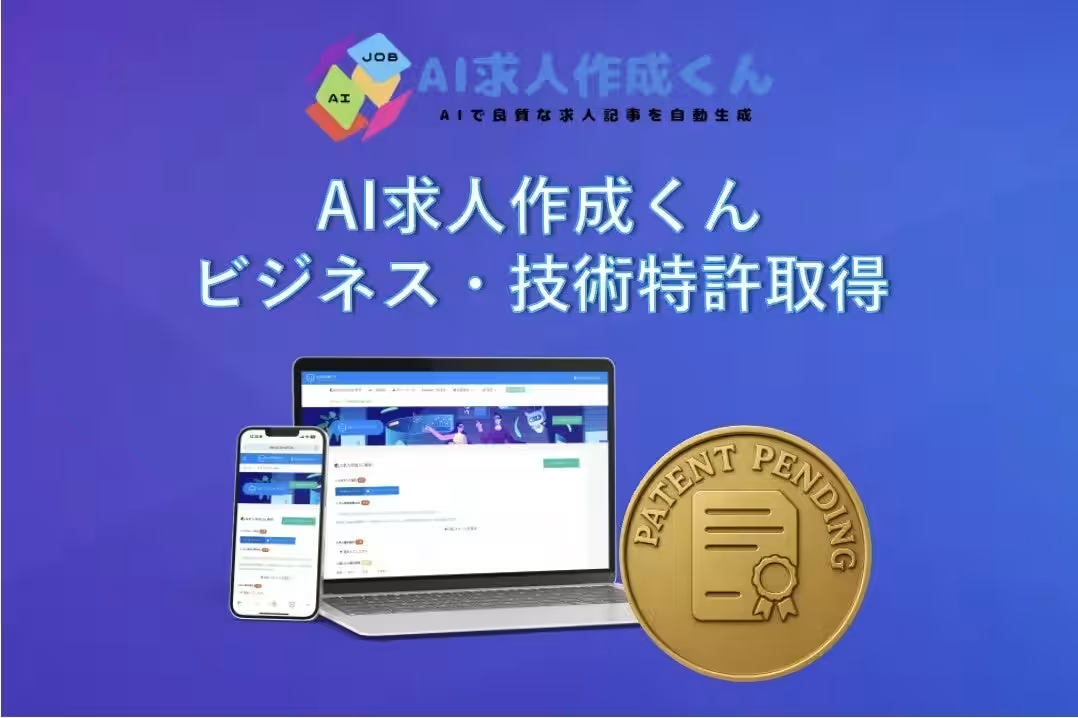
Patent Application
The company has submitted a patent application in Japan concerning a revolutionary technology that generates appealing job advertisements using AI. The key details are as follows:
- - Patent Area: Japan
- - Inventor: Kazuki Okamoto
- - Invention Name: Information Processing System, Information Processing Method, and Program
- - Applicant: AI Job Creation Co., Ltd.
- - Application Number: 2025-126610
- - Application Date: July 29, 2025
This patent application demonstrates the company's commitment to protecting its unique technology, which facilitates the easy creation of compelling job listings targeted at job seekers. With this patent, AI Job Creation aims to solidify its position in the industry, offering a distinctive product that stands apart from competitors. The application encompasses both the business model and technical aspects of the service, ensuring comprehensive protection.
Major Function Update
In addition to the patent application, AI Job Creation has implemented significant updates to its job creation tool. These updates have dramatically improved the tool's accuracy, usability, and scalability, allowing it to handle large requests while maintaining consistent performance even in high-demand environments.
Noteworthy enhancements include:
1. Preset Functionality: Save templates to streamline job creation processes.
2. Output Compatibility: Enhanced output support for various ATS (Applicant Tracking Systems), boosting integration with external tools used by companies.
3. New Image Generation Feature: Upload existing images directly for quicker creation of job postings or banners, thus improving the efficiency of visual production.
4. Algorithm Improvements: The introduction of the


Topics Other)
【About Using Articles】
You can freely use the title and article content by linking to the page where the article is posted.
※ Images cannot be used.
【About Links】
Links are free to use.