



Understanding Structural Determinants of Constitutive Activity in Histamine H3 Receptors: Implications for Neurological Disease Treatment
A Breakthrough in GPCR Research: Histamine H3 Receptor
Introduction
Recent findings from a research group led by Professor Mitsunori Shiroishi at Tokyo University of Science have made significant strides in understanding the histamine H3 receptor (H3R), a crucial target for treating various neurological disorders. The study, published in the journal Protein Science, sheds light on how specific amino acid mutations can enhance the receptor's constitutive activity, offering potential pathways for the development of novel therapeutic agents.
Background on Histamine H3 Receptor
H3R is a class A G protein-coupled receptor (GPCR) predominantly expressed in the central nervous system's frontal lobe. It plays a critical role in regulating neurotransmitter release and is implicated in multiple neurological conditions, including attention deficit hyperactivity disorder (ADHD), schizophrenia, stroke, Parkinson's disease, and Alzheimer's disease. Despite its promising status as a therapeutic target, the structural determinants that control its inherent high constitutive activity have remained largely elusive.
Key Findings of the Study
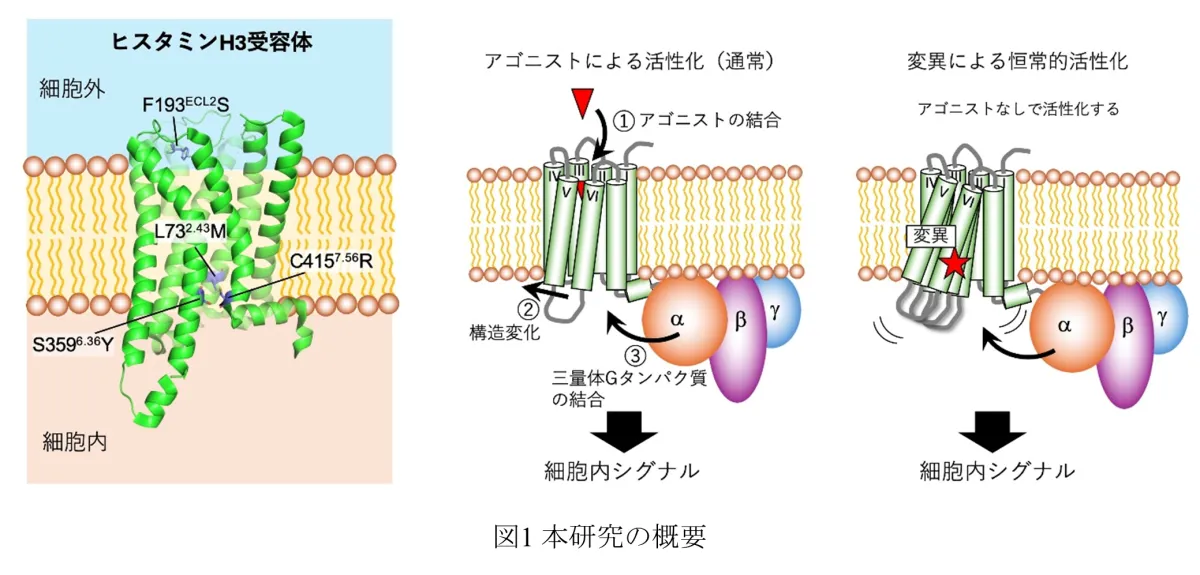
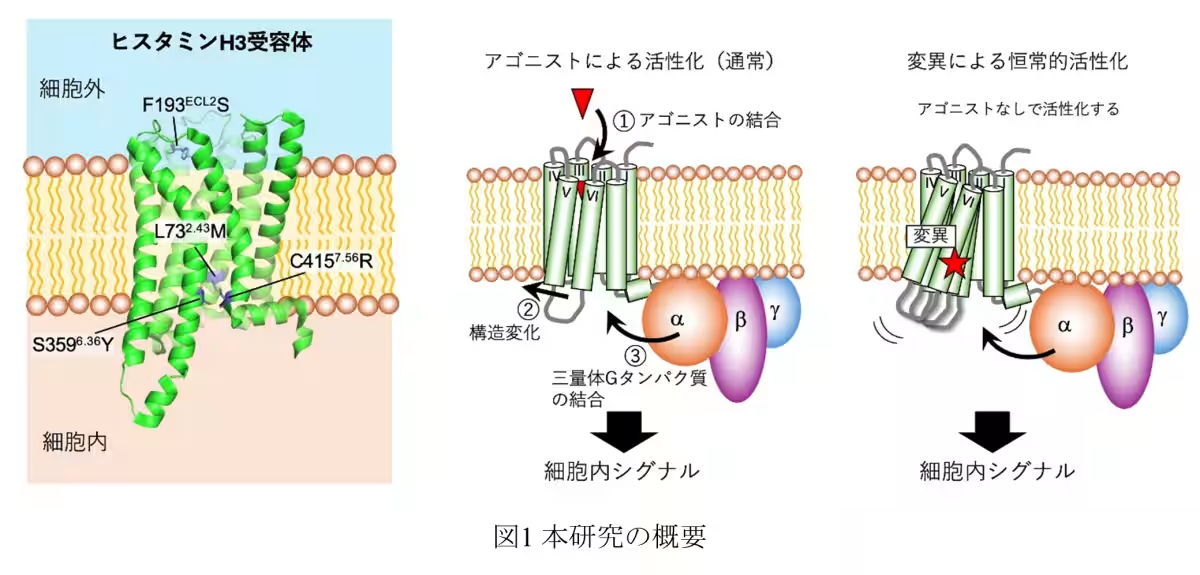
In this groundbreaking research, the group identified four specific mutations in the H3R (L732.43M, F193ECL2S, S3596.36Y, C4157.56R) that significantly enhance its constitutive activity. These mutations were hypothesized to lead to structural instability in the receptor, which was experimentally validated using both yeast and mammalian cell models.
Initially, these mutations were identified in yeast systems where H3R was expressed without observable activity. However, subsequent experiments demonstrated that the four mutations could restore activity to H3R, boosting its constitutive activity significantly. The researchers also confirmed that the alterations did not affect the receptor's affinity for histamine, thereby supporting the hypothesis that structural instability can be a mechanism for enhanced receptor activation.
Using fluorescence-detection size-exclusion chromatography (FSEC), it was shown that all four mutations contributed to a loss of structural stability. Three of the mutations led to steric clashes within the receptor, while the fourth eliminated stabilizing interactions with nearby residues, culminating in an overall destabilization of the H3R structure.
Furthermore, when one of the mutations (C4157.56R) was introduced into the H1 receptor (H1R), the receptor's activity increased approximately 100-fold, indicating that specific mutations can transcend receptor types, although other mutations showed negligible effects, emphasizing the importance of local structural environments in GPCR activity.
Implications for Drug Development
The findings from this study provide valuable insights into the molecular mechanisms underlying GPCR activation, particularly for the H3R, which could significantly impact the development of safer, more effective therapeutic agents for various neurological disorders. Professor Shiroishi remarks, “The research fosters a deeper understanding of brain disorders and could serve as a foundation for designing safer drugs. Moreover, it may provide insights beneficial for engineering synthetic GPCRs.”
Conclusion
This research represents a considerable advancement in the field of GPCR studies, highlighting the intricate relationship between receptor structure and function, particularly regarding constitutive activity. The exploration of H3R’s structural determinants is not only vital for unraveling its role in neurological diseases but also for paving the way for innovative treatments aimed at improving the quality of life for individuals suffering from these conditions. As the scientific community continues to explore these molecular underpinnings, the future may hold groundbreaking opportunities for therapeutic advancements.
Acknowledgments
This research was supported by the Japan Society for the Promotion of Science (JSPS) Grants and other substantial contributors, ensuring that pivotal studies like this one can advance our understanding of complex biological systems.
Topics Health)
【About Using Articles】
You can freely use the title and article content by linking to the page where the article is posted.
※ Images cannot be used.
【About Links】
Links are free to use.