



Innovative Synthesis Method for Nanoporous Carbon Using Modified Sugars
Groundbreaking Nanoporous Carbon Synthesis Developed
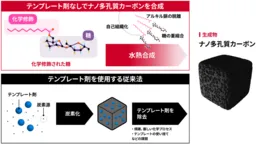
A recent advancement by researchers at the National Institute of Advanced Industrial Science and Technology (AIST) led by Shiori Kubo has introduced an innovative method for synthesizing nanoporous carbon materials solely from chemically modified sugars, such as sucrose and fructose. This approach marks a significant departure from conventional synthesis methods that rely on disposable template agents, potentially reducing resource consumption and energy usage.
The Challenge with Traditional Methods
Nanoporous carbon materials have garnered considerable attention for their applications as electrode materials in secondary batteries and as catalyst supports in various chemical reactions. These materials are valued for their large surface areas and uniform pore structures, which are crucial for efficiently storing energy and facilitating chemical reactions.
However, existing methods predominantly utilize template techniques that involve complex and resource-intensive processes. Conventional template methods rely on the use of special inorganic materials or polymers as molds, which are eventually removed after carbonization. This not only introduces waste due to the single-use nature of the templates but also subjects the carbon synthesis to harsh chemical processes, including high temperatures and strong acids, which consume significant energy.
A New Synthesis Method
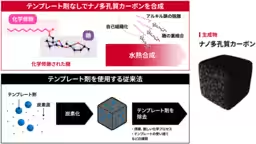
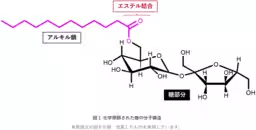
AIST’s research team has successfully established a novel process that synthesizes nanoporous carbon materials directly from modified sugar molecules. This method utilizes a simplified approach where alkyl chains are attached to sugar molecules, such as sucrose monolaurate, allowing for sequential reactions under hydrothermal conditions without any need for template agents. During these reactions, the researchers discovered that by altering the type of sugar used, they could produce various nanostructured morphologies, including layer-type structures.
This development represents a transformation from physical pore formation via template methods to a much-needed focus on chemical pore formation. As a result, a platform for the design and synthesis of new types of nanoporous carbon materials that cannot be achieved through traditional techniques is now possible.
Properties and Potential Applications
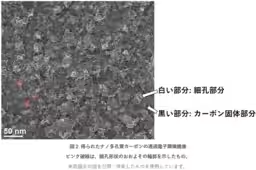
Nanoporous carbon materials feature numerous nanoscale pores and high surface areas, making them suitable for a wide range of applications. These include energy storage devices and catalysts for enhancing chemical reactions. The precise control over pore size and structure eliminates the heterogeneity found in traditional porous carbons, such as activated carbon, which may have varying pore dimensions and shapes. The uniformity in pore characteristics allows for selective capture of specific-sized molecules, enhancing efficiency in applications like gas separation or battery electrodes.
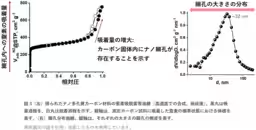
The study also highlights how modifying sugar molecules can drive the self-organization and subsequent formation of nanoporous carbon. Initial investigatory results indicated that as the reaction progressed, the sugar rings underwent polycondensation—an essential step in establishing the carbon solid structure.
Moving forward, the researchers anticipate that this synthesis method can be optimized and refined to further enhance carbon yield and electrical conductivity. The new carbon solids achieved impressive metrics, with a surface area exceeding 1155 m²/g and significant pore volumes, indicating their effectiveness as high-performance materials.
Future Directions
The ongoing research aims to further explore the link between the chemistry of sugar modifications and the characteristics of the resultant carbon materials. With targeted chemical modifications, the potential to innovate shapes and functionalities of nanoporous carbon materials could lead to unprecedented applications in electrochemical devices and catalysis.
This novel synthesis approach represents a turning point in carbon material creation, highlighting the efficiency of simple chemical modifications in producing high-performance materials without reliance on cumbersome and wasteful processes. As this field advances, it holds immense promise for addressing contemporary energy and environmental challenges.
The full details of this research have been published online in the Journal of the American Chemical Society on August 12, 2026.
Conclusion
The synthesis of nanoporous carbon through this newly established method utilizes the inherent properties of modified sugars, demonstrating how foundational changes can lead to meaningful technological progress in material science. As researchers continue to refine these techniques, the implications for future applications may significantly enhance the performance of energy storage systems and reactions in catalysis, paving the way for more sustainable technologies.
Topics Consumer Products & Retail)









【About Using Articles】
You can freely use the title and article content by linking to the page where the article is posted.
※ Images cannot be used.
【About Links】
Links are free to use.