



Telework Preferences: Majority Wants to Continue or Increase Remote Work
Telework Preferences: A Clear Majority Favor Remote Work
In a recent survey conducted by LASSIC, a company based in Tokyo, significant insights into the future of telework and remote working preferences emerge. The survey, called the "Telework Implementation Status and Continuation Intention Study," was performed between May 27 and June 2, 2026, involving 1,000 individuals who have experience with telework. The findings are a clear indication of the cultural shift taking place around work environments.
Key Findings
Majority Supports Telework Continuation
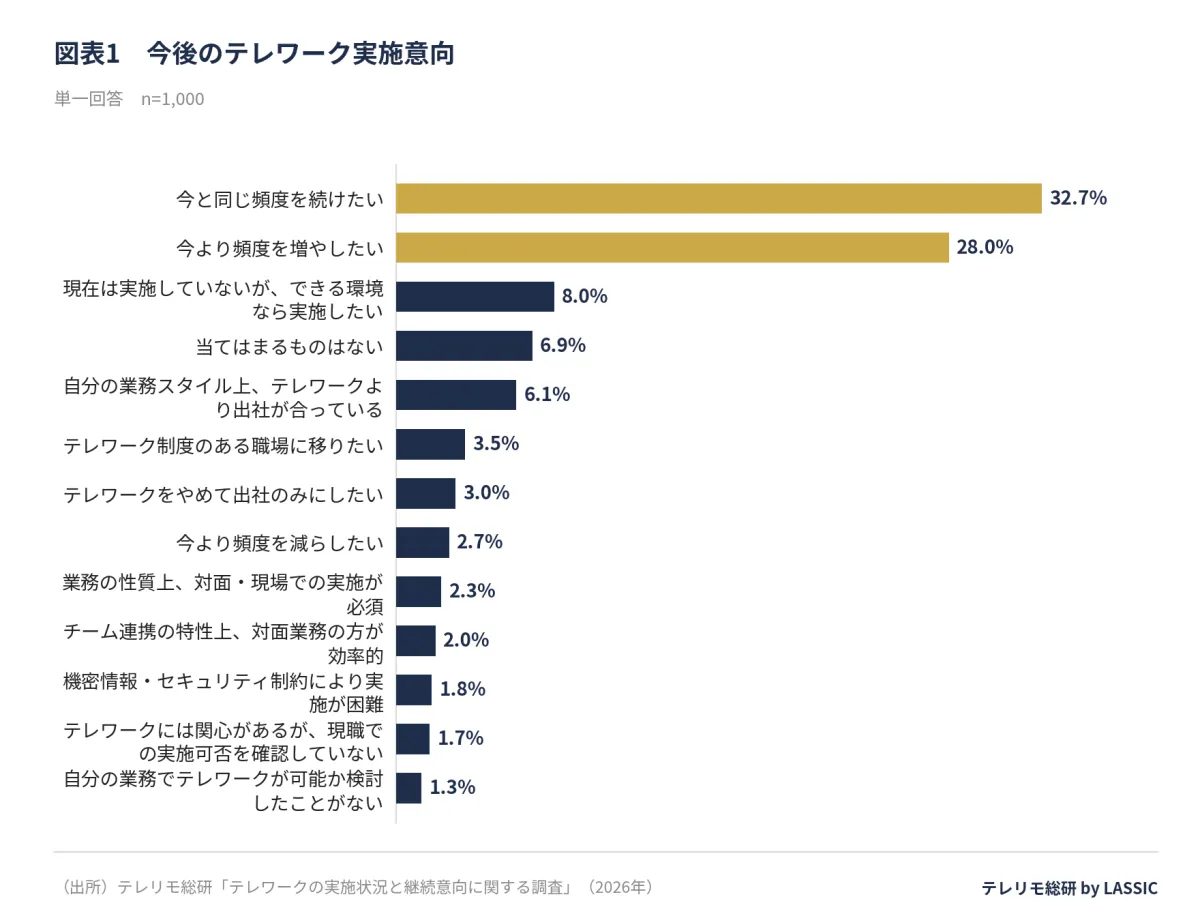
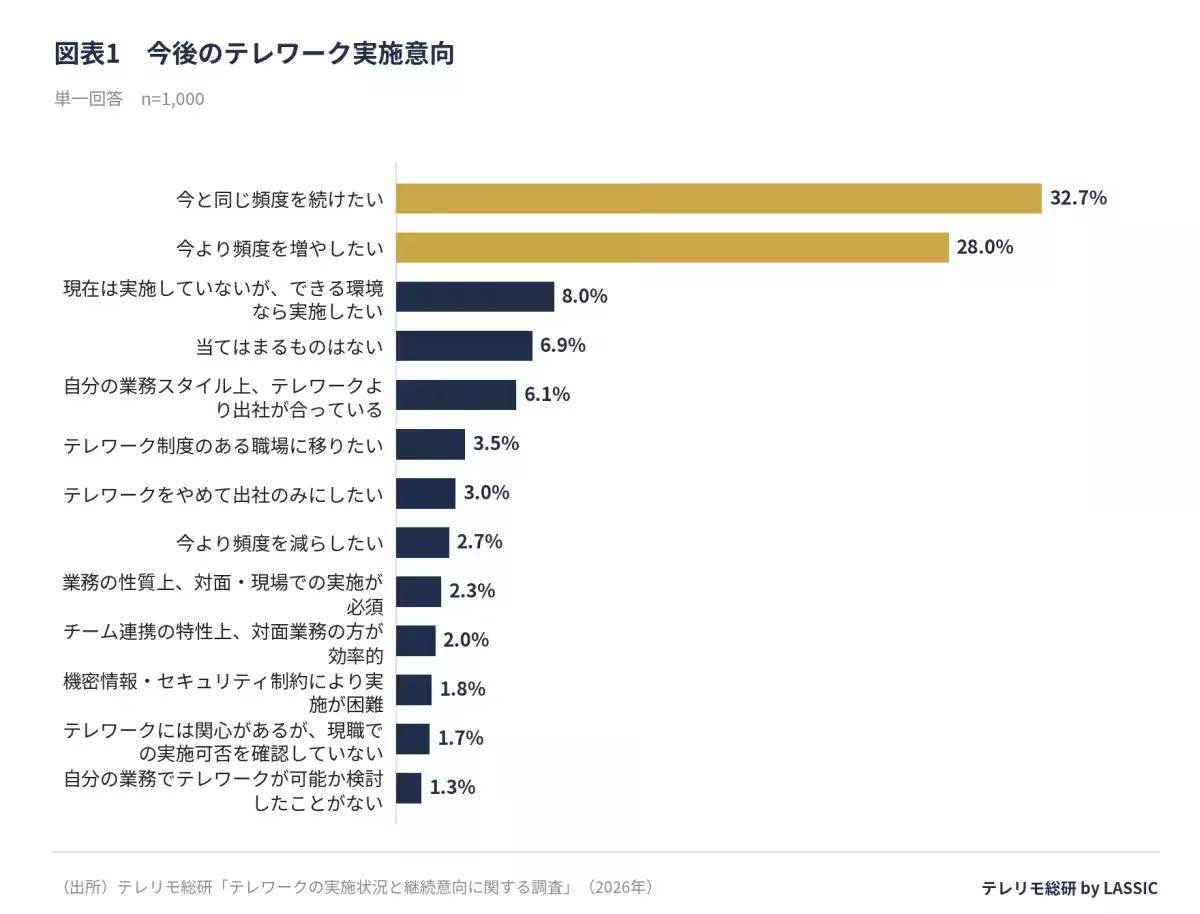
A striking 60.7% of respondents expressed a desire to either maintain their current frequency of telework or increase it. This proportion dwarfs the 5.7% who indicated they would prefer to reduce their telework or return to the office full-time. Specifically, 32.7% want to keep the same working frequency, while 28.0% want to increase it. This striking difference highlights a massive shift towards remote work as a long-term professional strategy.
Hybrid Work Model Appears Favorable
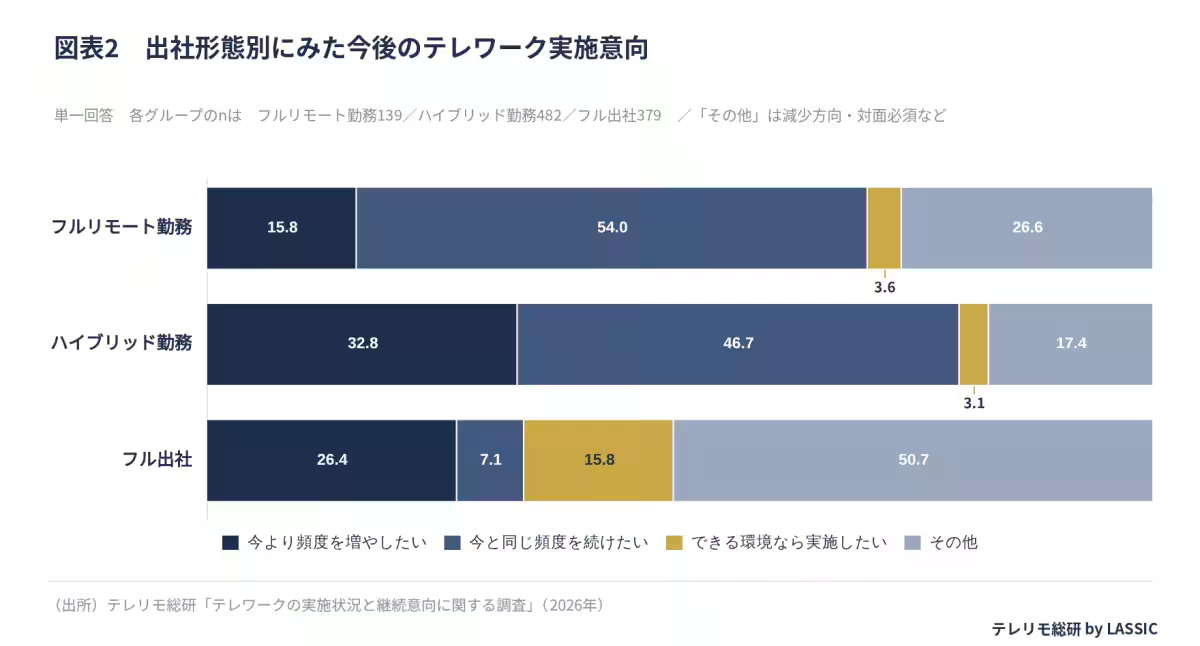
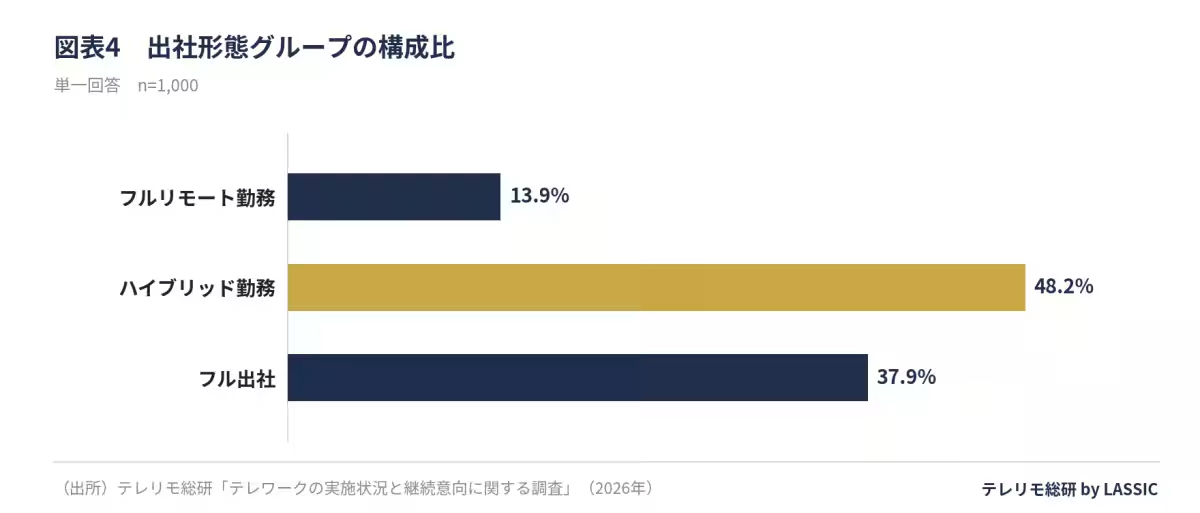
When investigating preferences based on the type of work arrangement, the hybrid model shows particularly strong support. An impressive 79.5% of those working in a hybrid capacity wish to maintain or augment their telework, compared to 33.5% of those working full in-office. This disparity of 46.0 points indicates a clear preference for flexibility.
Interestingly, even among those working entirely in the office, 15.8% stated they would prefer to telework if given the proper setup—further underscoring the prevailing sentiment towards remote work.
Insights Into Work Frequency
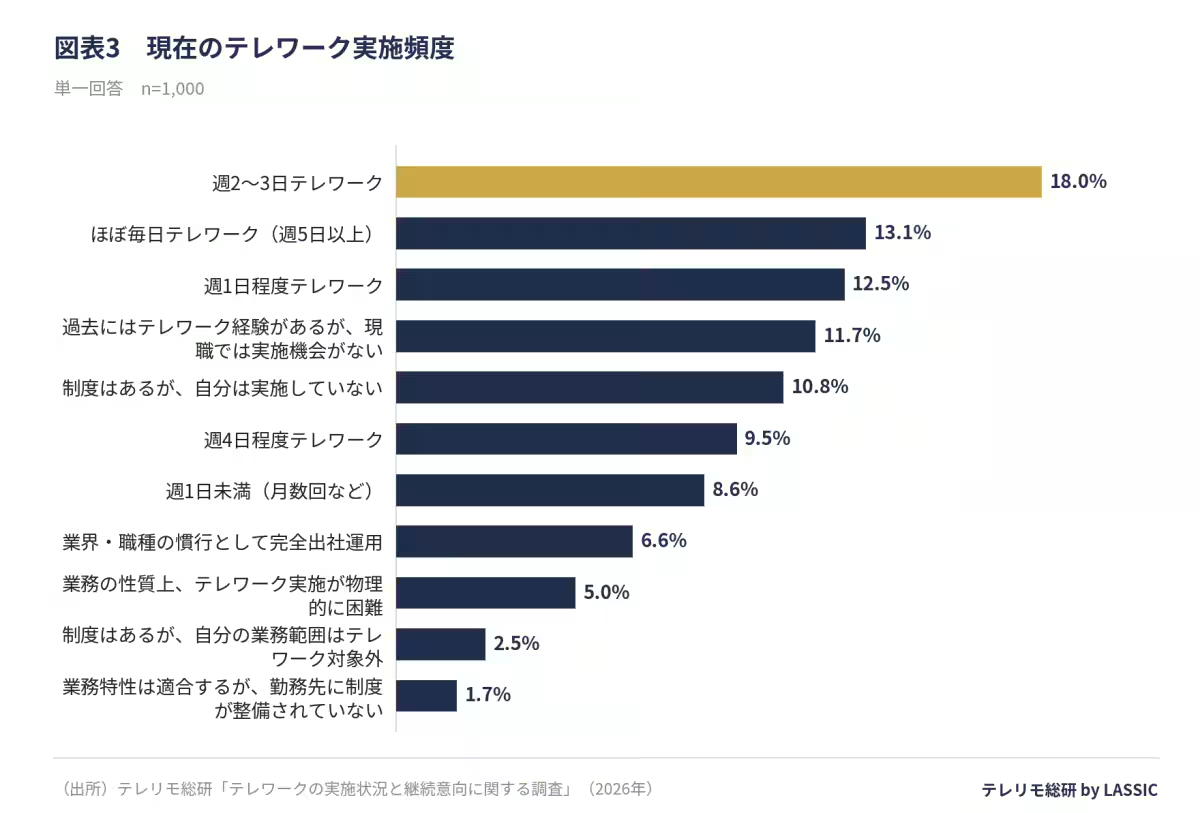
Respondents revealed varying frequencies for practicing telework. The most common arrangement was teleworking two to three days a week, indicated by 18.0% of those surveyed. Additionally, 13.1% claim to telework almost daily (five days a week), while another 12.5% work from home once a week. These statistics show that regular telework is becoming an integrated aspect of many professionals’ lives.
Decision-making Authority in Work Modes
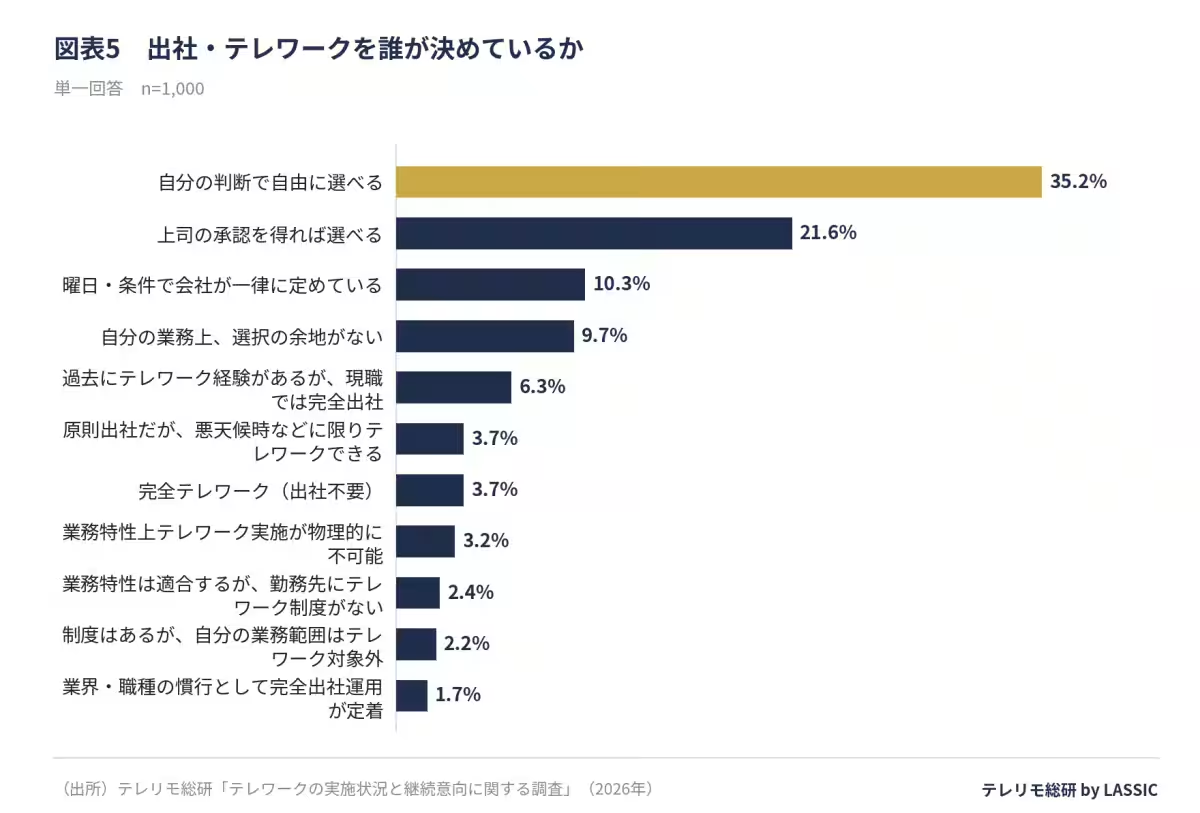
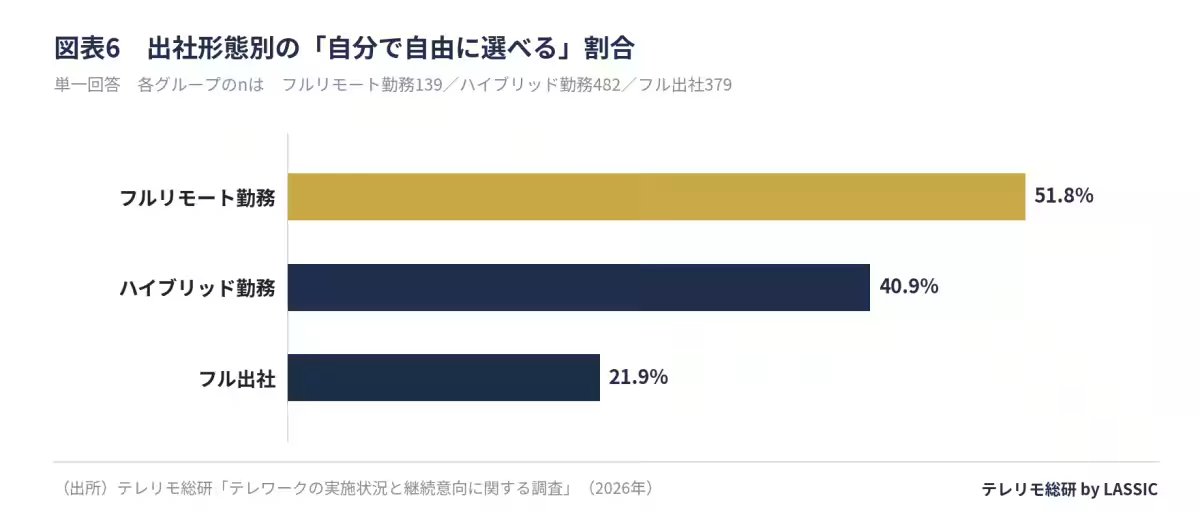
Interestingly, when it comes to who makes the call on whether to work from home or the office, 35.2% of respondents reported they make that choice themselves. This self-determination was most pronounced in the full-remote working group, with 51.8% claiming they could freely choose their work mode. In contrast, only 21.9% of those in full office settings enjoyed that same latitude.
Conclusion: A Shift in Work Culture
The findings from this study indicate a monumental shift in attitudes toward work arrangements. The overall preference to continue or ramp up telework rests at 60.7%, vastly overshadowing the 5.7% of individuals wishing for a return to traditional office settings. The hybrid working model not only garners vast support but showcases a significant preference for flexible work arrangements. Interestingly, although many desire telework, individuals' freedom to determine their work modes varies widely, hinting at an evolving work culture that prioritizes choices and flexibility.
For detailed results and further insights into workforce trends, visit LASSIC's Telework Research.



Topics Consumer Products & Retail)



【About Using Articles】
You can freely use the title and article content by linking to the page where the article is posted.
※ Images cannot be used.
【About Links】
Links are free to use.