



BCG Report: Predicting a $350 Billion Growth for the Global Gaming Market by 2030
The Future of the Global Gaming Market: Insights from BCG Report
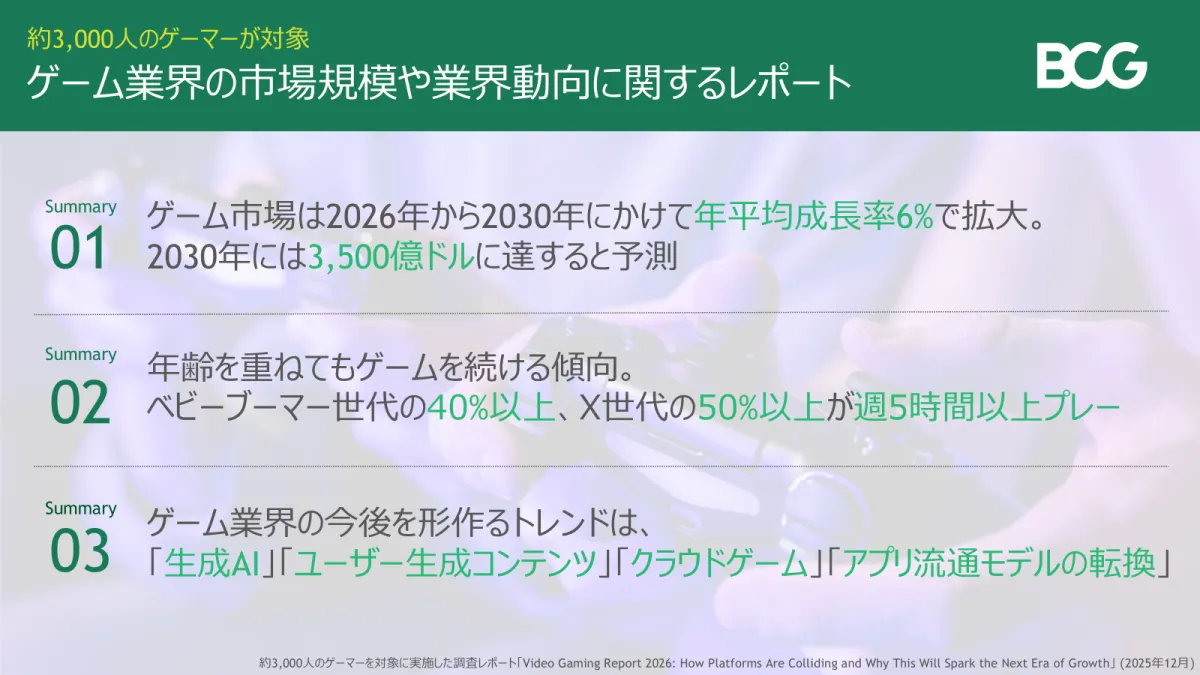
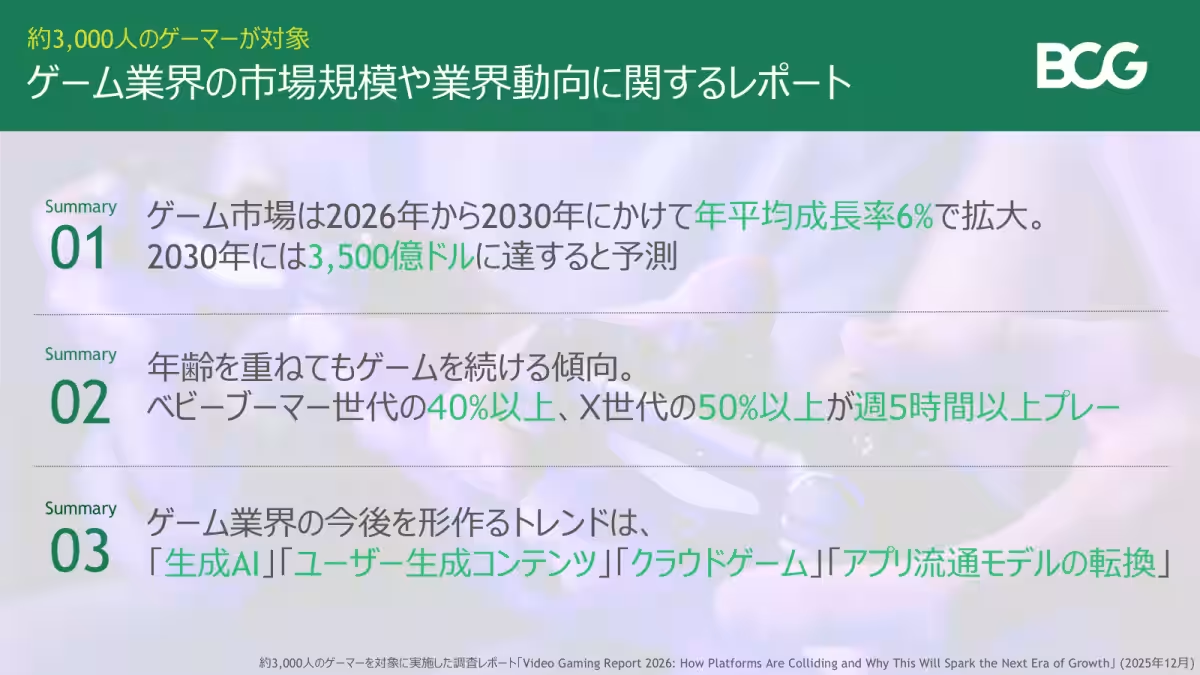
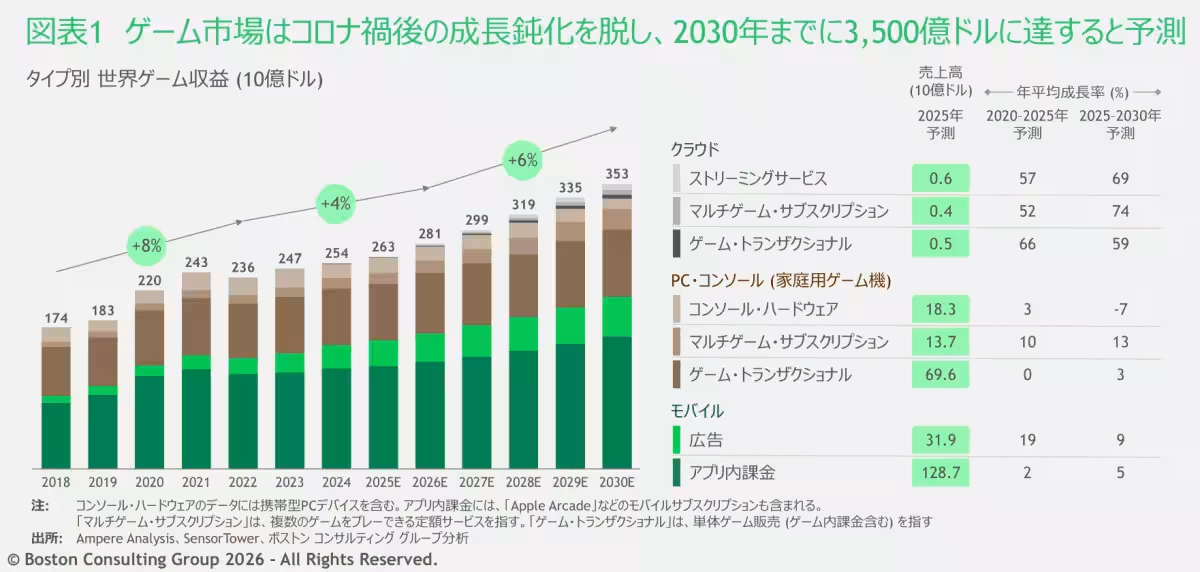
The gaming industry, once hitting a stagnation phase due to the pandemic, is poised for a monumental resurgence. According to a new report by the Boston Consulting Group (BCG), titled "Video Gaming Report 2026: How Platforms Are Colliding and Why This Will Spark the Next Era of Growth," the global gaming market is set to expand at an average annual growth rate (CAGR) of 6%. This robust growth trajectory will see the industry's value soar to an impressive $350 billion by 2030.
Post-COVID Recovery and Growth Trends
The BCG report highlights that the recovery phase of the gaming market will peak between 2026 and 2030, achieving a significant turnover. Specifically, the anticipated distribution of revenues by game type for 2025 indicates that mobile gaming will dominate the revenue share, driven by in-app purchases and advertisements. Although cloud gaming may currently generate lower revenues, it is expected to experience remarkable growth—propelled by subscription models that allow players to enjoy multiple games for a fixed fee. This segment is anticipated to expand at a staggering 74% CAGR from 2025 to 2030. In contrast, growth in the PC and console sectors appears limited, particularly in the console market where hardware sales are projected to decrease by 7%.
Gaming Beyond Age and Economic Challenges
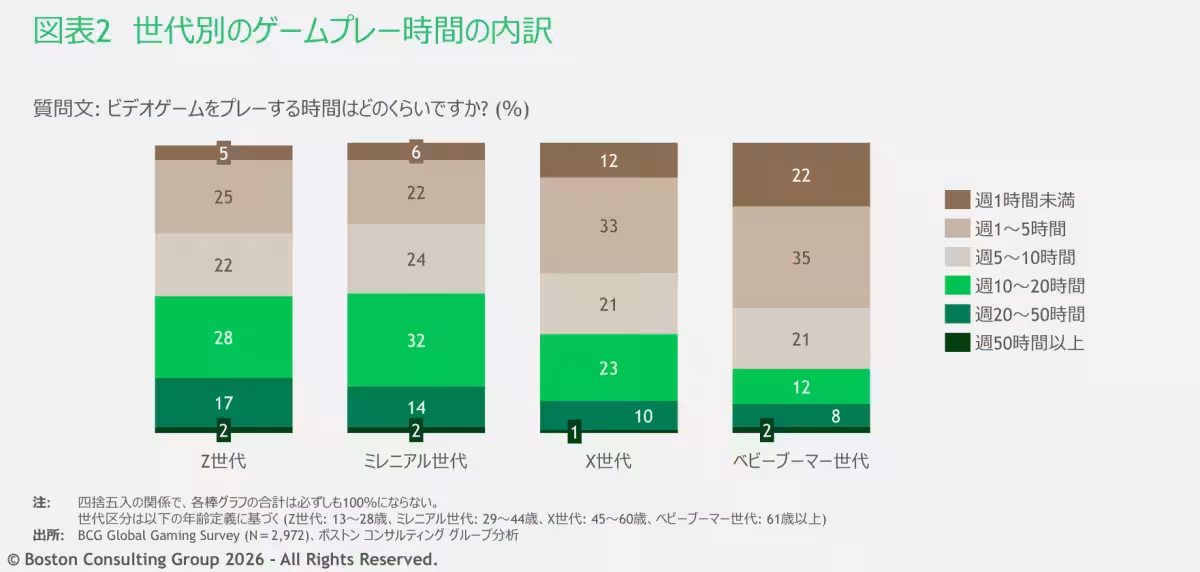
Interestingly, the report uncovers a trend where gaming is becoming increasingly popular among older demographics. Survey results revealed that over 55% of respondents reported an increase in their gaming time over the past six months. Among these players, more than 40% of Baby Boomers (ages 61 and above) and over 50% of Generation X (ages 45-60) are gaming five hours or more each week. Furthermore, many parents are introducing their children to gaming at an early age, with roughly 44% claiming their kids started gaming before the age of five. However, financial constraints are a concern for many gamers; approximately 49% expressed they wait for discounts before making a purchase, while 31% indicated they would delay purchases if prices rose.
Four Trends Shaping the Future of Gaming
BCG's report identifies four key trends that are set to shape the gaming industry in the coming years:
1. Harnessing Generative AI: The report states that around 7,300 games have publicly adopted AI, with an estimated 50% of game studios integrating it into their development process. AI is utilized not only for enhancing programming and automating quality assurance but also for delivering personalized gaming experiences based on players' choices.
2. Rise of User-Generated Content (UGC): UGC is rapidly evolving into a creator economy, where individuals can create and monetize content. By 2025, it's estimated that payments to creators from titles like Roblox and Fortnite will exceed $1.5 billion. Although over 40% of survey respondents consumed more UGC compared to the previous year, the actual creation of this content is done by only 10-15% of respondents.
3. Expansion of Cloud Gaming: About 60% of survey participants have experienced cloud gaming, with around 80% reporting a positive experience. However, regular engagement remains low, with only 27% of gamers using cloud services frequently. Revenue in cloud gaming is projected to skyrocket from around $1.4 billion in 2025 to an astounding $18.3 billion by 2030, with user numbers expected to surpass 50 million.
4. Transformation of App Distribution Models: Advances in regulatory frameworks and judicial decisions are opening mobile app stores that were previously closed off, allowing developers to distribute and monetize games through alternative channels. The report projects that in-app purchases in mobile gaming will reach approximately $130 billion in 2025, accounting for nearly half of the global gaming market. About one-third of adults surveyed, along with 40% of younger audiences, reported having purchased through developer-operated web-based app stores.
According to Ernesto Pagano, Managing Director & Partner at BCG Düsseldorf and co-author of the report, he anticipates a significant surge in both gaming content and players over the next five years. He emphasizes that developments in cloud gaming, UGC, AI, and app distribution models will structurally alter game development and distribution. Gamers are likely to seek fresher experiences, active communities, and the freedom to play across devices and locations. Those game studios that embrace these changes stand to shape the future of gaming effectively.
Conclusion
The findings from the BCG report not only highlight the recovery of the gaming sector post-pandemic but also reveal the transformative trends that will redefine how games are developed and consumed. As the industry moves toward 2030, it presents vast opportunities for innovation and growth, displacing traditional norms and paving the way for a more inclusive and engaging gaming experience.
- - Report: "Video Gaming Report 2026: How Platforms Are Colliding and Why This Will Spark the Next Era of Growth"
- - Contact for Media Inquiries: Hirohisa Ichikawa, Managing Director & Partner, BCG Japan
If you would like to know more about the continuous growth and innovation in the gaming industry, please visit BCG’s official website.
Topics Entertainment & Media)
【About Using Articles】
You can freely use the title and article content by linking to the page where the article is posted.
※ Images cannot be used.
【About Links】
Links are free to use.