



Check Point Research Reports Major Cyber Threats and Trends for February 2026
Cyber Threat Landscape in February 2026
Check Point Research has recently published its findings on global cyber threats for February 2026, signaling alarming trends yet again. Despite a temporary dip in ransomware attacks, the overall number of cyber attacks has reached a near-record level, indicating a worrisome status quo for organizations worldwide.
Statistics Overview
In February 2026, the average number of cyber attacks per organization rose to 2,086, reflecting a 9.6% increase compared to the same month last year, although it showed a nominal decrease of 0.2% from the previous month. This trend indicates that cyber threats have transformed from sporadic surges into a persistent challenge that organizations must confront continuously.
Ransomware Activity
Interestingly, ransomware activities showed signs of slowing down compared to the previous year. However, the surge in automation and digitization, alongside the risks associated with enterprises' use of generative AI, means that exposure to threats remains high. This underlines the ongoing risk companies face despite a temporary reprieve.
Most Targeted Sectors in February
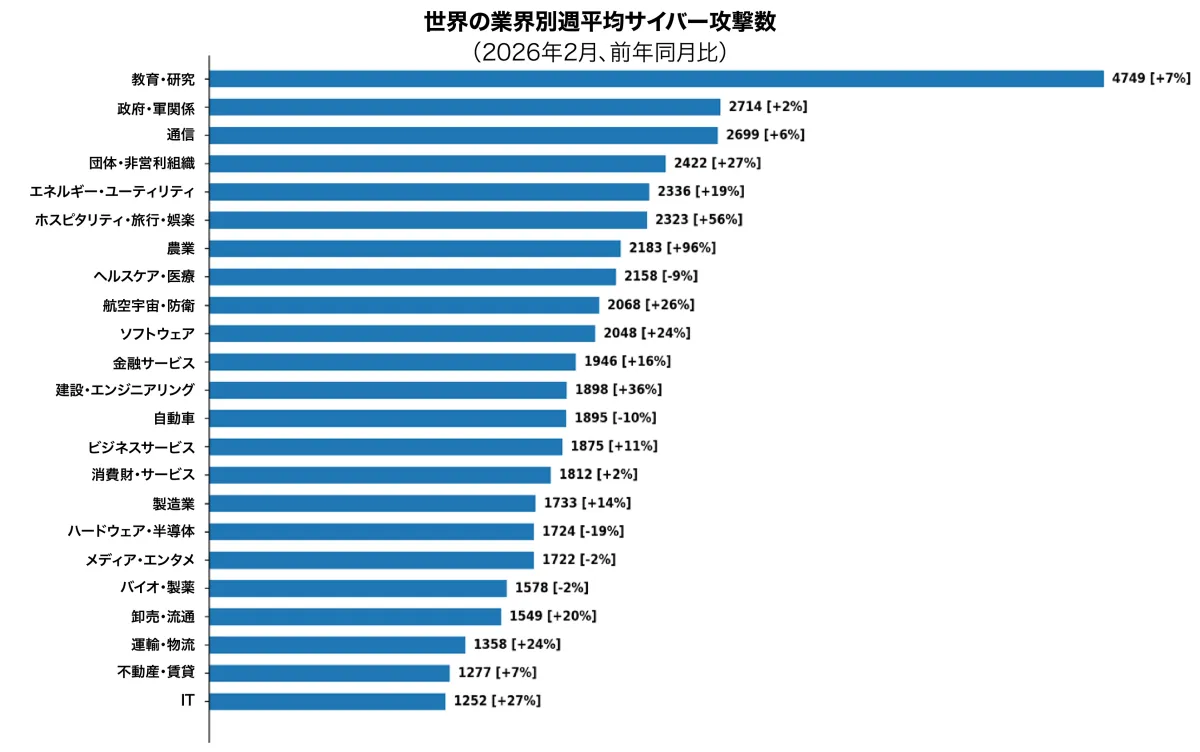
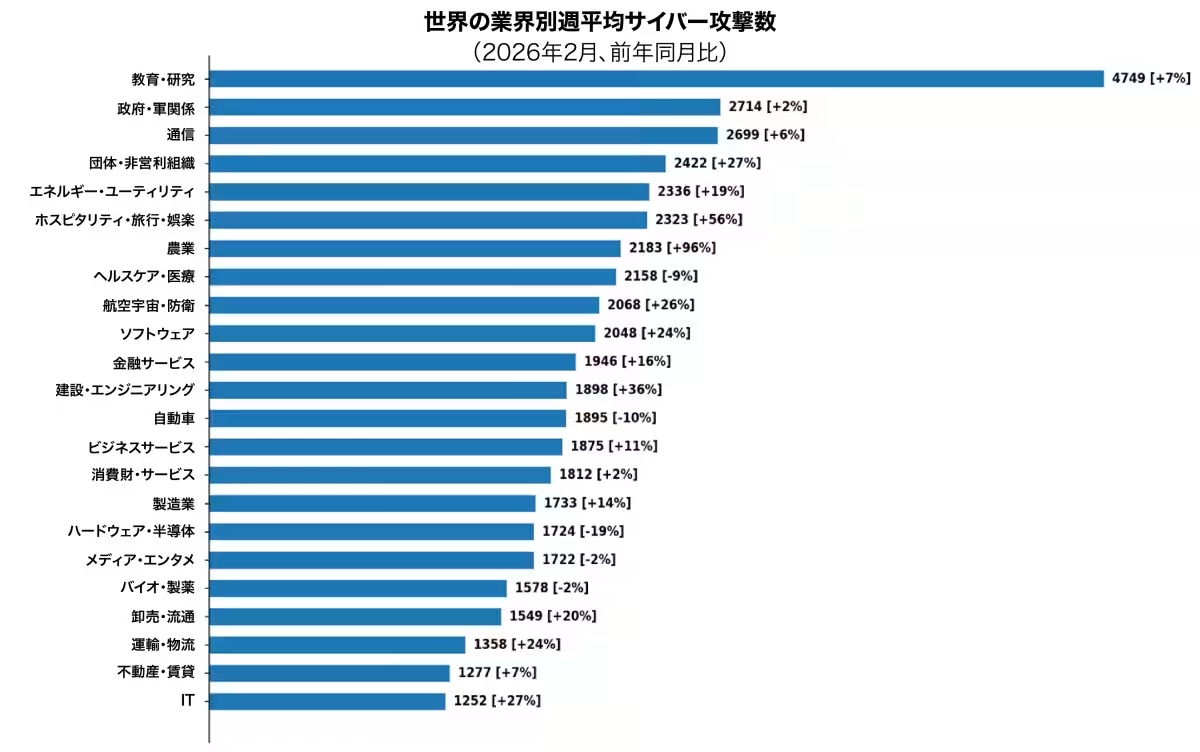
The report indicates that the education and research sector was the most frequently targeted, experiencing an average of 4,749 attacks per organization weekly—a 7% increase year-on-year. Factors contributing to this elevated threat level include a vast user base, open access environments, and limited security resources.
Following closely was the government and military sector, with an average of 2,714 weekly attacks—a modest 2% increase year-over-year. Despite the slight growth rate, this sector remains a primary target due to its critical public service role and the high value of the data involved.
The telecommunications sector ranked third, facing an average of 2,699 attacks weekly, marking a 6% rise. With the growing prevalence of digital connectivity and cloud services, telecom operators are pivotal targets for attackers aiming to exploit service disruptions.
Geographical Disparities in Cyber Threats
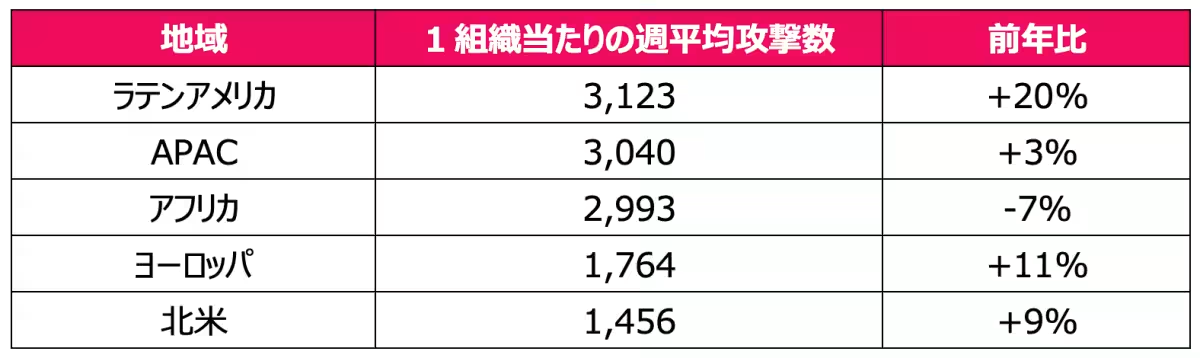
A geographical analysis provides further insights into the concentration of cyber attacks correlating to rapid regional advancements in digitalization. Latin America was significantly affected, with an average of 3,123 weekly attacks per organization, which represents a staggering 20% year-over-year increase. This reflects a heightened interest from attackers toward the burgeoning digital economy in the region.
APAC follows with an average of 3,040 attacks (3% increase), and Africa recorded 2,993 weekly attacks—a 7% decrease. Meanwhile, both Europe and North America experienced rises of 11% and 9%, respectively. This geographical distribution highlights that cyber threats are firmly established as a global challenge pressing in on all regions.
Generative AI and Data Exposure Risks
The integration of generative AI in corporate settings has introduced serious data leak risks. In February, alarming statistics emerged, revealing that one in every 31 AI prompts posed a substantial risk of disclosing confidential data. A staggering 88% of organizations regularly using generative AI tools reported experiencing impacts due to data privacy issues. Individual users generated an average of 62 prompts monthly, although total prompts showed a slight decrease from January, reinforcing that high-risk interactions continue without adequate governance or visibility.
Ransomware Shift and Attack Concentration
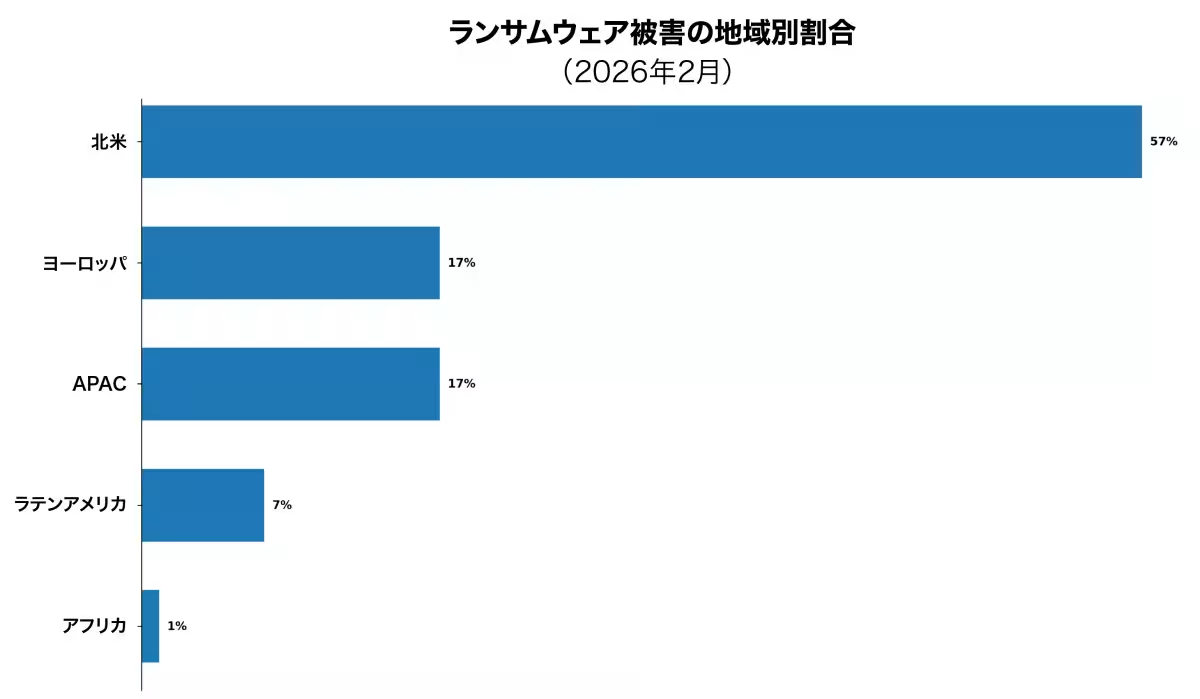
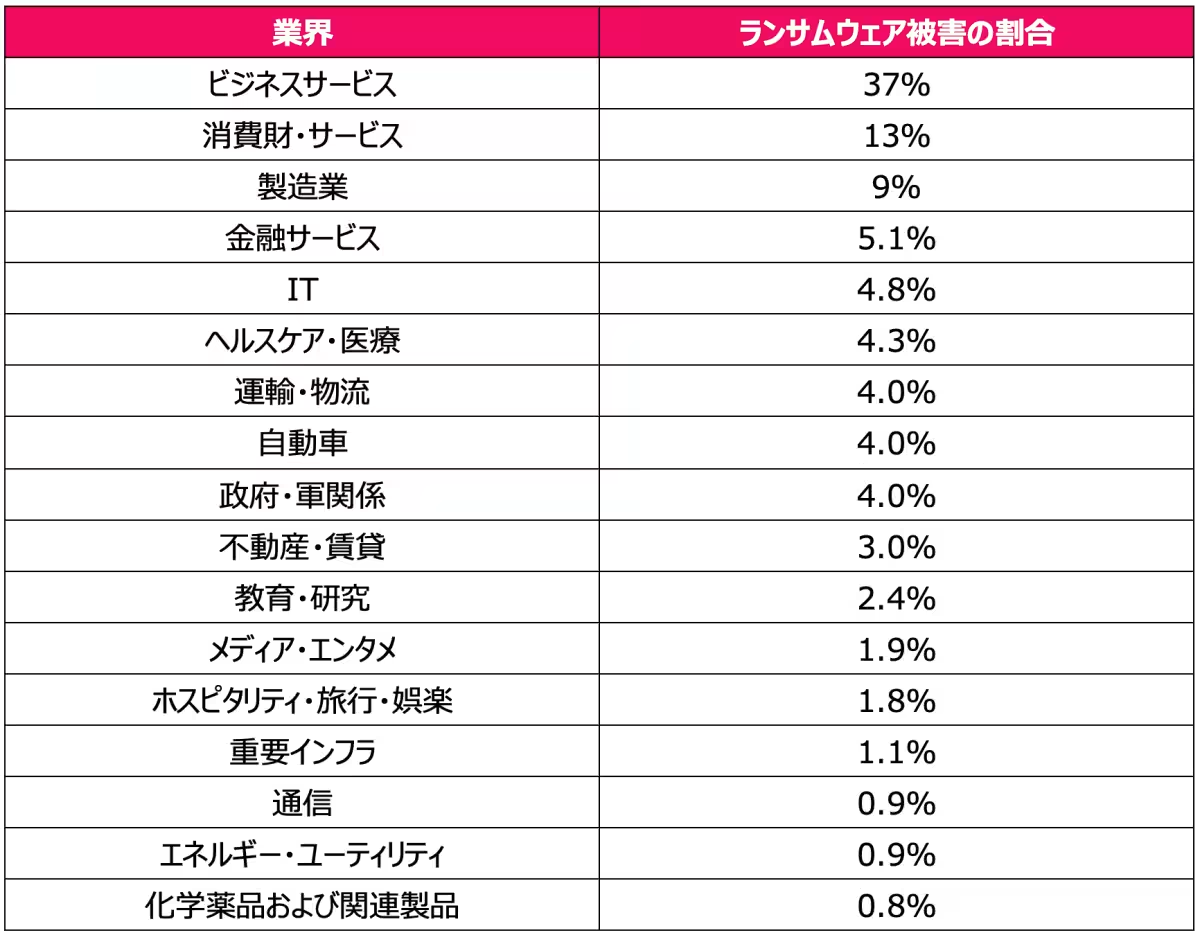
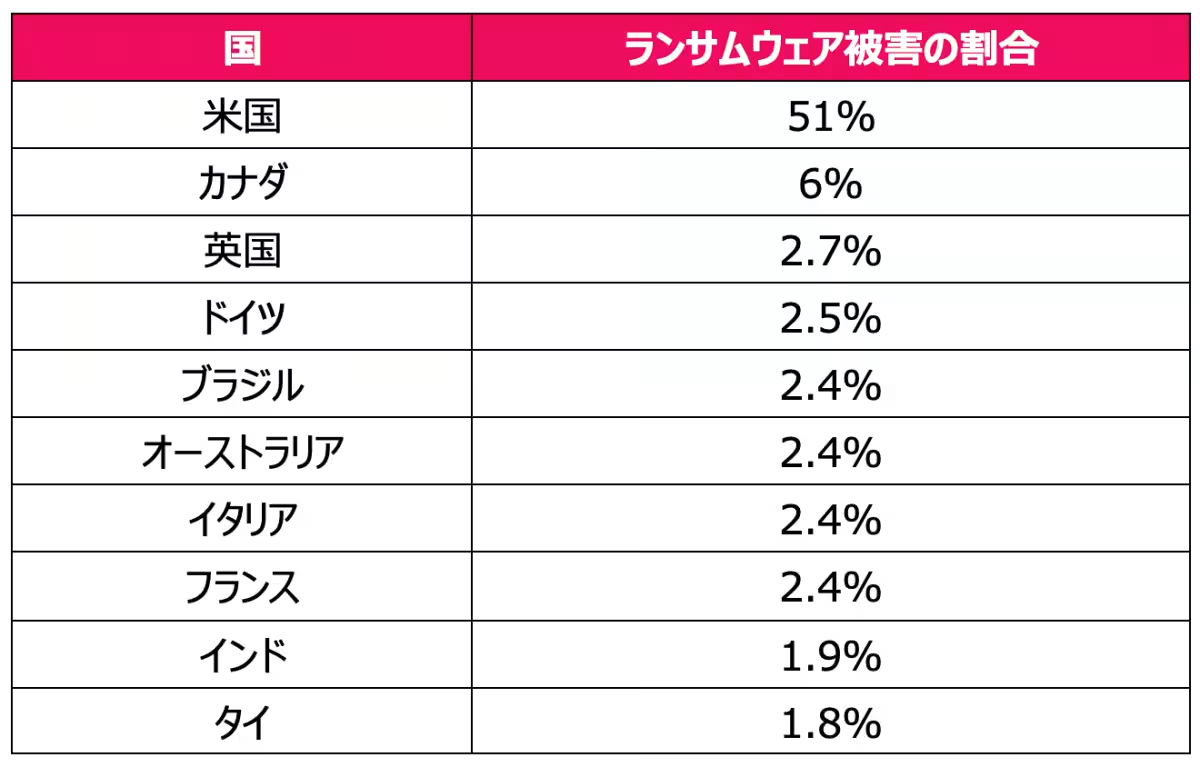
Solar ransomware incidents reported in February numbered 629, reflecting a significant 32% decrease year-on-year, largely due to the previous year's notorious Clop ransomware campaigns. Excluding these anomalies, ransomware activity remained relatively stable, evident in the 57% of incidents concentrated in North America; Europe and APAC accounted for 17% each. This trend signifies that attackers continue to target geographically lucrative regions with dense digital infrastructures.
Key Ransomware Groups: Qilin Remains Prevailing
Despite a fragmented ransomware ecosystem, some groups maintain significant influence over operations. Notably, Qilin led global ransomware activities, accounting for 15% of reported attacks. Moreover, the long-term campaign exploiting Oracle E-Business Suite vulnerabilities established Clop as the second-most dominant threat, while The Gentlemen saw a significant increase, marking an 11% share.
In total, 49 different ransomware groups operated against organizations worldwide in February, illustrating the broad and ongoing nature of these cyber threats.
Conclusion from Check Point
The data from February 2026 illustrates that cyber threats are no longer sporadic but rather an ongoing, high-frequency risk facing organizations. While ransomware incidents may have temporarily subsided, the overall attack levels remain concerning. As digital landscapes evolve alongside the adoption of generative AI, organizations must enhance threat intelligence strategies, implement integrated defenses, and prioritize security measures to combat these persistent threats effectively. The evolution of attackers demands that a proactive approach replaces the traditional reactive models, empowering organizations to stay one step ahead in defense strategies.
For additional insights and updates, visit Check Point Research.
Topics Other)
【About Using Articles】
You can freely use the title and article content by linking to the page where the article is posted.
※ Images cannot be used.
【About Links】
Links are free to use.