



Development of Compact Sensor for Rapid Detection of Cancer Markers for Home Medical Monitoring
Introduction
The detection of cancer markers has been a crucial element in the early diagnosis and monitoring of cancer treatments. Traditional methods rely on larger analytical machines and complex procedures that can be impractical for at-home use. However, advancements in sensor technology are changing the landscape.
Overview of HSP90
Heat Shock Protein 90 (HSP90) is a type of molecular chaperone that assists other proteins in proper folding within the cells. Although it is present in normal cells, its activity increases significantly in cancer cells. Research has shown that the concentration of HSP90 in the blood is elevated in cancer patients. Therefore, HSP90 has gained attention as a versatile cancer marker that can aid in the early detection and treatment monitoring of a wide variety of cancers.
Introducing the New Sensor
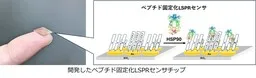
Recently, the Tokyo Metropolitan Institute of Industrial Technology (TMITI) has developed a groundbreaking sensor that detects HSP90 exclusively. This innovative method involves fixing a peptide, acting like a key in a lock, onto the surface of a specialized sensor known as an LSPR (Localized Surface Plasmon Resonance) sensor, which can detect material adhesion via light.
With this clever approach, a sensor chip measuring just 8mm square can now detect HSP90, making the measurement process significantly easier compared to previous methods. This innovative development is set to revolutionize the way cancer is detected and monitored in home healthcare settings.
Key Features of the New Sensor
1. Compact and Simple
The sensor's size, at just 8mm square, allows for quick measurements without the need for complex operations or bulky equipment.
2. High Sensitivity
The detection limit of this sensor stands at 0.75 μg/mL, a level that effectively corresponds to the blood concentration range found in cancer patients (which can reach several hundred μg/mL).
3. Future Potential
There is potential for this sensor technology to be developed into a handheld device, facilitating early detection and treatment monitoring of cancer right from home.
Publication Details
The findings related to this innovative sensor were published in the journal "Plasmonics" on November 13, 2025. The research paper is titled "Peptide-Functionalized Localized Surface Plasmon Resonance (LSPR) Sensor for Label-Free Detection of HSP90" and is co-authored by Kazuto Mochizuki, Yuki Takimoto, Tomoe Nakagawa, and responsible author Tomoko Tsukise. For those interested, the paper can be accessed via DOI: 10.1007/s11468-025-03301-z.
Collaboration Opportunities
TMITI is keen to promote the social implementation of this technology and is looking to collaborate with companies aiming to commercialize the product. Those interested in exploring this groundbreaking technology further are encouraged to reach out for more information.

Topics Health)
【About Using Articles】
You can freely use the title and article content by linking to the page where the article is posted.
※ Images cannot be used.
【About Links】
Links are free to use.