



Heat Aid: A Pioneering System to Prevent Heat Stroke for Firefighters in Fujisawa City
Heat Aid: Enhancing Firefighter Safety in High Temperatures
In recent months, EBP Inc. has completed an important practical study in collaboration with the Fujisawa City Fire Department concerning the development of the "Heat Aid" system, aimed at preventing heat stroke among firefighters. This initiative is particularly significant as workplace safety regulations regarding heat exposure are set to become stricter starting June 1, 2025. The main goal of this study is to bolster the safety management system for firefighters and avoid secondary injuries while they perform their critical duties.
Background and Purpose
Firefighting and emergency response often take place under challenging conditions, especially during the sweltering summer months. Increased workloads due to high temperatures can heighten the risk of heat-related illnesses. In light of the anticipated updates to labor safety laws requiring improved heat countermeasures, the Heat Aid project was initiated to assess and improve conditions for firefighters. Through this practical study, the intent was not only to gather data on heat exposure but also to promote better working environments for these essential service personnel.
Overview of the Experiment
The practical test lasted from June 12, 2025, to September 30, 2025. It was conducted at the Fujisawa City Fire Department, specifically at the Minami Fire Station, involving a total of 13 members from the firefighting, rescue, and emergency medical teams. Using two sensors affixed to the upper arms or forearms of the firefighters, important physiological metrics such as core body temperature, skin temperature, and heart rate were monitored in real time. This data was transmitted to smartphones and stored in the cloud, thereby visualizing heat load levels (the so-called heat zones). The sensors were designed for consistent wear during operational hours, except during bathing periods.
The experiment was made possible through support from Crews Works, a Tokyo-based technology company.
Key Findings
Throughout the study, significant variations in heat load levels were observed among the participating firefighters. Most were able to avoid entering dangerous heat zones, demonstrating the efficacy of the Heat Aid system. The traditional Wet Bulb Globe Temperature (WBGT) index was found insufficient for individual assessments of risk, affirming the need for personalized monitoring through Heat Aid.
Approximately 80% of the firefighters reported that their subjective feelings of heat aligned closely with the measured data, confirming the system's accuracy. Moreover, every participant agreed on the benefit of using the data for heat acclimatization training.
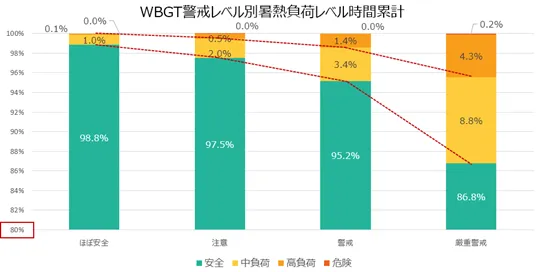
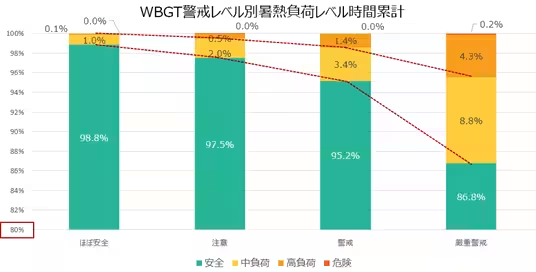
Graphs derived from the experiment showed that high heat load levels—signifying the need for breaks—occurred under all WBGT caution levels. Typically, these elevated levels would not be expected to manifest in environments deemed 'almost safe' during summer months.
Future Directions
Looking ahead, improvements in connection stability and notification features of the Heat Aid system will be prioritized to enhance operational effectiveness. Modifications in armband design will also be sought to ensure comfort over extended wear during intense activities. Significantly, the application of this technology will expand to include location tracking for better safety management of team members during emergencies.
Representative Comments
A spokesperson from EBP expressed confidence in the system's ability to contribute significantly to firefighter safety. They emphasized a commitment to addressing issues and feedback raised during the test, aiming for continual improvements in functionality, technology, and service infrastructure.
Company Information
For press inquiries, contact:
- - EBP Inc.
- - Address: Marunouchi 3-4-1, Chiyoda-ku, Tokyo, Japan, New International Building 6F
- - Email: [email protected]
- - Phone: 03-6421-7168
- - Website: EBP Inc.
Through initiatives like Heat Aid, EBP Inc. reaffirms its dedication to innovation that safeguards those who protect us.
Topics Health)
【About Using Articles】
You can freely use the title and article content by linking to the page where the article is posted.
※ Images cannot be used.
【About Links】
Links are free to use.