



Unveiling the Characteristics of Lumbar Spondylolysis in Young Soccer Players through MRI and Simple Screening Tests
Introduction
Lumbar spondylolysis is a prevalent spinal condition among adolescent athletes, particularly in sports involving repetitive bending and twisting motions. Early detection and prevention of recurrence are crucial to minimize prolonged activity restrictions. A recent study from Waseda University's Institute of Sport Sciences under the leadership of Dr. Toshiharu Tsutsui investigated this condition in young male soccer players aged 12 to 14.
Study Overview
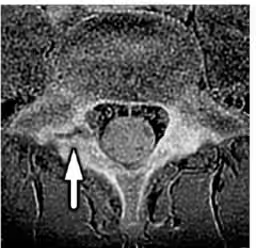
The research aimed to explore the characteristics of unilateral lumbar spondylolysis by examining MRI scans and conducting simple screening tests. Among 107 adolescent male soccer players, 19 were identified with unilateral lumbar spondylolysis using MRI. The research team compared these players with a control group of 19 participants matched by age, height, and weight.
Key Findings
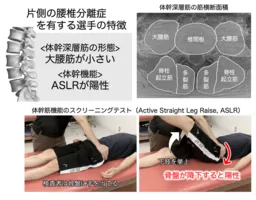
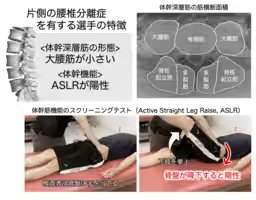
The study revealed that the psoas major muscle on the affected side of players with lumbar spondylolysis was approximately 12% smaller than that of the control group. Additionally, the Active Straight Leg Raise (ASLR) test, which assesses lumbar stability, indicated that the pelvis on the side of the raised leg tended to drop in players with spondylolysis. Out of 16 positive ASLR tests, 13 were associated with diagnosed spondylolysis.
These findings suggest observable differences in deep trunk muscle morphology and pelvic control in athletes suffering from this condition. By combining MRI evaluations with simple screening tests, the study provides an effective approach for identifying potential issues that might otherwise be overlooked in sports settings.
Implications for Sports Training
The implications of this study are significant for sports coaches and trainers. Recognizing the characteristic asymmetry of the deep trunk muscles and the stability issues during leg-raising actions can facilitate early intervention strategies. By incorporating these findings into training regimens, sports professionals can better support the development and rehabilitation of young athletes.
The research aims to standardize assessment methods for timely diagnosis and personalized training interventions, focusing on minimizing the risks of lumbar spondylolysis.
Future Directions
This cross-sectional study lays the groundwork for further investigation into the causes of psoas muscle size variation and its effect on lumbar spondylolysis. Future research should explore dynamic imaging during athletic activities to understand how movement influences lumbar stability and muscle activity.
Conclusion
Lumbar spondylolysis poses a significant concern for youth athletes, often leading to extended periods away from sports. By effectively utilizing MRI and simple screening tests, coaches and healthcare providers can gain insights into specific muscular imbalances and stability issues associated with this condition. The goal is to promote early detection and individualized support to aid in the athletes' recovery and return to play.
Related Studies
The published research will be featured in BMC Sports Science, Medicine and Rehabilitation on November 21, 2025. This study contributes to the growing body of knowledge regarding the prevention and management of sports-related injuries in adolescent athletes.
Key Terms
- - Lumbar Spondylolysis: A stress fracture in the lumbar spine, commonly seen in adolescent athletes due to repetitive strain.
- - MRI: A diagnostic technique that uses magnetic fields to visualize soft tissues, helpful in diagnosing conditions like spondylolysis.
- - Psoas Major: A deep muscle of the trunk crucial for hip and core stability, often affected in lumbar injuries.
- - ASLR (Active Straight Leg Raise): A practical screening test to evaluate pelvic and lumbar stability by observing pelvic drop during leg movement.
Topics Health)
【About Using Articles】
You can freely use the title and article content by linking to the page where the article is posted.
※ Images cannot be used.
【About Links】
Links are free to use.