



Preserving Tradition: Donation of Furo Bonsai Clones to Toyokuni Shrine
Preserving Tradition: Donation of Furo Bonsai Clones to Toyokuni Shrine
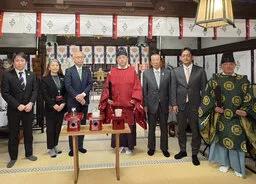
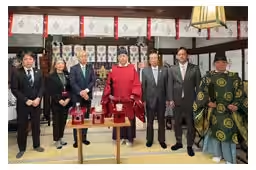
On February 6, 2023, the Nagahama Tourism Association, led by President Kazuhiko Maekawa, officially donated cloned Furo bonsai saplings to the Toyokuni Shrine in Nagahama City, Shiga Prefecture. These saplings, cultivated through tissue culture by Sumitomo Forestry Co., Ltd., were derived from the beloved and ancient Furo bonsai tree, which is estimated to be between 350 to 400 years old. This donation represents a commitment to preserving and passing on the historical significance of the Furo bonsai for future generations.
Background of the Donation
Nagahama City is historically renowned as the stronghold of Toyotomi Hideyoshi, a prominent warlord in Japanese history. The timing of this donation coincides with the upcoming NHK historical drama titled Toyotomi Brothers, set to air in January 2026, which highlights the city’s rich heritage. February 6 is also uniquely designated as “Furo Day,” marked by the pun on the word “Furo” (不老), emphasizing longevity and continuity.
The donation ceremony honors the Toyokuni Shrine, which has watched over the community for centuries. The wish is to ensure peace, prosperity, and the continuation of cultural legacies.
About the Furo Bonsai Saplings
The Furo bonsai tree holds significant historical value and has been cherished by the locals of Nagahama for many years due to its grandeur and deep-rooted connection to the community. Recently, however, a virus known as the Plum Pox Virus (PPV) has threatened various members of the Rosaceae family, including plums and peaches, leading to a nationwide emergency response by governmental agriculture departments. Recognizing the urgent need to protect this valuable bonsai, Sumitomo Forestry began tissue culture propagation of the Furo tree in March 2018, and successfully developed saplings by October 2020.
The Process of Tissue Culture
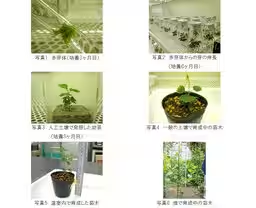
Sumitomo Forestry has pioneered techniques in tissue culture, grafting, and seed propagation to cultivate successor trees for numerous historical and valuable trees managed by shrines and municipalities. The tissue culture process involves several meticulous steps:
1. Collecting winter buds and extracting the shoot apex tissue under a microscope.
2. Placing the shoot apex in a specialized culture medium designed for the Furo bonsai to promote rapid growth, resulting in clusters of buds.
3. Growing these bud clusters in solid medium to develop into shoots.
4. Once shoots reach sufficient length, they are separated and planted in a rooting solution for about four weeks, which leads to the complete regeneration of individual saplings under sterile conditions.
5. Acclimatizing these saplings in a greenhouse before final outdoor cultivation.
6. Allowing the saplings to flourish in their growth environment until they reach a suitable size for donation.
Toyokuni Shrine
Established in 1600 to honor the legacy of Toyotomi Hideyoshi, Toyokuni Shrine has been a revered site for centuries. It serves as a spiritual haven for those wishing for success and prosperity, attracting numerous visitors during events like Toka Ebisu and the Toyo-san Festival.
Sumitomo Forestry Group is committed to sustainable forestry, wood material manufacturing and distribution, residential construction, and biomass energy solutions. Harnessing their extensive value chain, known as the “Wood Cycle,” they provide integrated services related to forests, timber, and greenery, addressing a wide range of stakeholder needs. The organization continues to support local governments and private enterprises in managing forests, biodiversity, and environmental conservation.
Future Initiatives
With emerging threats from harmful viruses and climate change affecting the growth of plum trees, this project is crucial for safeguarding valuable cultivars. Sumitomo Forestry will persist in its efforts to nurture and propagate celebrated local trees, not just limited to plums and cherries but also encompassing other cherished species across various regions.
For inquiries concerning the propagation of historical and treasured trees across Japan, please contact the Tree Utilization Division at the Forest and Greening Research Center (website link).


Topics Other)
【About Using Articles】
You can freely use the title and article content by linking to the page where the article is posted.
※ Images cannot be used.
【About Links】
Links are free to use.