



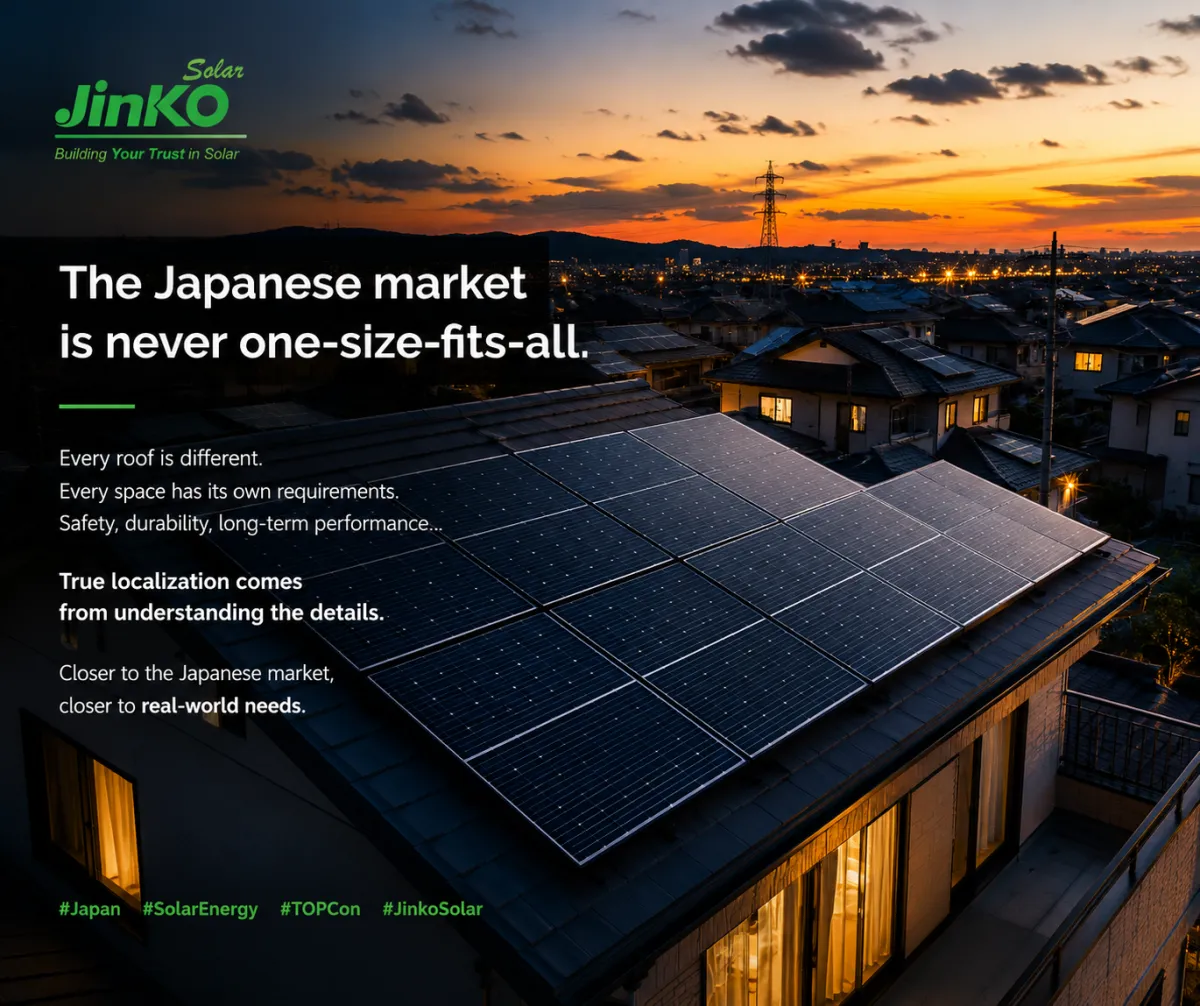
Jinko Solar's Unique Approach to the Japanese Market: Customization and Adaptability
Jinko Solar's Unique Approach to the Japanese Market
Jinko Solar, a leading global solar company, has firmly established itself in the Japanese market for several years, achieving the top shipment volume from 2019 to 2025 for seven consecutive years. Unlike many other markets worldwide, Jinko acknowledges that Japan cannot be approached with a single product that fits all scenarios.
Understanding the Japanese Market
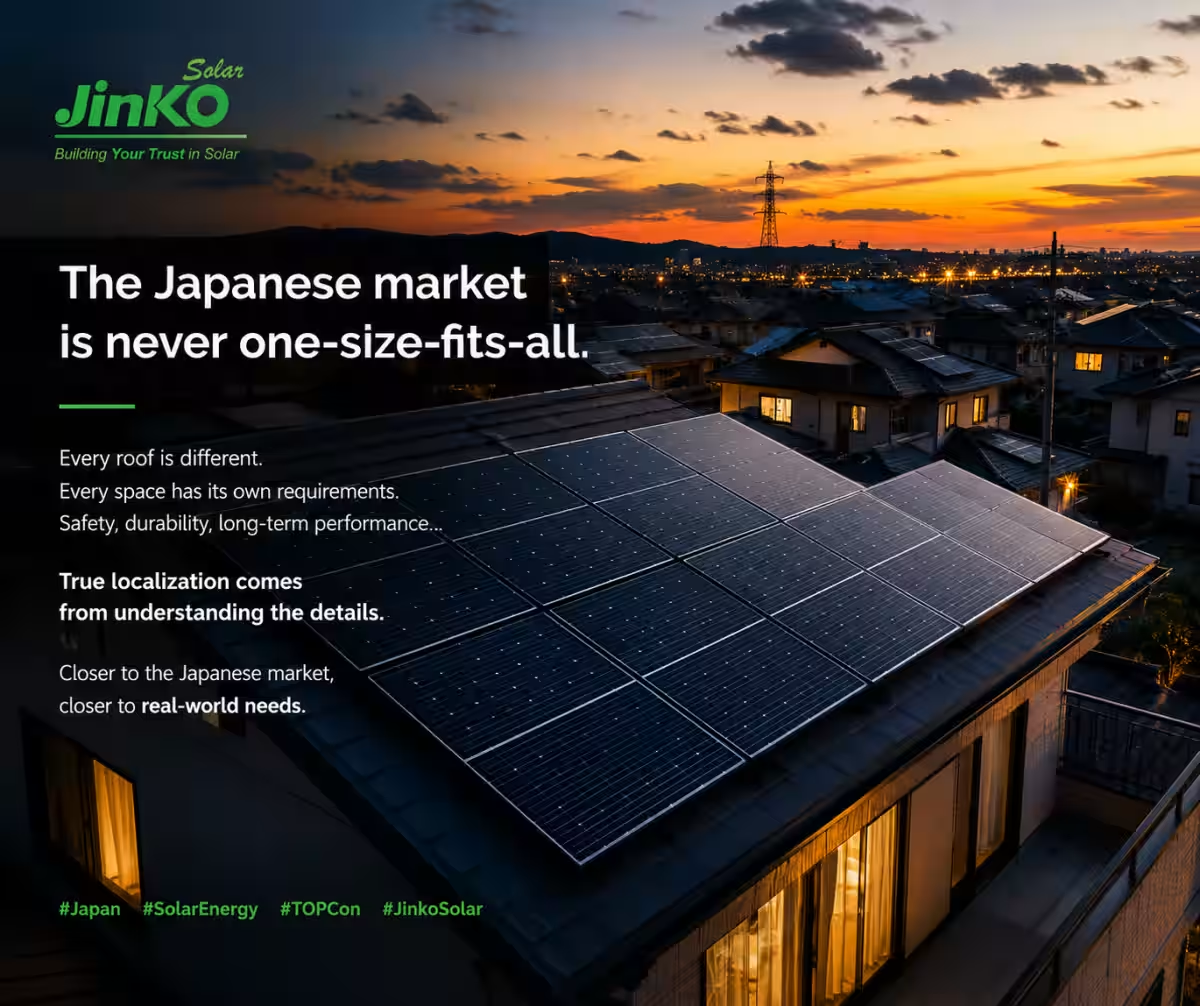
The competition in the Japanese solar market transcends simple output battles. Here, the ability to adapt to actual usage environments takes precedence. The complexity of residential roof shapes, unique urban architectural structures, varying weather conditions including cloudy days, safety requirements, long-term reliability, and harmonious integration with the landscape have all spurred a move towards a more nuanced and customization-driven market.
To respond to these diverse needs, Jinko Solar has been continuously launching a variety of customized products and solutions. These include low-current modules, lightweight modules, anti-glare modules, and gutter-equipped modules, all designed to enhance adaptability in residential, industrial, and specialized applications.
The Rise of the Repowering Market
As Japan's initial Feed-in Tariff (FIT) projects reach their renewal period, the repowering market is witnessing rapid expansion. Jinko Solar leverages the advantages of its N-type TOPCon technology, which boasts excellent low-light performance, bifacial generation capabilities, and long-term reliability, to provide upgraded solutions that offer higher efficiency and greater stability tailored for the Japanese market.
To date, Jinko Solar's Tiger Neo series has surpassed cumulative global shipments of 220 GW, making it one of the leading N-type module series worldwide. The localization of product design, localized service systems, and long-term partnerships further strengthen Jinko's ties to the Japanese market.
Commitment to Quality and Value
Vicky Sun, General Manager of Jinko Solar's North Asia region, emphasizes the importance of adapting to local needs. She states, “In the Japanese market, there are very high demands for product details, long-term reliability, and tangible usage value. We believe localization should not just be a sales activity, but should be reflected in product design and service systems.”
Moving forward, Jinko Solar aims to be deeply rooted in the Japanese market, offering products and solutions that resonate more closely with customer needs, thereby providing long-term value for Japan's energy transition.
In conclusion, Jinko Solar's approach to customization and adaptability is not merely a business strategy, but a commitment to enhancing the efficiency and effectiveness of solar energy solutions in Japan. With a focus on meeting high expectations and fostering strong partnerships, Jinko Solar is well-positioned for continued success in this unique market.
Topics Energy)
【About Using Articles】
You can freely use the title and article content by linking to the page where the article is posted.
※ Images cannot be used.
【About Links】
Links are free to use.