



New Dataset from SCUEL Provides Insight into Employment Support for Individuals with Disabilities
SCUEL Launches Innovative Datasets to Visualize Employment Support Outcomes
In a significant step towards enhancing employment support services for individuals with disabilities, Mi Company, based in Minato, Tokyo, has introduced two comprehensive datasets: the "Retention and Transition Rate Dataset" and the "Employment-Related Compensation Dataset." These datasets aim to provide a transparent look at the achievements and economic realities within the domain of employment support services under the disability welfare sector.
Understanding the Datasets
The new datasets are structured to allow for aggregation and analysis by prefecture and organization, covering vital metrics such as transition rates, retention rates, and wage levels for both Type A and Type B employment support services. A free report has also been made available, visualizing some of the data to serve as a reference for understanding trends and outcomes based on region or organization.
Through the clear visualization of support outcomes, this data foundation holds considerable social significance for various actors, including businesses focused on supporting employment for people with disabilities, governmental bodies, research institutions, and financial organizations.
The Socioeconomic Context
As the number of employed individuals with disabilities continues to rise and the demand from employers grows, the usage of employment support services has also seen an uptick. However, several pressing issues have surfaced:
- - A notable proportion of individuals securing general employment are leaving their jobs within six months to one year.
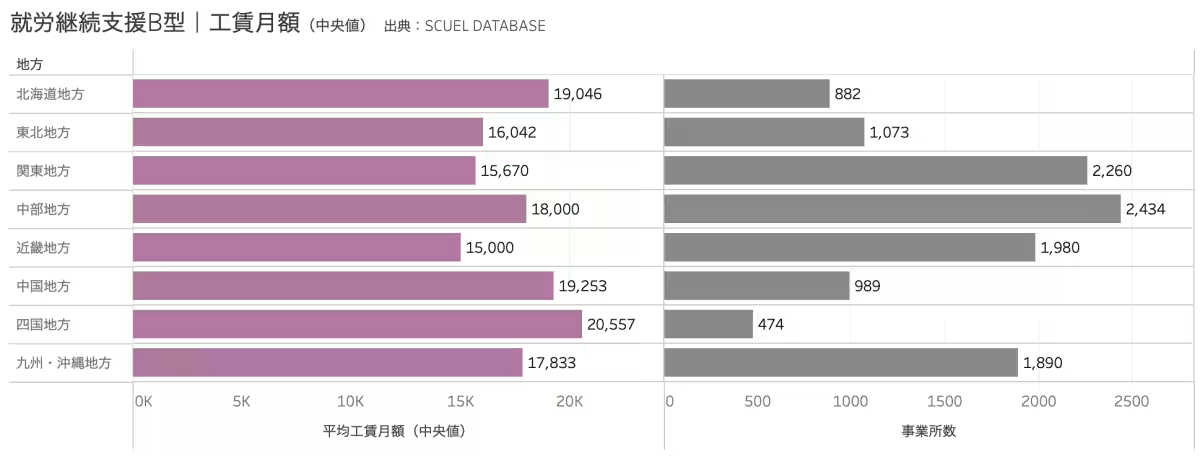
- - The average monthly wages in Type B workplaces hover around 17,000 yen, far from achieving economic independence.
- - There are significant discrepancies in achievement levels across different regions and organizations, despite the presence of a uniform support system.
Given these challenges, a unified dataset capable of comparing and validating support outcomes had been lacking until the introduction of SCUEL's recent offerings. By addressing both the real voices from the field and the gaps in the current system, SCUEL has developed this dataset as a social data foundation that sheds light on the "beyond support" aspect of employment.
Key Insights from the Data
The following insights provide a comparative look at trends across different services while accounting for varying objectives and target groups:
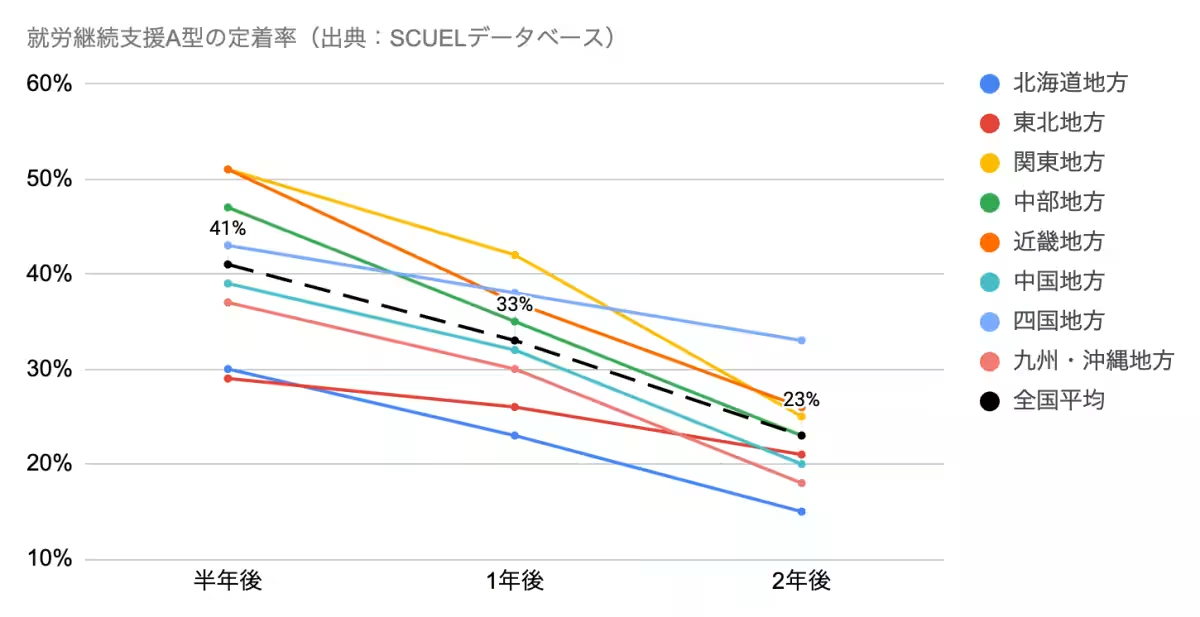
- - Type A Employment Continuation Support: The retention rate nationally drops from 41% at six months to 23% at two years. In regions such as Hokkaido and Kyushu, retention rates are below 20%.
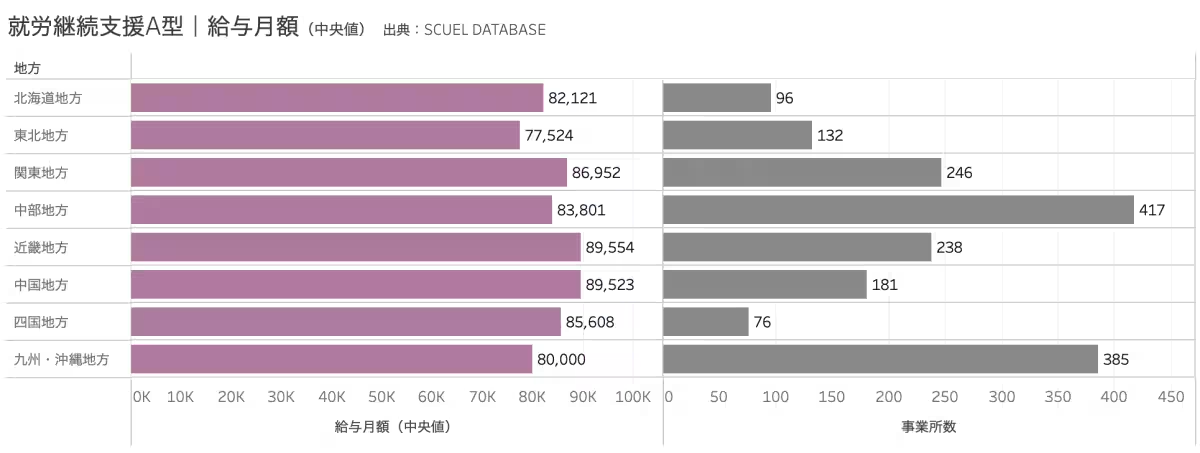
- - Type A Average Salary: In the Tohoku region, the average wage is approximately 8% lower than the national average of 84,000 yen.
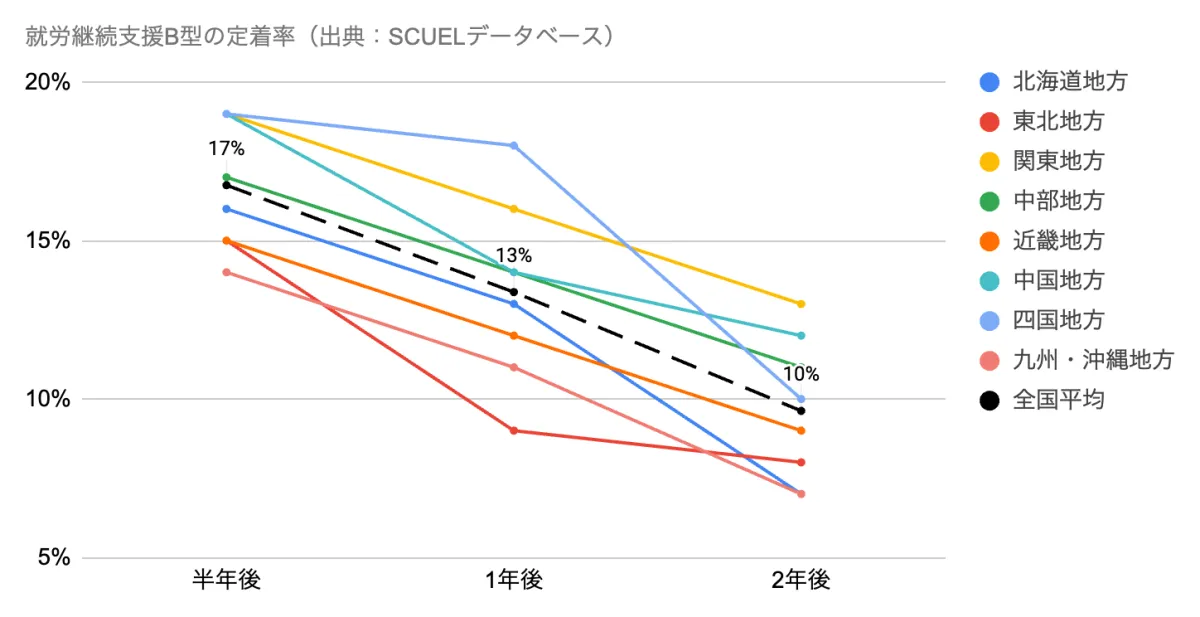
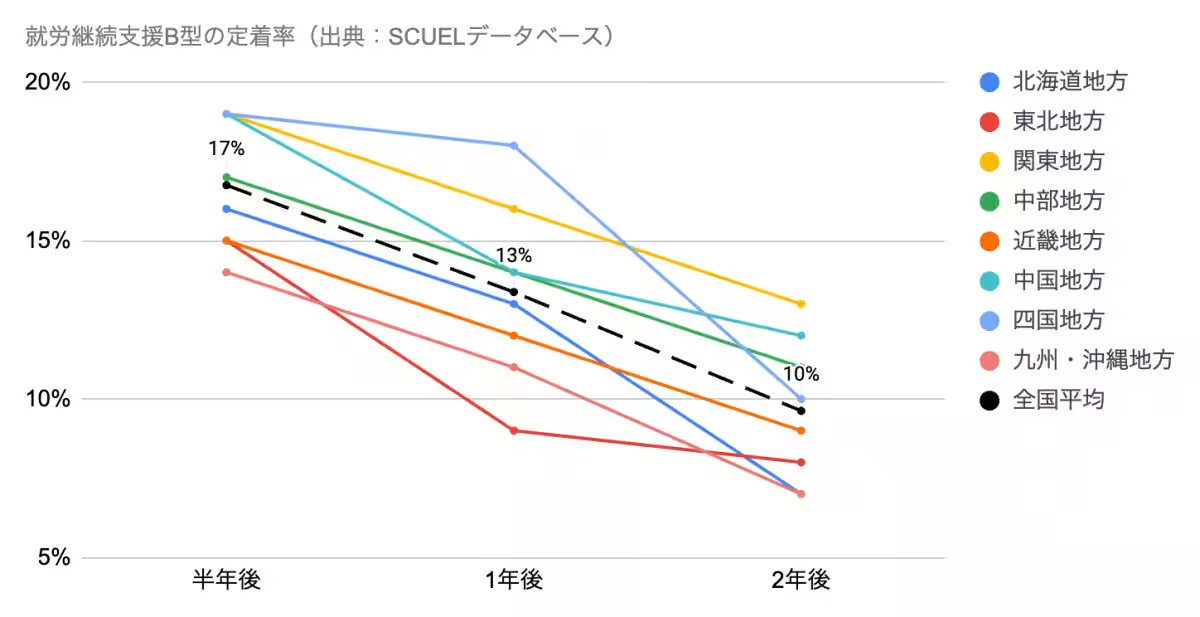
- - Type B Employment Continuation Support: Retention rates overall remain low, with many regions showing retention below 10% at the two-year mark, particularly in the Shikoku area.
- - Type B Average Earnings: In the Kinki region, the average wage is approximately 15% lower than the nationwide average of around 17,600 yen, while Shikoku sees wages about 15% higher.
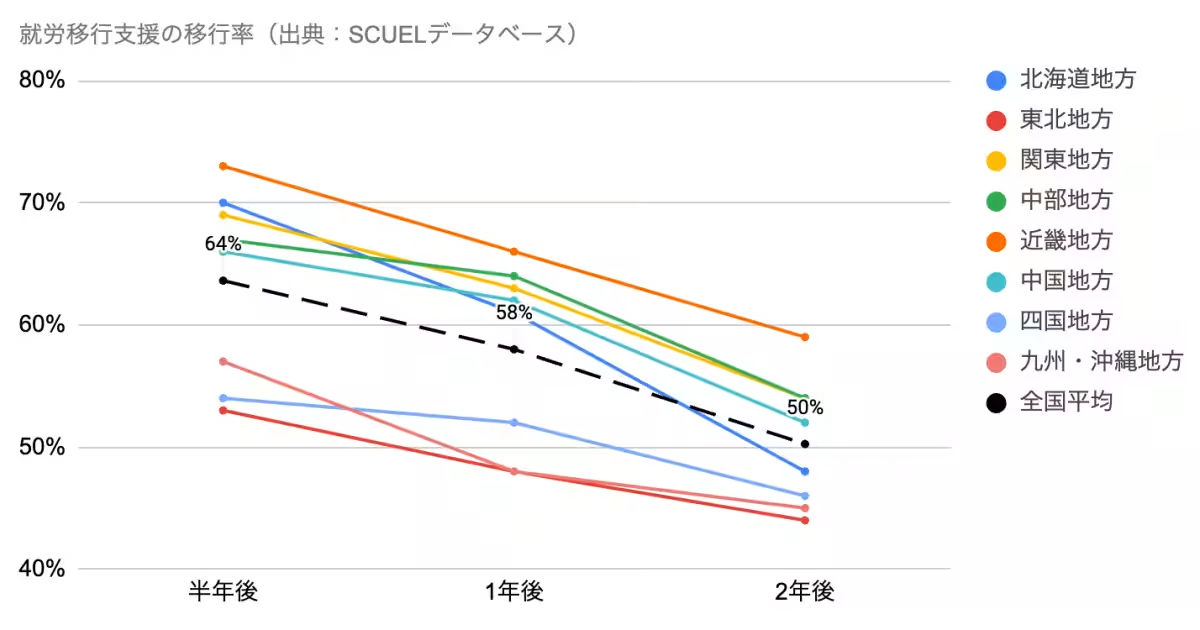
- - Transition Support: Retention rates in regions such as Kanto, Kinki, and Chubu are relatively stable, with retention exceeding 50% at two years.
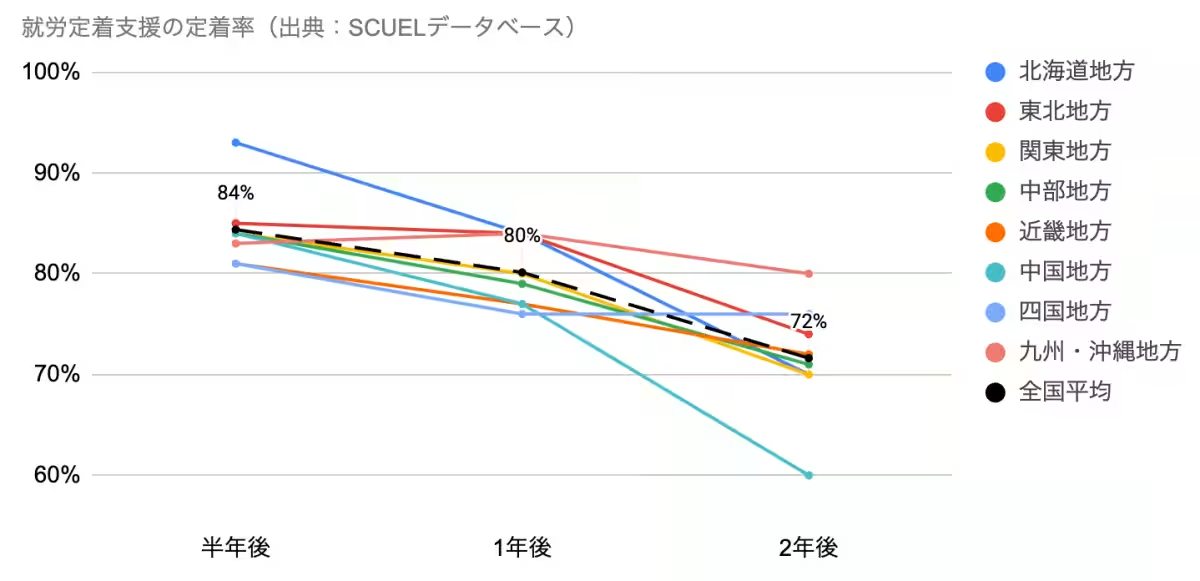
- - Continued Support: Many regions maintain retention rates above 70% at the two-year mark, with Kyushu and Okinawa achieving rates as high as 80%.
Overview of the Data Sets
1. Retention Rates Dataset: This dataset clarifies how long employees continue in roles post-transition into general employment, providing detailed metrics such as:
- Annual transition numbers and rates (over three years)
- Retention counts and rates at various intervals (6 months, 1 year, 2 years, 3 years)
- Retention trends by service type, organization, and prefecture.
2. Employment-Related Compensation Dataset: This dataset assesses whether support services contribute to achieving economic independence through comparisons of:
- Average wages (monthly/hourly) and average working hours for Type A
- Average compensation for Type B including production income and total wages paid.
Regions and organizational financial performances can also be analyzed in depth.
Primary Utilization Scenarios
- - Employment Support Organizations: Compare outcomes across locations, enhance support quality, and design staff evaluation benchmarks.
- - Governmental Bodies: Address regional disparities, provide evidence for subsidy policies, and ensure compensation adjustments.
- - Policy Planning & Research Institutions: Utilize retention rates and wage levels for system reforms and evaluation of programs.
Download Free Reports
A free report detailing retention curves (6 months to 2 years), average transition rates, and average salary across prefectures for both Type A and Type B has been released for public access.
SCUEL's Uniqueness
SCUEL stands as the sole provider of a data foundation service that systematically collects and integrates publicly available information and system data spanning the sectors of disability welfare, healthcare, and nursing care. The current dataset merges published metrics from the Ministry of Health, Labour and Welfare with success metrics and compensation structures categorized by organizational name, region, and support type. Available in CSV format, the dataset can also be connected to BI tools for dashboard implementation.
Topics Health)
【About Using Articles】
You can freely use the title and article content by linking to the page where the article is posted.
※ Images cannot be used.
【About Links】
Links are free to use.