



Understanding the Challenges of Microsoft 365 Security: Half of Users Overlook Configuration Changes
Understanding the Challenges of Microsoft 365 Security
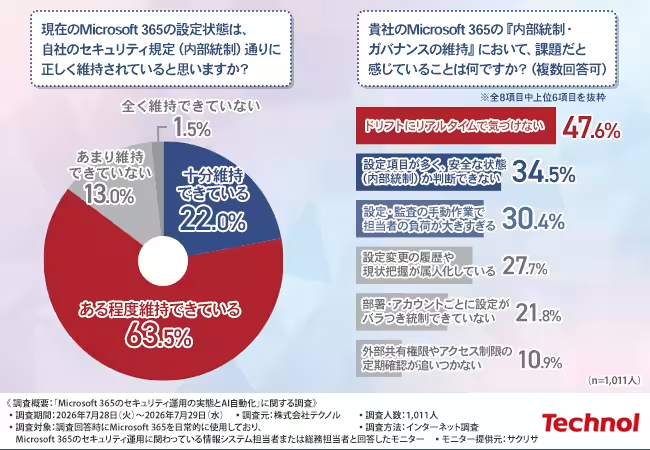
Recent research conducted by Technol Corporation highlights substantial concerns regarding the security operations within Microsoft 365. Despite its widespread use among businesses as a core operational platform, nearly half of the respondents were unaware of unauthorized configuration changes—commonly referred to as ‘drift’—and over 40 percent are bogged down with manual checks, leaving potential gaps in security oversight. The findings underscore the limitations of human-dependent processes in managing digital safety.
The Reality of Manual Oversight
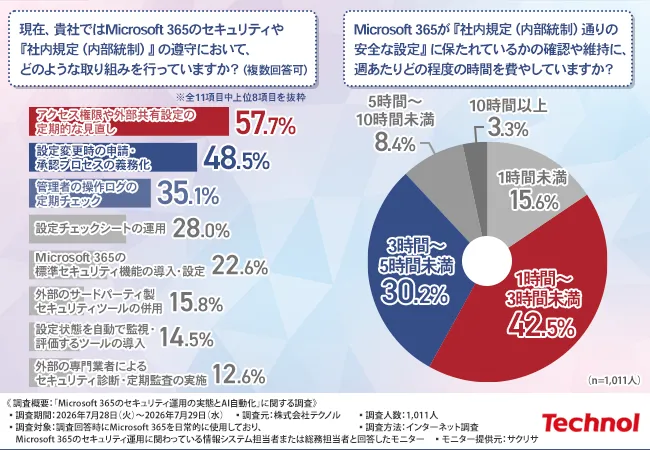
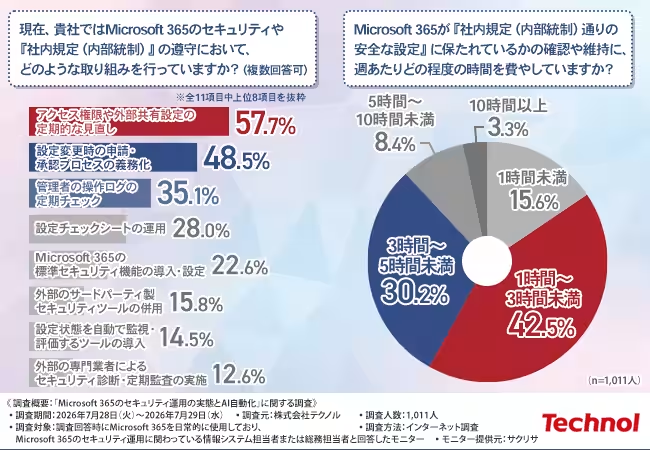
A significant portion of the surveyed participants—specifically those involved in information systems and administration—reported investing substantial time on manual security checks. When asked how many hours they dedicated to ensuring compliance with internal security protocols, over 42 percent admitted to spending between one to three hours weekly on such tasks. These results illustrate a reliance on manual audits for security management, which due to their time-consuming nature, often detracts from substantial IT investment and strategic improvement endeavors.
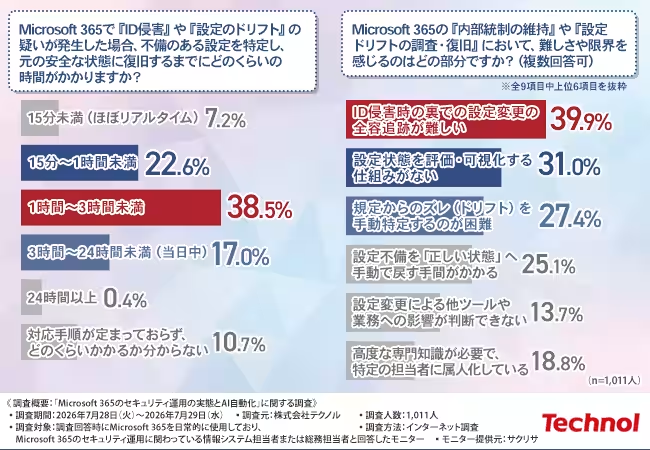
The survey responses indicated that a majority of companies occasionally verify access permissions and external sharing settings—showing that human oversight remains a primary form of ensuring security compliance. While awareness of operation protocols is key, the heavy reliance on manual processes raises alarming questions about the adequacy of such measures. Over 30 percent of industry professionals expressed concerns regarding the inability to promptly identify unauthorized changes due to system drift.
Automation as a Solution
In light of these findings, Technol Corporation suggests that organizations should explore automated solutions like their own product, Overe. This platform is designed expressly for Managed Service Providers (MSPs) who manage multiple customer environments. The Overe solution employs AI-driven methodologies to streamline security evaluations, apply the highest standards of practice across client architectures, and monitor unusual behaviors continuously.
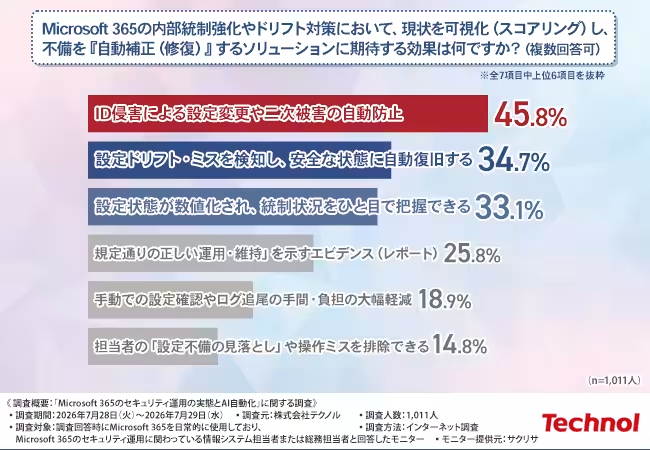
The survey also revealed that many believe automation could help eliminate the risk of secondary damage from unauthorized changes. Approximately 45 percent of respondents emphasized the need for systems that could automatically prevent further disruptions when security settings are altered without authorization. Moreover, 34.7 percent sought capabilities to automatically rectify deviations from internal security guidelines—highlighting a robust desire for effective and proactive security management approaches.
A Gap Between Perception and Reality
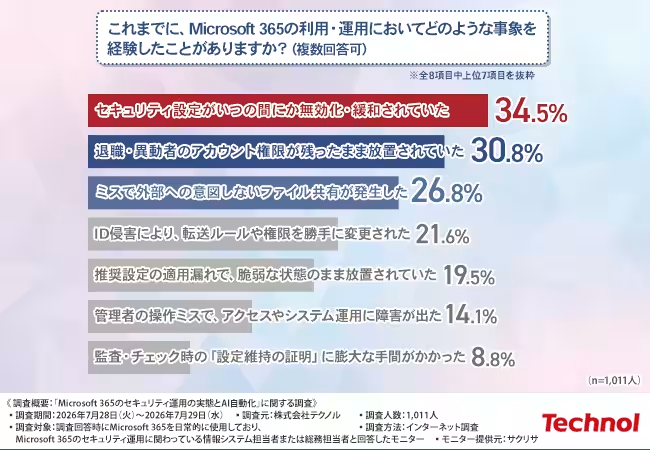
The study presents a contradiction; while a considerable number of participants claimed they maintain security regulations effectively, actual incidents of oversight reveal otherwise. Inputs from respondents indicated that many companies experienced lapses like unauthorized access due to retained permissions of former employees, misconfigurations during transitions, and exposure to phishing attempts. This gap between self-reported security efficacy and real-world vulnerabilities raises critical alarms about organizational preparedness.
Instances of Security Vulnerabilities
Examples cited by respondents included instances of deactivated multi-factor authentication leading to unauthorized access, forgotten user credentials from terminated personnel, and the exposure of sensitive information due to mismanaged permission settings. Such vivid accounts demonstrate the urgency for efficient governance in Microsoft 365 environments. Failure to address these issues could potentially damage not only the reputation of the company but also their operational integrity.
The Cost of Delayed Recovery
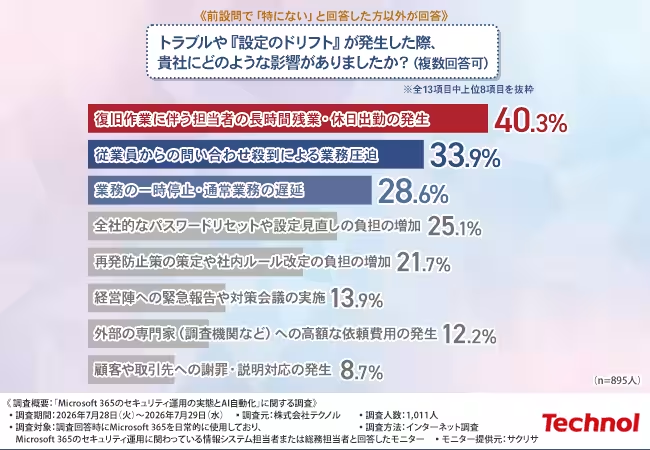
When incidents occur, the consequences can be severely taxing. Respondents indicated that recovery from these breaches often results in long hours for IT staff, sometimes leading to employee burnout and lost productivity. Almost 40.3 percent acknowledged that recovery efforts frequently require excessive overtime, further exacerbating workload pressures on their teams.
This highlights the critical need for immediate and efficient response systems that can reduce recovery time following a security breach. A solution that integrates both automated corrective actions and comprehensive situational visibility would significantly alleviate the repetitive burdens faced by security personnel, thus enhancing overall operational productivity.
Conclusion: A Call for Advanced Solutions
The recent exploration into the reality of Microsoft 365 security management reveals a system that currently hinges on dated manual processes, posing risks that many are not fully aware of. As the digital landscape continues to evolve, organizations must embrace innovative solutions to safeguard their operational frameworks. With over half of the survey respondents expressing frustration at the gaps in current management technologies, the time for firms to shift towards automated security solutions is now. By prioritizing AI-driven platforms like Overe, organizations can enhance their security posture, reduce reliance on manual interventions, and ensure a balanced approach to compliance and risk management moving forward.
For more information on Overe and how it can protect your Microsoft 365 environment, visit Technol Corporation’s website.

Topics Consumer Technology)
【About Using Articles】
You can freely use the title and article content by linking to the page where the article is posted.
※ Images cannot be used.
【About Links】
Links are free to use.