



The Rise of Social Media-Powered Anime and Gaming Events in China
Emerging Trends in China’s Anime and Gaming Events
In an exciting development for the anime and gaming industry, Spice Smart has released its latest research on significant trade shows and events in China scheduled between 2024 and 2025. Marking a vibrant period for the sector, these events, notably powered by social media giants, have attracted massive audiences and discussions, indicating a remarkable shift in how these industries engage with fans.
Key Insights from the Research
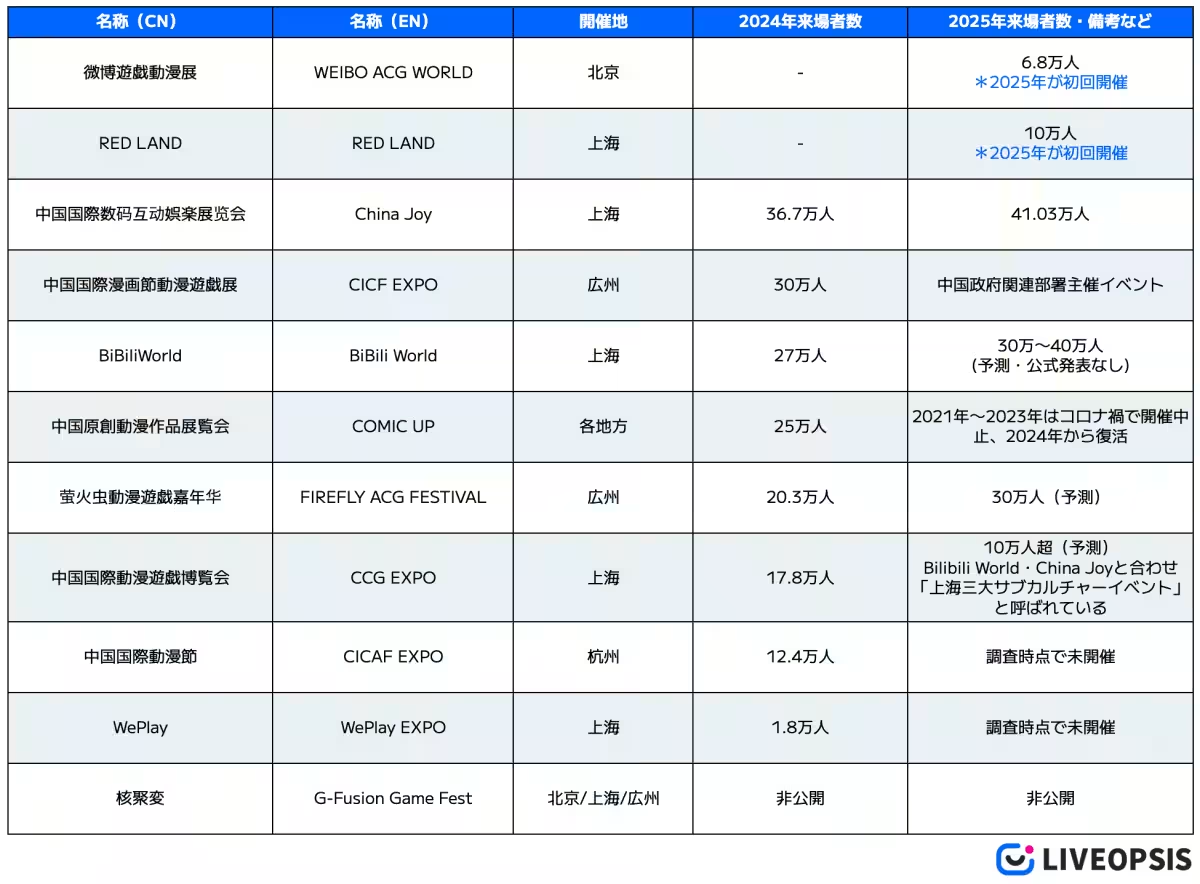
The research covers several large-scale exhibitions that regularly take place in China. It focuses on events initiated by crucial social media platforms like Weibo and RED, revealing their impact and reach. For instance, the WEIBO ACG WORLD held in Beijing attracted around 68,000 attendees and generated remarkable online engagement with 2.45 billion views on discussions linked to the event. Similarly, RED LAND created a lively atmosphere reminiscent of summer festivals and managed to draw in notable Japanese companies such as Aniplex and Toei Animation, alongside significant participation from gaming giants like Tencent and miHoYo. Ubisoft also showcased their upcoming titles at the event, demonstrating a growing interest from global corporations in Chinese markets.
Expansion of Japanese Presence
Interestingly, the landscape of participation has changed significantly. Events like Bilibili World and G-Fusion Game Fest featured renowned Japanese companies such as Bushiroad, KADOKAWA, and Sega, along with celebrated creators like Hideo Kojima stirring discussions among attendees. This marks a pivot from the previous concentration on China Joy. Now, Japanese IPs and enterprises are increasingly engaging across multiple exhibitions and events, creating greater visibility.
Traditionally, large expos in China have revolved around China Joy, but there is now a visible dispersion towards newer events that cater to various sectors, including B2B opportunities, which are valuable for companies seeking partnerships.
Diverse Event Characteristics
Furthermore, events taking place in Beijing are uniquely positioned to reach audiences in northern China directly. There’s also a noteworthy rise in events with a focus on Japanese anime and manga licensing, opening a plethora of promotional opportunities for Japanese creators and companies. The report meticulously catalogs the features of these recurrent events, providing a comprehensive reference for stakeholders looking for collaboration or entrance into the Chinese market.
Looking Ahead
Spice Smart is committed to continuously delve into the evolving exhibition landscape within China. In the future, they will analyze trends associated with China Joy and other significant overseas gaming events, keeping stakeholders informed. A report from the Tokyo Game Show 2025, which took place from September 25 to 28, will be available next month, further enriching this ongoing research.
Companies interested in accessing this in-depth report are encouraged to reach out directly.
About Spice Smart
Spice Smart specializes in mobile game market research and analysis, focusing on business support leveraging IPs from Japan. Their ongoing studies span various global markets, including Japan, China, Korea, and the USA, delivering essential insights to members through their operational solution, LIVEOPSIS.
Services Offered
- - IP Collaboration Production: Comprehensive support from proposal to supervision.
- - LIVEOPSIS: A solution encompassing essential data for mobile game analysis and operation.
- - LIVEBeauty: A marketing tool specifically designed for beauty and cosmetic brands on social media.
Company Overview
- - Company Name: Spice Smart, Inc.
- - CEO: Masumi Kubo
- - Location: BLOCKS EBISU 909, 1-11-2 Hiroo, Shibuya, Tokyo, Japan
- - Established: July 2015
- - Business Areas: Mobile game operation research, consulting, IP collaboration negotiations.
Contact
For inquiries regarding this article or further information, please contact our public relations department at [email protected]. Our team is available to assist in Japanese, English, Chinese (Simplified and Traditional), and Korean.
Topics Entertainment & Media)
【About Using Articles】
You can freely use the title and article content by linking to the page where the article is posted.
※ Images cannot be used.
【About Links】
Links are free to use.