



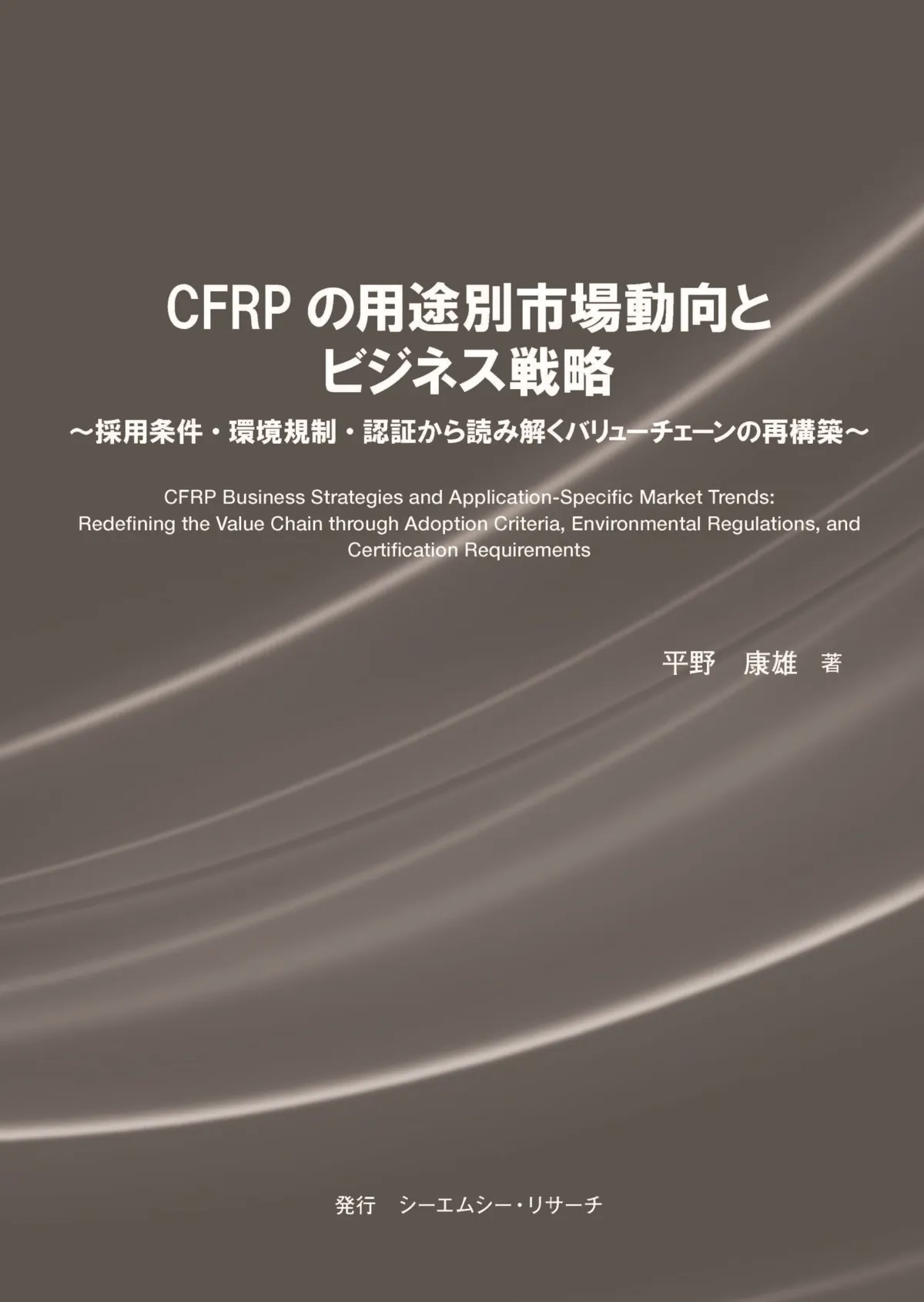
Exploring CFRP Market Trends and Business Strategies for 2026
Understanding the CFRP Market Dynamics
Carbon Fiber Reinforced Plastic (CFRP) has been a crucial material in industries such as aviation and automotive due to its lightweight and high-strength characteristics. However, recent shifts in the market emphasize the importance of assessing CFRP applications based on specific requirements that vary significantly across different sectors. This article provides an overview of the new book by Yasuo Hirano, which delves into the recent transformations in the CFRP market and presents strategic insights for businesses looking to navigate this evolving landscape.
Overview of the CFRP Market Changes
The CFRP market has become increasingly complex, with varying demands based on application, including aerospace, defense, mobility, energy, infrastructure, and consumer goods. Each sector poses unique challenges, such as performance expectations, pricing, mass production capabilities, certification requirements, environmental impacts, and supply chain stability. Recognizing these differences is key for businesses aiming to harness the opportunities presented by CFRP technology.
In his book, Hirano discusses how the market lacks a one-size-fits-all approach and encourages a targeted evaluation of business opportunities. By examining the conditions under which CFRP is adopted in different applications, companies can position themselves strategically in a competitive market.
Application-Specific Insights
Aerospace and Defense
The aerospace and defense sectors underscore the rigorous requirements for CFRP, which include fatigue resistance, corrosion resilience, dimensional stability, and compliance with regulations. The demand for civilian aircraft production, increased military procurement, and the development of next-generation air mobility and unmanned aerial systems are driving new opportunities. However, understanding the distinct needs during prototyping and mass production stages is crucial for evaluating technical feasibility against economic viability.
Mobility and Energy
In the mobility sector, CFRP is making significant strides in hydrogen storage and wind energy applications. Increased usage in electric vehicles (EVs) presents both opportunities and challenges, as manufacturers must contend with competition from aluminum, high-strength steel, and Glass Fiber Reinforced Plastics (GFRP). Evaluating the total lifecycle costs, including safety, weight reduction, and ease of repairs, is imperative for making informed decisions.
Infrastructure, Marine, and Consumer Goods
In infrastructure and marine applications, reliability and high added value are increasingly important. Similarly, sectors like semiconductor manufacturing and medical devices require a focus on stable revenue rather than just volume demand. Hirano’s insights provide clarity on how to navigate these factors effectively.
Future Outlook and Business Strategies
With an eye toward 2030, businesses must enhance their strategies based on market forecasts that take into account the diverse applications and the economic conditions underpinning them. Adapting to changing market dynamics while addressing supply constraints and environmental regulations is essential for extracting value from CFRP innovations.
Hirano emphasizes that success in the CFRP industry extends beyond material performance. Companies need to understand their customer value propositions, optimize mass production processes, and ensure compliance with environmental standards to maintain competitive advantage.
This book serves as a comprehensive guide for professionals associated with CFRP research, business development, and quality assurance. It also offers valuable insights for product manufacturers and users involved in purchasing and designing CFRP applications.
Conclusion
As the CFRP market continues to evolve, businesses must remain vigilant about new trends, technologies, and market opportunities. Hirano’s work provides practical strategies for assessing and capitalizing on the opportunities inherent in various sectors, making it an essential resource for stakeholders in the CFRP value chain.
Overall, understanding these intricacies enables companies to make better informed decisions about entering or expanding within the CFRP market as they prepare for a promising future.
Topics Consumer Products & Retail)
【About Using Articles】
You can freely use the title and article content by linking to the page where the article is posted.
※ Images cannot be used.
【About Links】
Links are free to use.