



Brazilian Green Propolis Shows Potential in Reducing Cancer Stem Cell Growth
Brazilian Green Propolis: A Promising Ally Against Cancer
In a groundbreaking study, researchers at the Yamada Bee Farm's Health Science Research Institute, in collaboration with Okayama University of Science's Veterinary Medicine Department, presented findings that Brazilian green propolis (also referred to simply as 'propolis') may have significant implications in oncology. This innovative research was unveiled during the 84th Annual Meeting of the Japanese Cancer Association held from September 25 to 27, 2025.
Research Background
According to the 2021 report from Japan's Ministry of Health, Labor and Welfare, around 988,900 individuals are diagnosed with cancer annually, marking a staggering reality where one in two people is expected to develop cancer in their lifetime. Cancer remains the leading cause of death in Japan, claiming the lives of one in four citizens.
Central to cancer development are cancer stem cells, which are known for their self-renewal capacity and ability to differentiate into various cancer cell types, making them crucial players in tumor growth. These cells also exhibit resistance to conventional cancer therapies, presenting a significant challenge in treatment.
The study at hand highlights the role of Brazilian green propolis in addressing the proliferation of cancer stem cells. Through extensive research conducted in partnership with Okayama University, the team aims to explore the therapeutic potential of bee products, including propolis, in combating cancer.
Key Findings
1. Inhibition of Cancer Stem Cell Colony Formation
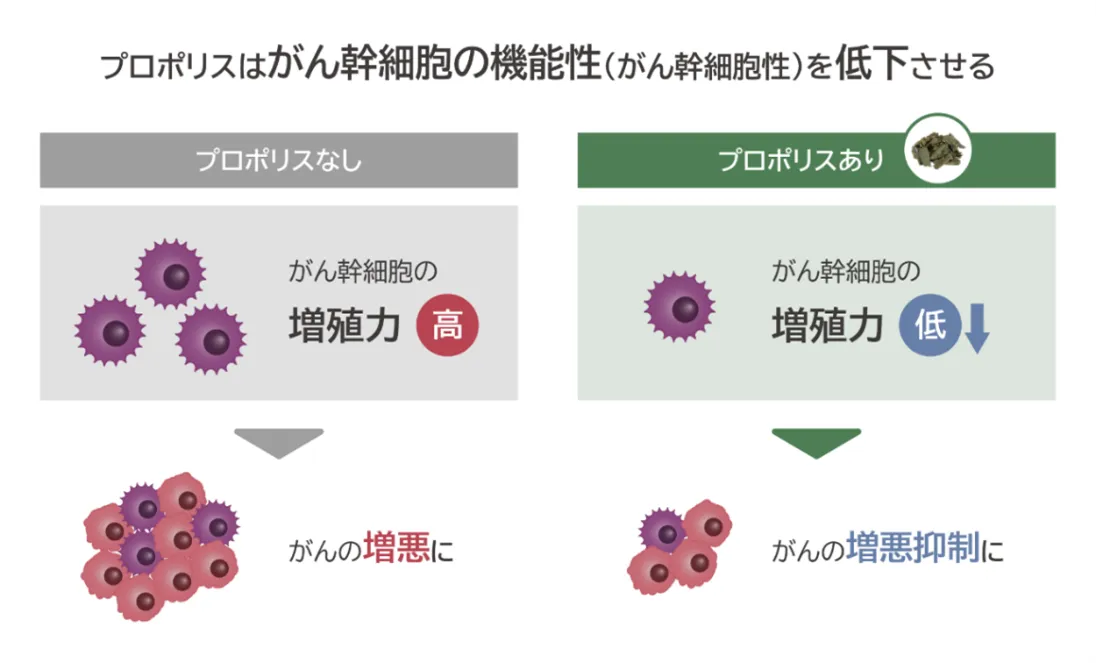
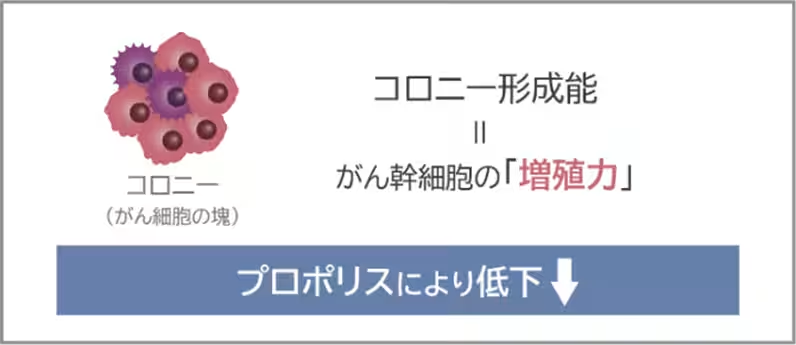
The study demonstrated that when administered to colorectal cancer stem cells, Brazilian green propolis significantly reduced their colony formation ability compared to untreated conditions, revealing its potential in curbing cell proliferation.
2. Reduction of Cancer Stem Cell Markers
Furthermore, the addition of propolis resulted in a marked decrease in cancer stem cell markers, suggesting a possible reduction in their overall numbers and indicating a need for further investigation into its mechanisms.
Implications of the Research
The findings suggest the capability of Brazilian green propolis to reduce the stemness and functional characteristics of cancer stem cells, thereby helping to impede cancer progression. The results not only underscore the potential health benefits of bee products but also open new avenues for cancer prevention and treatment.
In the broader scope of prevention medicine, the Yamada Bee Farm plans to continue exploring the utility of products like propolis, royal jelly, and bee larvae through rigorous scientific research. Their mission is to promote health longevity for individuals, contributing positively to society through apitherapy, the medicinal use of bee products.
Future Directions
This research paves the way for further studies aimed at deepening our understanding of the effects of Brazilian green propolis on cancer biology. Additional clinical studies could lead to the development of novel therapeutic strategies and nutritional supplements designed to enhance human health and combat cancer more effectively.
The involvement of notable researchers such as Nobuyuki Fujiwara and Takashi Ito—alongside contributions from the Okayama University Veterinary Faculty—enhances the credibility and anticipation surrounding these groundbreaking findings.
As the team moves forward, they remain committed to providing innovative solutions that harness the power of nature to address some of the most pressing health challenges we face today.
- ---
Title: Propolis Reduces the Colorectal Cancer Stemness
Presenters: Nobuyuki Fujiwara, Takashi Ito, Nobuaki Okumura, and Noboru Fujitani
Presentation Date: September 25, 2025


Topics Health)
【About Using Articles】
You can freely use the title and article content by linking to the page where the article is posted.
※ Images cannot be used.
【About Links】
Links are free to use.