




New Insight into the Combined Pathology of Alzheimer's and Lewy Body Dementia Using Model Mice
Exploring the Combined Pathology of Alzheimer’s and Lewy Body Dementia
Recent research by Professor Toshio Ohshima and his team at Waseda University offers groundbreaking insights into the complex relationship between Alzheimer's disease and Lewy Body dementia. Both are significant causes of dementia, yet their combined pathology has been insufficiently explored, particularly around the simultaneous influence of Tau and alpha-synuclein proteins on neurodegeneration. This study utilized a double transgenic mouse model to investigate the concurrent overexpression of these proteins, an experimental approach that has not been previously conducted.
Background and Significance of the Study
Alzheimer's disease is characterized by the accumulation of hyperphosphorylated Tau proteins within neurons, while Lewy Body dementia is linked to similar accumulation of hyperphosphorylated alpha-synuclein. These conditions lead to cellular dysfunction, ultimately resulting in neuronal death and cognitive impairment. Although isolated cases of these diseases are more common, it is known that they can present as a combined condition as well. This intersection becomes increasingly pertinent given the rising prevalence of dementia, which is poised to become a significant public health challenge in aging populations.
By crossing established mouse models of both diseases, the research team created a new double transgenic model to study the pathological outcomes more effectively. The resulting mice exhibited more rapid disease progression than their single-transgenic counterparts, underscoring the potential for combined pathologies to exacerbate symptoms.
Research Highlights
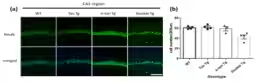
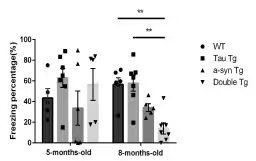
Using mice that were eight months old, the research identified clear markers of accelerated pathological conditions, such as increased phosphorylation of Tau, amplified neuroinflammation, and a notable decrease in the number of healthy neurons. Importantly, memory function was also assessed through behavioral tests such as fear conditioning. Results indicated a shortening of freezing time in the double transgenic mice, suggesting significant impairment in contextual memory—a crucial aspect of cognitive function.
Experimental Methodology
The double transgenic mouse model was constructed using two well-established genetic lines. The Tau Tg mice express a form of Tau with a P301S mutation, known to enhance the protein's aggregation. In contrast, the alpha-synuclein Tg mice express the A53T variant. By comparing these double transgenic mice with their single counterparts, researchers assessed the progression of various parameters, including the extent of Tau and alpha-synuclein phosphorylation, neural inflammation, and neuronal density in crucial brain regions like the hippocampus.
Implications for Future Research
The outcomes of this study indicate that the concurrent pathology of Alzheimer's and Lewy Body dementia may lead to more severe outcomes than previously understood. As research continues, unraveling the mechanisms of how Tau and alpha-synuclein interact to damage neuronal function could open avenues for new therapeutic interventions targeting these processes.
Moreover, understanding the underlying dynamics of protein accumulation in neurons is essential to developing effective treatments for these debilitating conditions. Future studies, including investigating the possibility of suppressing the phosphorylation of CRMP2 protein to mitigate Tau aggregation, are being considered.
Conclusion
The findings from this research not only enhance our understanding of the combined pathology of Alzheimer's and Lewy Body dementia but also underscore the need for integrated approaches to cerebral health as the global population ages. The team led by Professor Ohshima aims to further explore dementia-related pathologies to contribute significantly to the field of neurodegeneration research, potentially leading to innovative solutions in treatment paradigms.
Lastly, the research will be published in the upcoming issue of Molecular Neurobiology on July 25, 2025, further sharing these critical developments with the scientific community.
Reference
For more details, you can access the research paper titled "Co-expression of mutant tau and α-synuclein in neurons promotes tau phosphorylation, neuronal loss and neuroinflammation in mouse brain" at the Journal of Molecular Neurobiology.

Topics Health)
【About Using Articles】
You can freely use the title and article content by linking to the page where the article is posted.
※ Images cannot be used.
【About Links】
Links are free to use.