



Regular Cheese Consumption Linked to Lower Dementia Risk in Japanese Seniors: A Study
The Impact of Cheese on Dementia Risk in Elderly Japanese
Recent research has highlighted a promising link between regular cheese consumption and a decreased risk of dementia in elderly populations. A three-year follow-up study, conducted by Meiji Co., Ltd. and Niimi University, utilized data from the Japan Gerontological Evaluation Study (JAGES) to analyze the impact of dietary habits on cognitive health among older adults in Japan.
Study Findings
In the survey conducted from 2019 to 2022, researchers found that seniors who consumed cheese at least once a week demonstrated a significantly lower incidence of dementia compared to those who did not consume cheese. Specifically, out of the 10,180 participants analyzed, 134 individuals (3.39%) who regularly ate cheese developed dementia, whereas 176 individuals (4.45%) in the non-cheese-eating group were diagnosed with the condition. This notable difference supports the hypothesis that regular cheese intake can benefit cognitive function.
Research Goals
This research aims to explore the relationship between dairy consumption and cognitive health thoroughly, particularly in Japan where aging populations are rapidly increasing. While several international studies have examined the benefits of cheese and other dairy products on cognition, limited research exists regarding Japanese seniors, whose eating habits and genetic backgrounds may differ significantly from those observed in Western populations. Therefore, this study seeks to fill that gap by scrutinizing not only the frequency of cheese consumption but also the types of cheese that might contribute to cognitive health.
The nutrients found in cheese, including essential vitamins and minerals, are believed to positively affect cognitive functions. Previous studies conducted predominantly in Western countries suggested that specific nutrients and components in cheese could be linked to improved mental acuity; however, these do not always translate directly to Japanese dietary contexts. This research thus aims to evaluate the unique dietary patterns of Japanese seniors and their implications for health.
Methodology
The study extracted data from a comprehensive cohort of 26,408 older adults aged 65 and above who participated in postal surveys. By 2022, the team linked those data sets with long-term care insurance records, ultimately focusing on a matched sample of 3,957 regular cheese eaters and 3,957 non-eaters, ensuring that demographic and health factors such as age, gender, education level, income, and health status were comparable.
Results
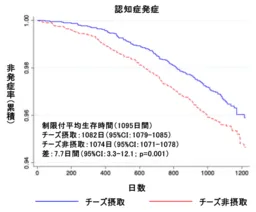
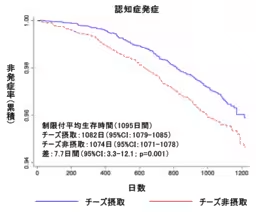
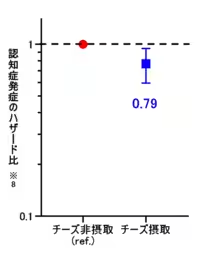
Analysis of the data through Cox proportional hazards models yielded a significant correlation between regular cheese consumption and lower dementia risk (HR: 0.76), which remained consistent even after controlling for meat, fish, and vegetable consumption patterns (HR: 0.79). The Kaplan-Meier survival curves depicted that cheese consumers experienced significantly lower cumulative incidences of dementia.
Implications
The implications of these findings are vast, especially for Japan, a nation facing challenges posed by an aging population. With dementia becoming increasingly prevalent among older adults, the potential to utilize dietary interventions such as cheese consumption could provide beneficial strategies to enhance cognitive health and longevity. Promoting cheese consumption may not just satisfy dietary preferences; it could lead to a notable improvement in the quality of life for seniors.
The study thus opens avenues for further research into dietary recommendations aimed at maintaining cognitive health. Encouraging the consumption of cheese could play a pivotal role in strategies for extending healthy life years in aging societies. Researchers advocate for expanded discussions regarding nutrition and public policies that endorse cheese as part of a healthy dietary regime for older adults.
In conclusion, this study presents significant evidence supporting the protective benefits of cheese consumption against dementia in older Japanese adults. Further research will be essential to explore the underlying mechanisms and potentially influence public health recommendations in the future.
Topics Health)
【About Using Articles】
You can freely use the title and article content by linking to the page where the article is posted.
※ Images cannot be used.
【About Links】
Links are free to use.