



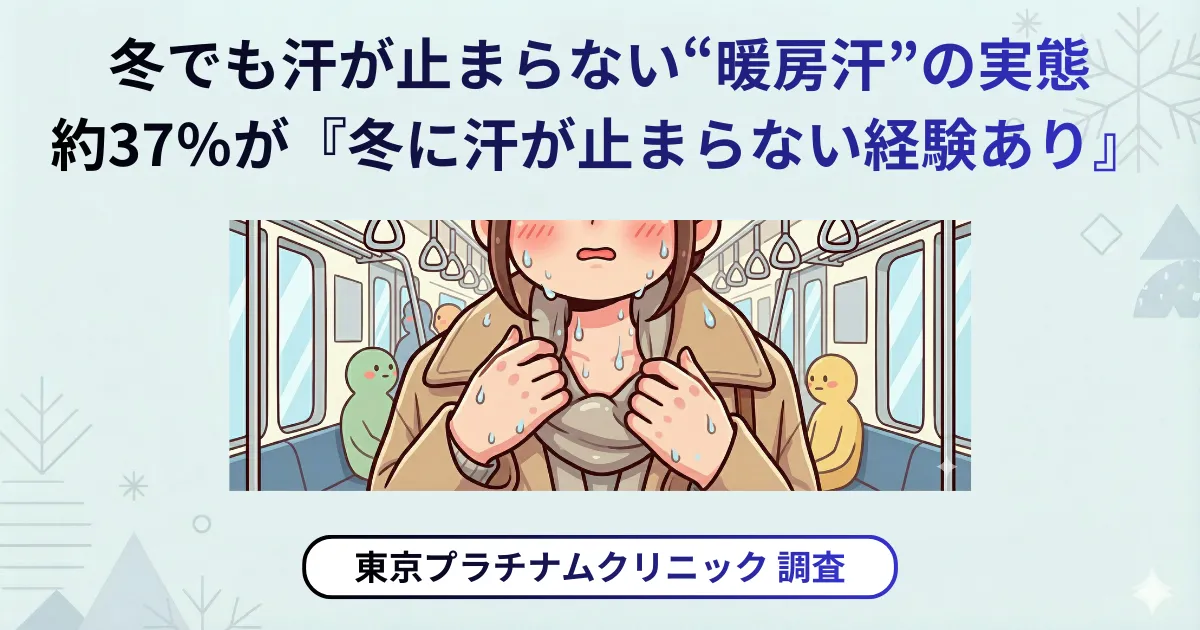
The Unseen Winter Sweats: Insights on Seasonal Overheating and Stress from Tokyo Platinum Clinic
The Unseen Winter Sweats: Insights from Tokyo Platinum Clinic
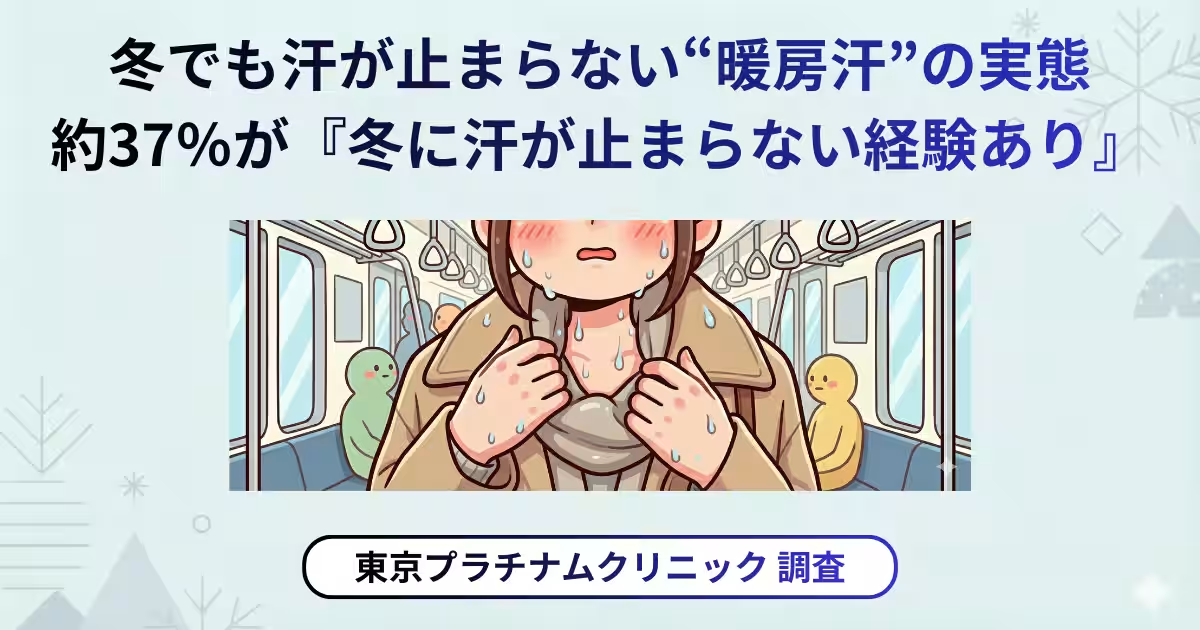
As the chill of winter settles in, one would expect to remain comfortably dry. However, an alarming 37% of individuals in a recent survey conducted by Tokyo Platinum Clinic reported experiences of excessive sweating—dubbed "winter sweat"—during the cold months. This phenomenon has raised concerns about thermal comfort in heated spaces such as public transit and offices.
The Survey Breakdown
In this study targeting individuals aged 20 to 49, the results revealed alarming statistics regarding winter sweating:
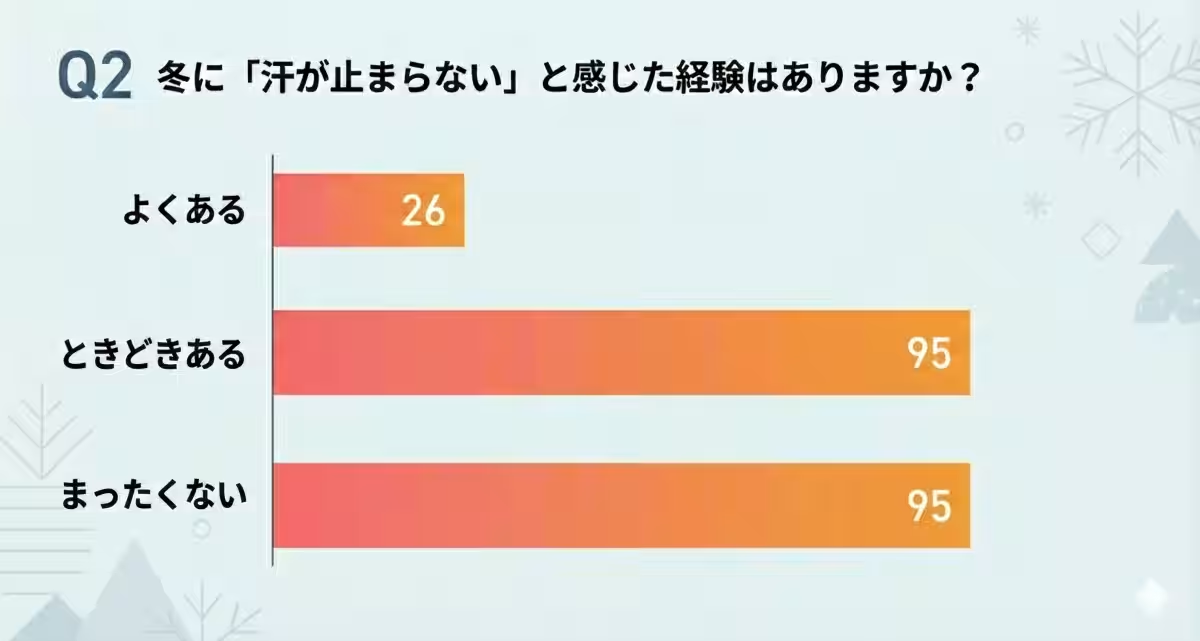
- - 37% of participants claimed to have experienced uncontrollable sweating during winter.
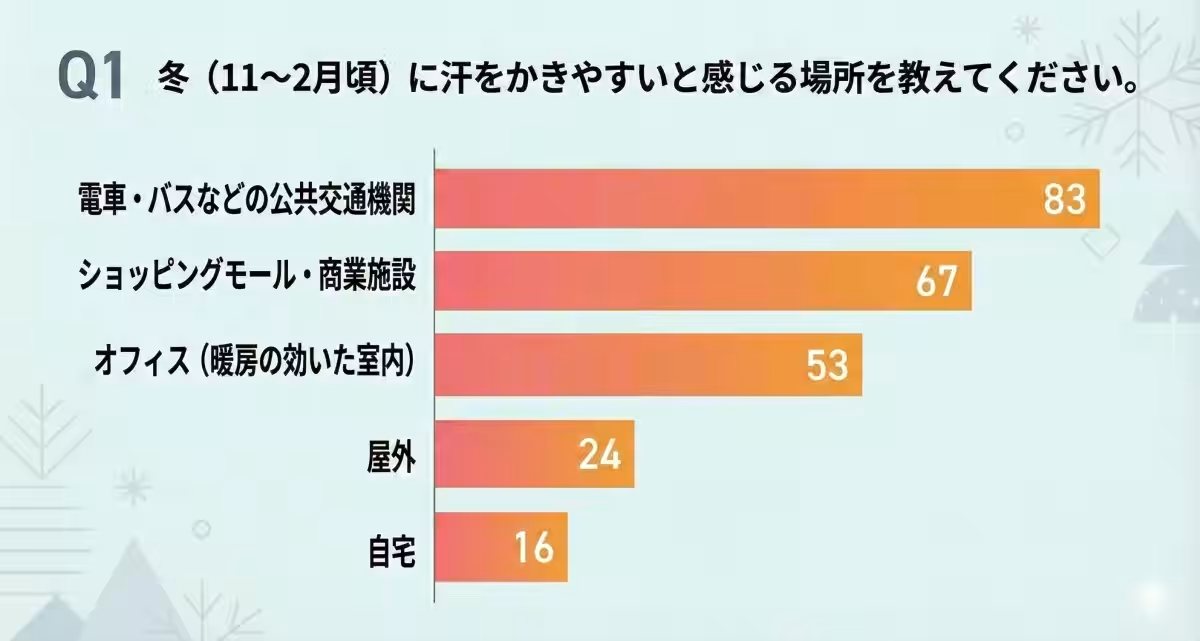
- - The most common locations for experiencing this were found to be in public transportation (25.1%), followed by shopping malls (20.3%) and offices (16.0%).
Interestingly, many cited discomfort and anxiety regarding body odor in such heated environments. This highlights a hidden issue that affects stress levels in daily life.
Understanding Winter Sweats
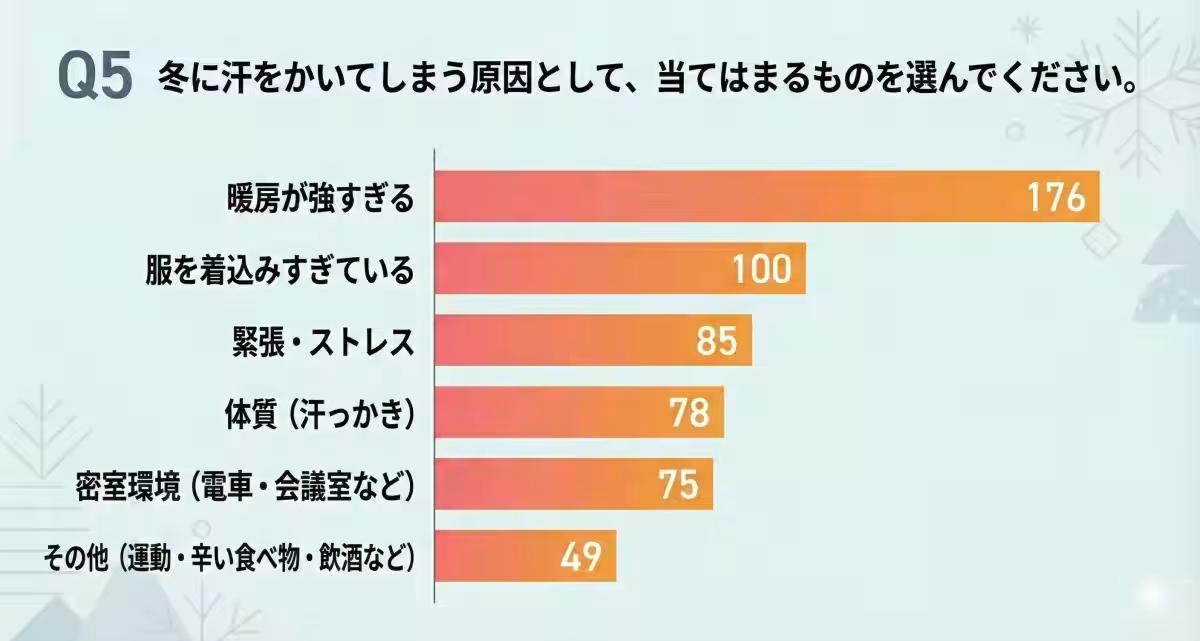
While commonly thought of as a summer issue, sweating is not exclusive to warmer months. This survey leads to the understanding that excessive heat in closed, well-heated spaces contributes significantly to winter sweating. Here are some reasons cited by respondents:
- - 53.3% pointed to overly strong heating systems as the leading reason for their discomfort.
- - Others simply identified their clothing as too warm (30.3%) or noted that stress and tension (25.8%) also played a role.
- - Compounding these issues is the fact that many winter fabrics are not breathable, making moisture trapped beneath layers even more uncomfortable.
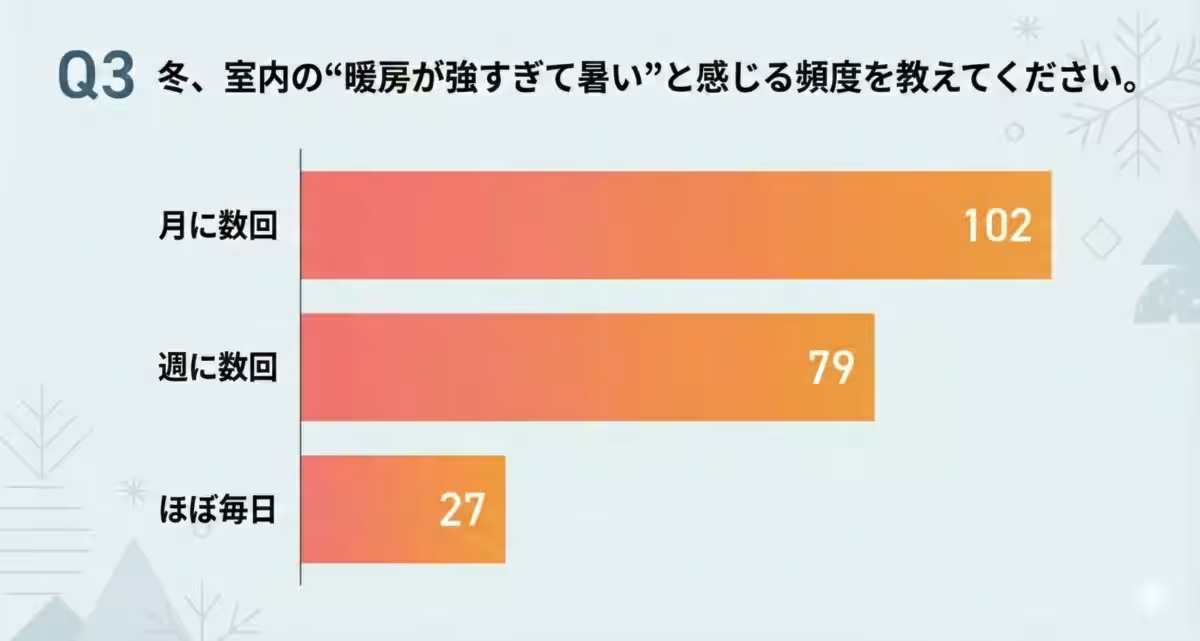
As people board crowded trains or enter large office spaces, the rapid temperature changes provoke sweating. 29.1% of respondents reported feeling that indoor heating was often too intense, leading to discomfort on a regular basis. This highlights a disconnect between climate comfort preferences, especially in commercial spaces aimed at accommodating a broad range of comfort needs.
Concerns about Odors
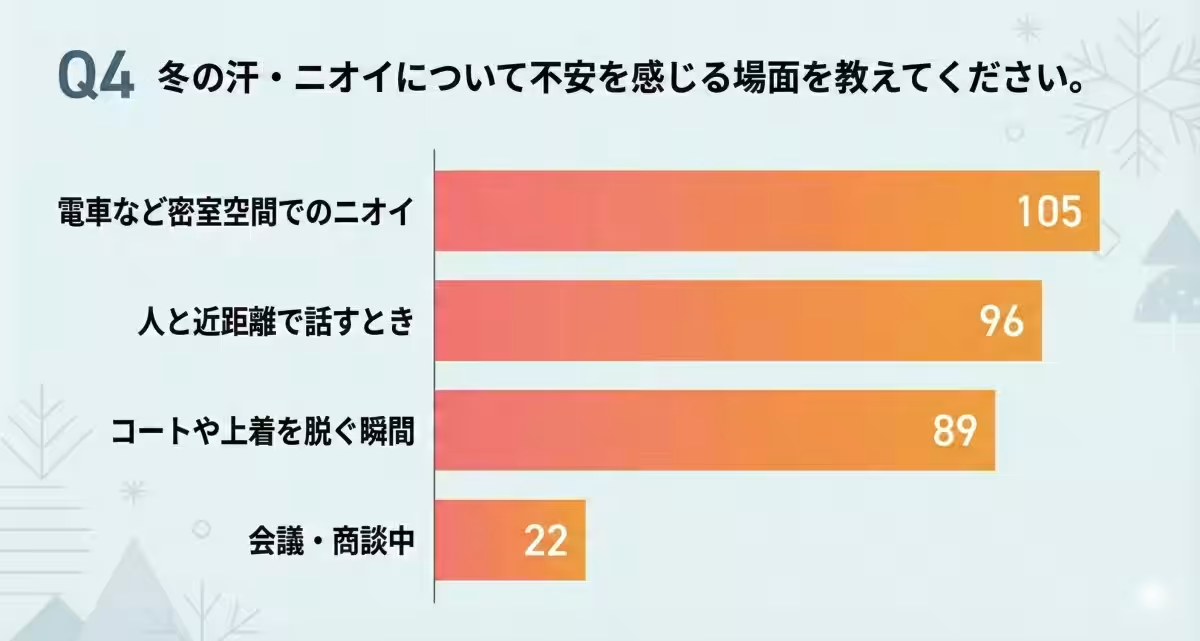
In addition to sweating, winter poses a unique issue regarding body odor—anxiety peaked especially in confined spaces. According to the survey, the top three areas of concern included:
1. Enclosed spaces like trains (31.8%).
2. Close conversations (29.1%).
3. Moments when shedding outer layers (27%).
The nature of winter sweating doesn’t allow moisture to evaporate as easily as in summer; therefore, negative olfactory experiences can linger longer in clothing. Many respondents even shared sentiments about feeling self-conscious upon removing their jackets, fearing trapped odors.
The Implications and Solutions
What can be done about this? The increase in winter sweating is far more linked to environmental factors than purely the season's temperature. This extreme discomfort complicates daily activities and degrades quality of life, leading people to grapple with social embarrassment and diminished self-esteem.
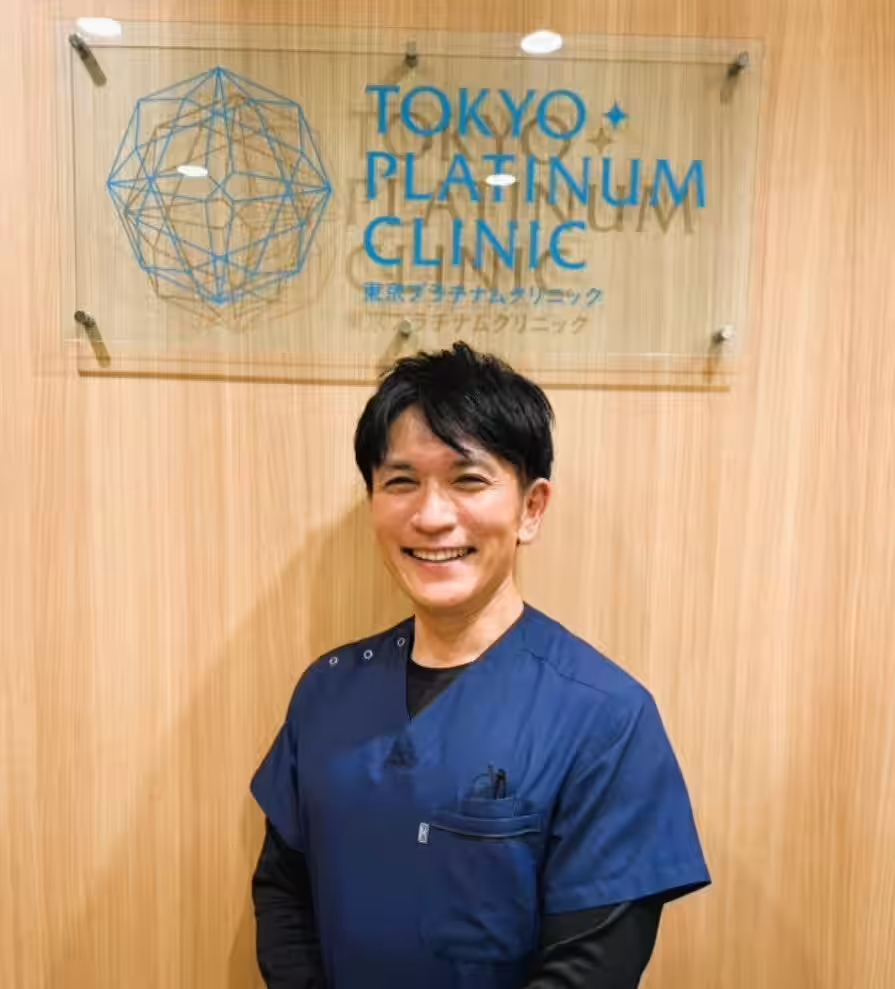
Tokyo Platinum Clinic’s Director, Dr. Masaru Yaguchi, emphasizes that the root cause of winter sweating is an inability to regulate body temperature effectively within these heated environments. The "Miradry" treatment provided at the clinic reduces sweat glands at the source, offering long-term relief from such conditions. With over 5,261 successful cases recorded, the protocol involves comprehensive coverage of sweat glands to minimize reoccurrence effectively.
By choosing to consult with such a specialized medical institution, individuals struggling with excessive sweating during winter can explore advanced solutions designed specifically for their needs.
Contact Information
For individuals seeking relief or more information on this treatment, Tokyo Platinum Clinic is located at:
- - Address: 401 Sekiguchi Building, 2-29-19 Dogenzaka, Shibuya, Tokyo
- - Access: A 3-minute walk from JR Shibuya Station
- - Booking Hours: 11:00 AM – 08:00 PM (by appointment only)
With thoughtful public awareness and the right professional guidance, winter does not need to become synonymous with discomfort and self-consciousness.
Topics Health)
【About Using Articles】
You can freely use the title and article content by linking to the page where the article is posted.
※ Images cannot be used.
【About Links】
Links are free to use.