



Preparing for a Hot Summer: New Dining Trends for the Rainy Season
The Arrival of Summer: Evolving Dining Trends
As we witness a spate of exceedingly high temperatures this summer, with some days exceeding 40°C, the Japan Meteorological Agency recently called for names to be suggested for days reaching this critical temperature. Furthermore, projections estimate that by 2025, emergency transport cases due to heatstroke will surpass 100,000, marking a historic high since monitoring began in 2008. As such, it seems we still have some time ahead before fully adapting to the reality of a long and hot summer.
Recent three-month forecasts from the Meteorological Agency from April to June predict average temperatures for each month will likely exceed seasonal averages, with some days in May even potentially qualifying as “midsummer days.” Clearly, preparations for the summer need to start earlier each year.
A Lengthening Summer Season
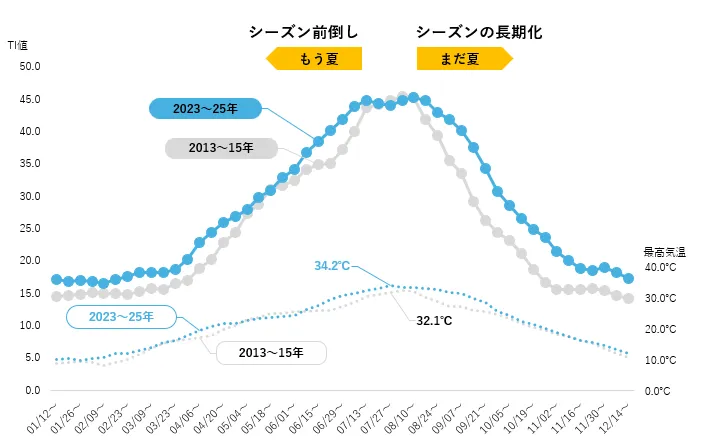
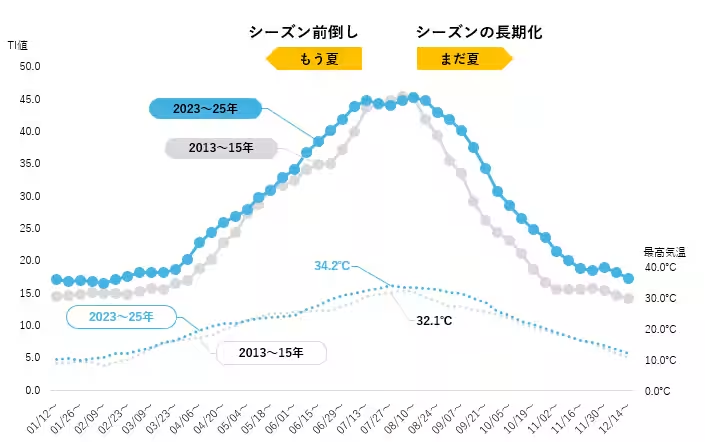
A review of the data on the emergence of ice cream and frozen dessert options shows several shifts in eating habits. Comparing the past three years (2023-2025) with ten years ago (2013-2015), we notice a significant rise in temperatures from June to September, accompanied by an advance in the ice cream consumption season, which now begins in June rather than July, extending much later into the year.
Interestingly, the peak in demand during early August remains unchanged, indicating that it isn’t merely higher consumption per peak, but rather that the ice cream season is expanding over several weeks in both directions, leading to a lengthened summer overall.
In this article, we will delve into the trends shaping our dining experiences during June—the “almost summer” phase—focusing on how our tables are transforming during the rainy season.
Refreshing Changes in June Dining
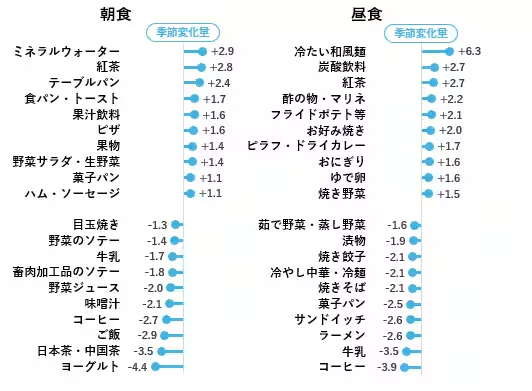
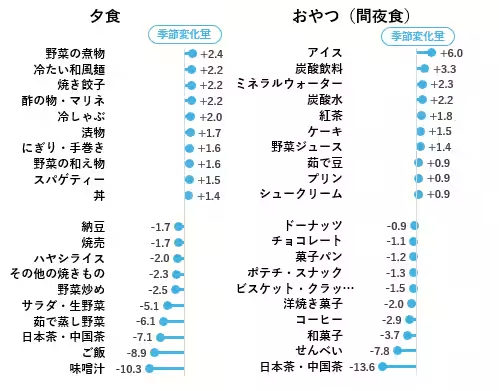
When analyzing past data from a decade ago, it’s essential to consider numerous changes in living conditions including inflation. To better understand the unique nature of the June season, we need to compute seasonal change metrics, comparing the average for May to July against June alone. Through this comparative data, we can observe how the relative positioning of June’s dietary choices has shifted, while minimizing the impacts of events like recent rice crises.
Figure 2 showcases a comparative look at the rise and fall of menu TI values for June over the last decade. Notably, there is a clear shift from rice-based breakfasts to bread, along with an increase in fruit juices and water consumption, suggesting a focus on hydration in the morning.
For lunch, cold variations of traditional noodles like soba and udon dominate, while dinner sees an uptick in cold dishes such as chilled noodles, vinegared salads, and shabu-shabu. The presence of convenience foods like pasta and gyoza is also on the rise, indicating that the characteristics of June’s dining experience are shifting to accommodate lighter and more convenient meal options.
Avoiding Summer Fatigue?
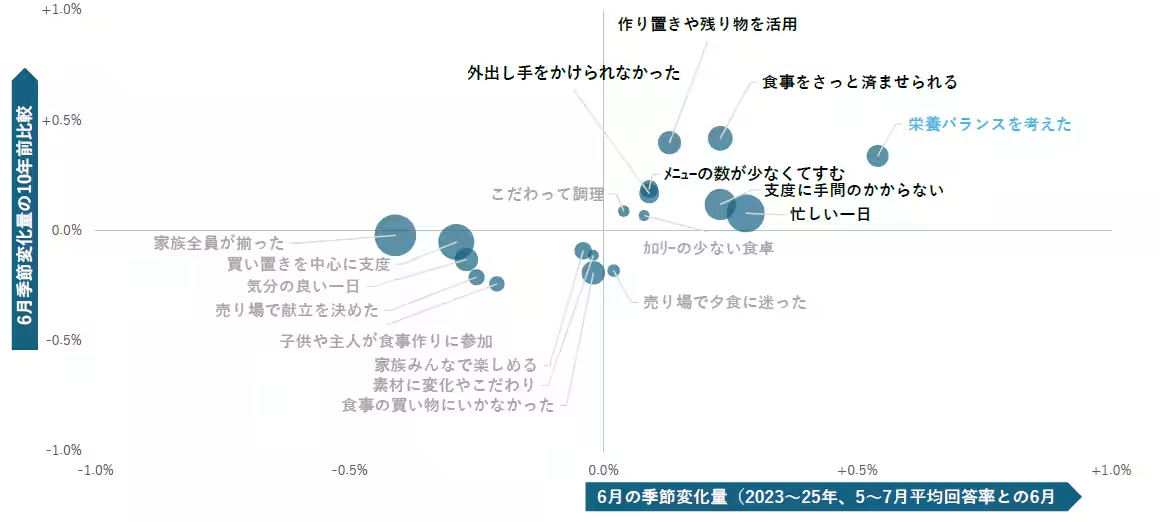
Next, let’s contemplate the sentiments of homemakers crafting daily menus. By examining responses to daily meal-preparation surveys, trends in June show that there’s a rising preference for convenience and a balanced nutritional approach, as illustrated in Figure 3.
This month’s humidity is unique to the rainy season; in fact, projections for June 2025 suggest that more than 40% of days will be deemed unpleasant (with discomfort indexes exceeding 80). When compared to zero in June 2015, the worsening discomfort underscores a growing awareness and effort towards nutritional balance as we combat summer fatigue.
Refreshing and Flavorful Ingredients for Dining
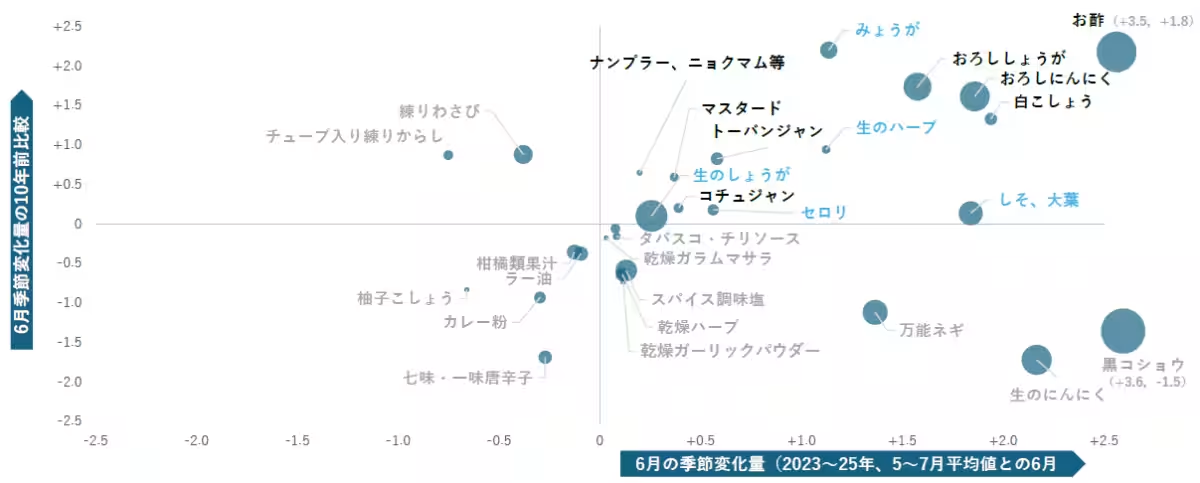
Thus far, we have highlighted increasing desires for refreshing, convenient, and balanced meals. However, new flavors and seasonings are starting to emerge as well. Figure 4 outlines the seasonal changes in spice and herb TI values from dinner menus in June. Ingredients typically used as garnishes, like ginger, myoga (Japanese ginger), and shiso leaves, are on the rise, along with a newer trend towards fresh herbs, celery, and ethnic flavors like fish sauce and gochujang.
In summary, June meals now go beyond merely featuring cold dishes; it seems imperative to incorporate elements that stimulate appetite through sourness, refreshing flavors, and ethnic dishes to properly adapt to rising temperatures.
Conclusion
With “almost summer” upon us, it’s essential that we embrace innovative and refreshing culinary practices that will ensure we are prepared for the heat yet to come in the months ahead.
- ---
Reference and Inquiries
Source: Lifescape Marketing Co., Ltd.

Topics Consumer Products & Retail)
【About Using Articles】
You can freely use the title and article content by linking to the page where the article is posted.
※ Images cannot be used.
【About Links】
Links are free to use.