



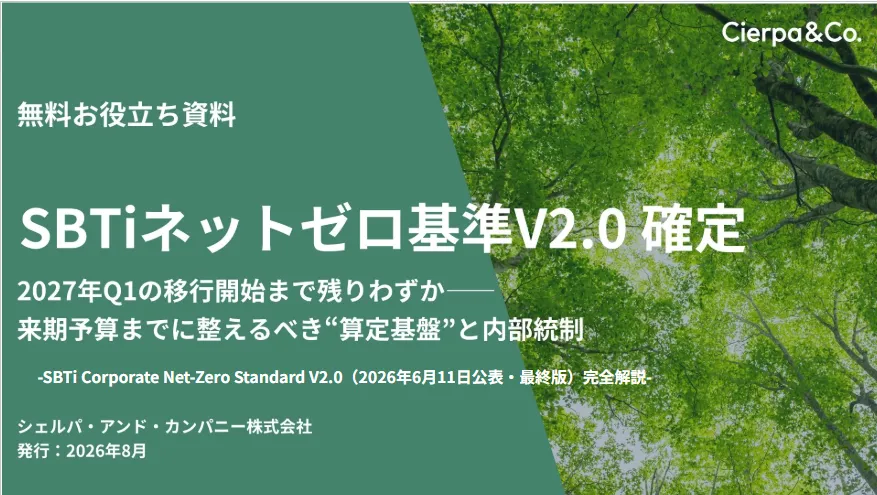
New SBTi Net-Zero Standard V2.0 Published Ahead of 2027 Implementation
Introduction: The Waiting Phase is Over
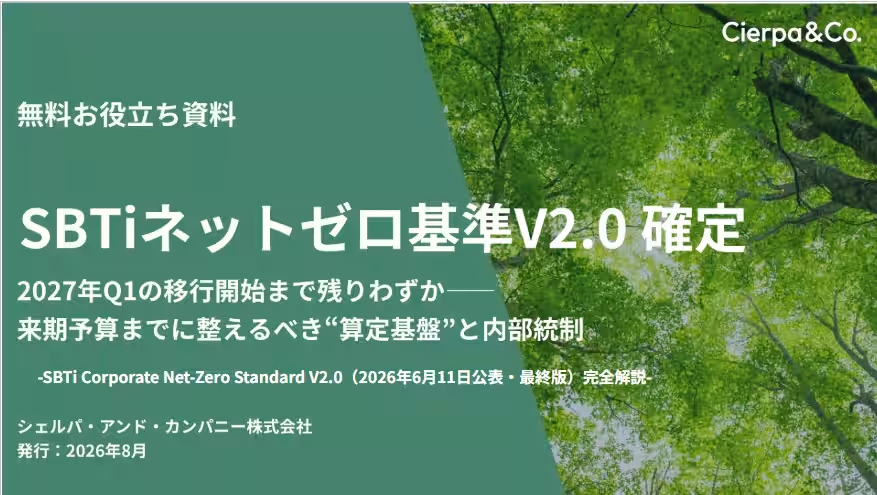
As the global push towards sustainable practices intensifies, companies are increasingly held accountable for their greenhouse gas emissions. The recent publishing of the white paper titled "Confirmed Net-Zero Standard V2.0 for SBTi" marks a pivotal moment for organizations aiming for sustainability. Developed by Sherpa & Company, a leading firm focusing on ESG strategies, this document outlines essential preparatory actions required for compliance with the updated standards by 2027.
Overview of SBTi CNZS V2.0 and Transition Schedule
On June 11, 2026, the SBTi initiative, which certifies scientifically based greenhouse gas reduction targets, unveiled the finalized version of Corporate Net-Zero Standard V2.0. With only roughly five months left until its February 1, 2027 enforcement date, it’s crucial for businesses to revisit their sustainability strategies. After this date, all new submissions must comply with this standard.
Japan is currently leading the global landscape in SBTi certifications, with a notable number of companies achieving certification around 2021, now entering a renewal cycle. This shift in standards promotes a transition from merely establishing targets to implementable actions and proofs of progress, positioning the SBTi as an “action framework.”
Major Changes and Corporate Impact: Pre-Budget Self-Assessment Checklist
With the introduction of V2.0, there is an increased focus on data management and internal controls capable of passing rigorous audits. Companies will now need to transition from basic calculations to higher-quality financial data management to demonstrate their commitment to greenhouse gas emission reductions. Ensuring sufficient budget and personnel to support internal controls and transition plans is critical for success.
The white paper offers insights into the key changes of the new standard, operational implications, and a self-assessment checklist for organizations to prepare before the upcoming budget season. Understanding and adapting to these changes is no longer optional; it is imperative for companies striving towards net-zero compliance.
The Essence of V2.0: Structural Transformation of Calculation Foundations
At the core of the V2.0 adaptation is the need for a structural shift in calculation foundations. Companies must strategically align their data management and internal controls to uphold sustainability commitments. The white paper elaborates on these necessary actions, detailing how firms can construct their actionable frameworks and implement viable data governance.
Introducing SmartESG Carbon: Assurance of Financial Audit Quality
A key tool that facilitates compliance with the new standards is SmartESG Carbon, an AI-native greenhouse gas accounting system optimized for SBTi alignment and third-party verification. By automating the processing of data from ERP and accounting systems, it offers a comprehensive management solution for calculation processes and documentation.
Equipped with features like automated mapping and variance analysis, SmartESG Carbon enhances both accuracy and operational efficiency. Additionally, it seamlessly integrates collected data with the wider SmartESG sustainability platform, fortifying corporate efforts towards decarbonization and information disclosure.
Conclusion: Embracing 2027 Preparedness
As the February 2027 deadline approaches, companies must act swiftly to ensure they are regarded as leaders in sustainability practices. The recommendations laid out in the white paper serve as vital steps for organizations preparing for the mandatory adoption of the V2.0 standards. By incorporating these rigorous measures into their strategies, companies can enter this new era of accountability with confidence.
For further exploration of specific actions necessary for compliance and effective internal control systems, access the white paper through the following link.
About ESG Journal
ESG Journal provides the latest insights and updates on ESG and SDGs initiatives worldwide, showcasing corporate practices and original columns. The expertise of Sherpa & Company’s professionals is reflected in the white paper publications, aimed at supporting sustainability-focused business professionals.
For more resources, visit the ESG Journal homepage: ESG Journal.
Topics General Business)
【About Using Articles】
You can freely use the title and article content by linking to the page where the article is posted.
※ Images cannot be used.
【About Links】
Links are free to use.