



Developing Robust Privacy Preservation Algorithms with TEE for Data Analysis
Introduction
In recent years, the ubiquitous use of smartphones, wearable devices, and artificial intelligence (AI) has led service providers to collect varying types of personal data from users, including purchasing histories, location data, and physical activity metrics. While this data can be leveraged for analytics and machine learning, it also raises significant privacy concerns. To address these issues, a research group led by Associate Professor Takao Murakami from the Institute of Statistical Mathematics, Professor Yuichi Kiyoh from the University of Electro-Communications, and Researcher Rei Egashira from the National Institute of Advanced Industrial Science and Technology has developed a novel data analysis algorithm utilizing Trusted Execution Environment (TEE) technology to prevent personal data leaks.
Overview of the Research
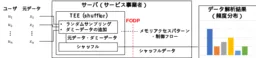
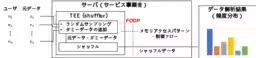
The developed algorithm implements an advanced variant of the shuffling model known as the Augmented Shuffle Model. By using TEE-equipped servers, the model enables effective data analysis while safeguarding user privacy. One significant advantage of this approach is that even when malicious users attempt to manipulate data submissions, the model effectively obscures personal data, ensuring integrity and confidentiality.
The algorithm introduces a new safety metric called Fully Oblivious Differential Privacy (FODP), which addresses potential side-channel attacks aimed at TEE. Recent studies have highlighted vulnerabilities associated with memory access patterns and control flows that could expose internal data. The FODP metric mathematically guarantees that even if an attacker gains access to output data, memory access patterns, and control flows, they will obtain minimal information regarding the internal data.
This research's findings were accepted at the prestigious 35th USENIX Security Symposium, boasting an acceptance rate of just 12.0%. This indicates a significant breakthrough in enhancing security protocols in the realm of information security.
Background on Privacy in Data Analysis
The increasing collection of personal data has made the implementation of privacy-preserving measures imperative. Traditional safety metrics such as Differential Privacy (DP) use noise to prevent the leaking of original datasets through their analytics results. The shuffling model enhances DP effectiveness by introducing an intermediary server (shuffler) that anonymizes the data prior to its use by service providers, thus optimizing both privacy and data utility.
The Augmented Shuffle Model, an evolution of the basic shuffling model, involves random sampling and the addition of dummy data that accomplishes noise induction, allowing for high safety ratings without any input noise from users. In contrast, the basic shuffling model requires users to append noise to their data, making it vulnerable to malevolent actors who can reduce its safety. Thus, a need for trustworthy mechanisms to prevent data leaks even when shuffler compromises are attempted is essential.
Achievements of the Research
In their groundbreaking work, the team centered on frequency distribution estimation to establish the reliability of the shuffler employing TEE-based algorithms. Essentially, personal data undergoes random sampling, dummy data addition, and shuffling within the TEE prior to external analysis. This isolation ensures that even server administrators cannot access or corrupt internal data. Moreover, the algorithm's protective mechanisms can provide strong assurance against malicious tampering, fulfilling FODP requirements.
The most remarkable aspect of the developed algorithm is its robustness against side-channel attacks. By incorporating noise prevention methods within memory access patterns and execution flows through the introduction of 'bots' (meaningless data), the algorithm effectively reinforces its data safeguarding protocols. The algorithm also innovatively uses skewed asymmetric geometric distributions for dummy and bot distributions, which significantly optimizes processing time while maintaining tight control over data privacy.
Comparative analyses have demonstrated that this new algorithm yields noteworthy improvements in security, accuracy, and efficiency when evaluated against existing models. For instance, the newly developed algorithm can efficiently process large datasets, outperforming traditional centralized models that can take upwards of 270 days to compute tasks, while the new approach completes the same tasks in less than 16 hours.
Future Outlook
The implications of this research are vast. With the foundation of TEE technology and newly developed safety indicators (FODP) cemented within the framework of data privacy, the potential applications of these protocols extend beyond mere frequency distribution estimation and into broader realms of data analysis and machine learning applications, presenting exciting avenues for future exploration.
Conclusion
In conclusion, this research signifies a monumental shift in the integration of privacy-preserving technology in data analysis, leveraging TEE and FODP to create algorithms that withstand potential threats from both malicious users and server administrators while ensuring highly efficient and accurate outcomes in data processing.
Acknowledgements
This study has received support from various research grants and accolades, underscoring its significance and contribution toward enhanced data privacy methodologies.
Topics General Business)
【About Using Articles】
You can freely use the title and article content by linking to the page where the article is posted.
※ Images cannot be used.
【About Links】
Links are free to use.