



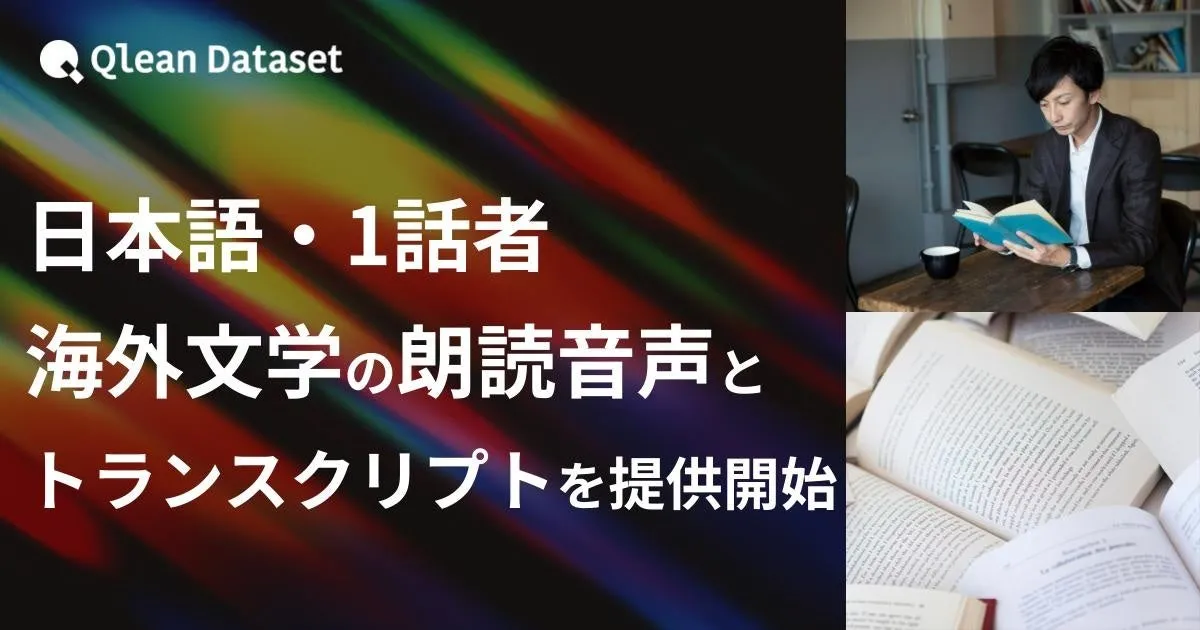
Visual Bank's Qlean Dataset Unveils Japanese Narration of Foreign Literature
Introduction
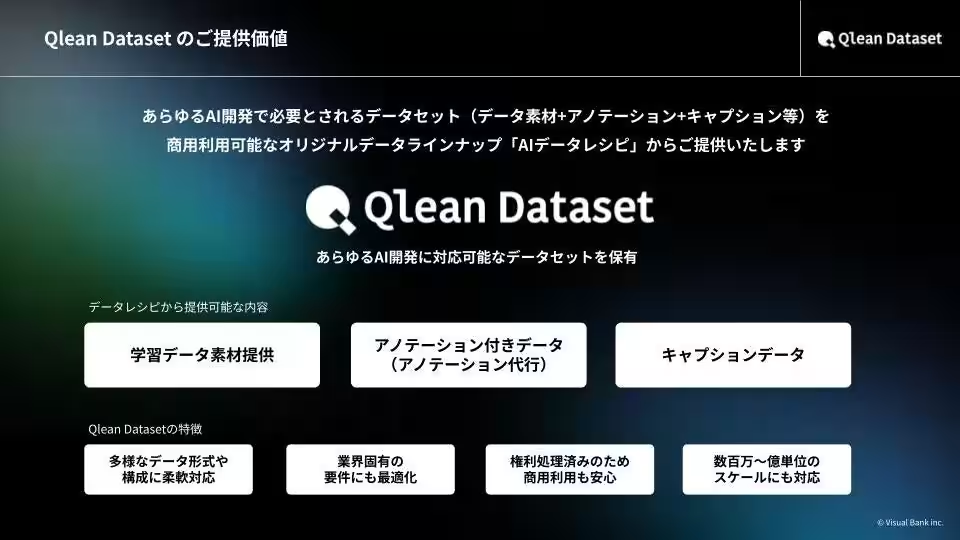
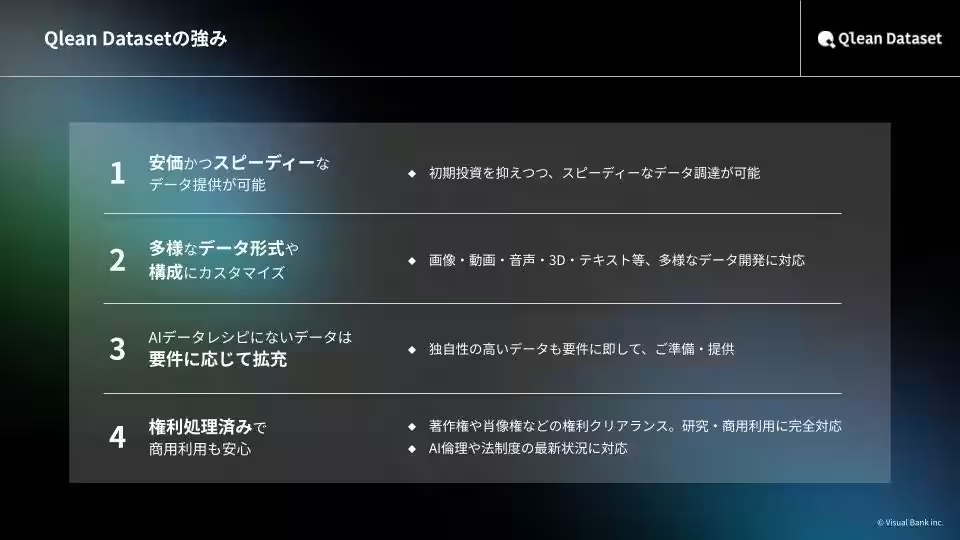
Visual Bank Inc., based in Minato-ku, Tokyo, has gained attention for its innovative AI training data solution known as the Qlean Dataset. Recently, the company announced the release of a remarkable dataset consisting of Japanese readings of foreign literature, a notable addition that promises to improve the realms of Automatic Speech Recognition (ASR) and Text-to-Speech (TTS) technology.
The Dataset Details
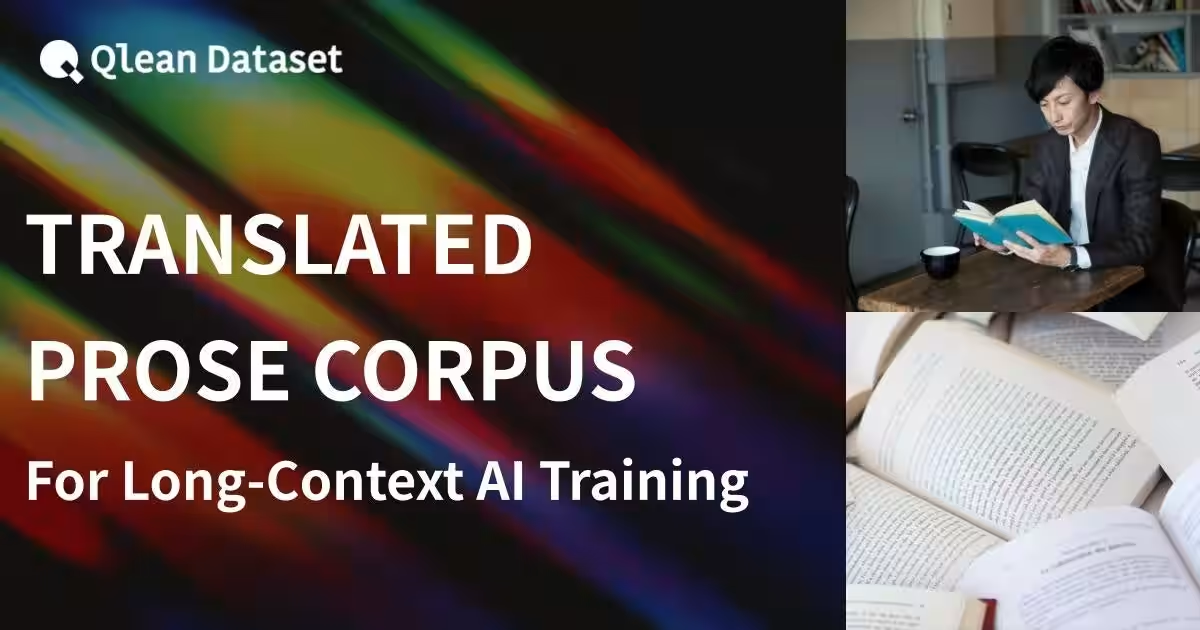
The Qlean Dataset, developed through its subsidiary amana images, features high-quality audio recordings narrated by a native Japanese speaker. The focus lies in Japanese translations of internationally recognized literary works, capturing the essence of storytelling and philosophical reflections within these literary pieces. Each audio file ranges from 30 seconds to 90 minutes, sampled at competitive rates of 44.1kHz or 48kHz.
The key characteristics of the dataset include:
- - Data Types: The dataset encompasses both audio (in MP3 format) and text (available in TXT, JSON, and CSV formats).
- - Subject Attributes: The recordings feature a single Japanese speaker known for their clarity and calm narrative tone.
- - Thematic Focus: The dataset is primarily designed to read out Japanese translations of foreign texts, aimed at capturing the intricate language structures often found in translated literature.
Applications of the Dataset
This versatile dataset opens up myriad opportunities across research, industry, and educational sectors:
Research Applications
The dataset serves as an accurate benchmark for validating ASR models, particularly those that aim to capture the subtleties in translations that may include complex grammatical structures and extended contextual sentences. Understanding how ASR systems can maintain coherence and context during transcription is crucial, especially within the realm of Japanese literature that often employs advanced syntax.
Industrial Utilization
In terms of industry applications, the Qlean Dataset facilitates the development of specialized TTS engines. Content creators in the entertainment sector can leverage this dataset for audiobook production or for services that need automated narration of news articles. The high-quality data allows for expressive speech generation that resonates with listeners, without indulging in excessive emotional bias, striking a balance between narrative authenticity and listener engagement.
Educational Integration
In the education sector, particularly beneficial for Japanese language learners, this dataset can significantly enhance their learning experience. By using standard Japanese pronunciation as a base for ground truth, it provides a foundation for AI systems designed to aid in pronunciation correction and listening comprehension. Moreover, the dataset can support reading-assistive technologies aimed at visually impaired users, offering natural and fatigue-free reading capabilities.
Future Prospects
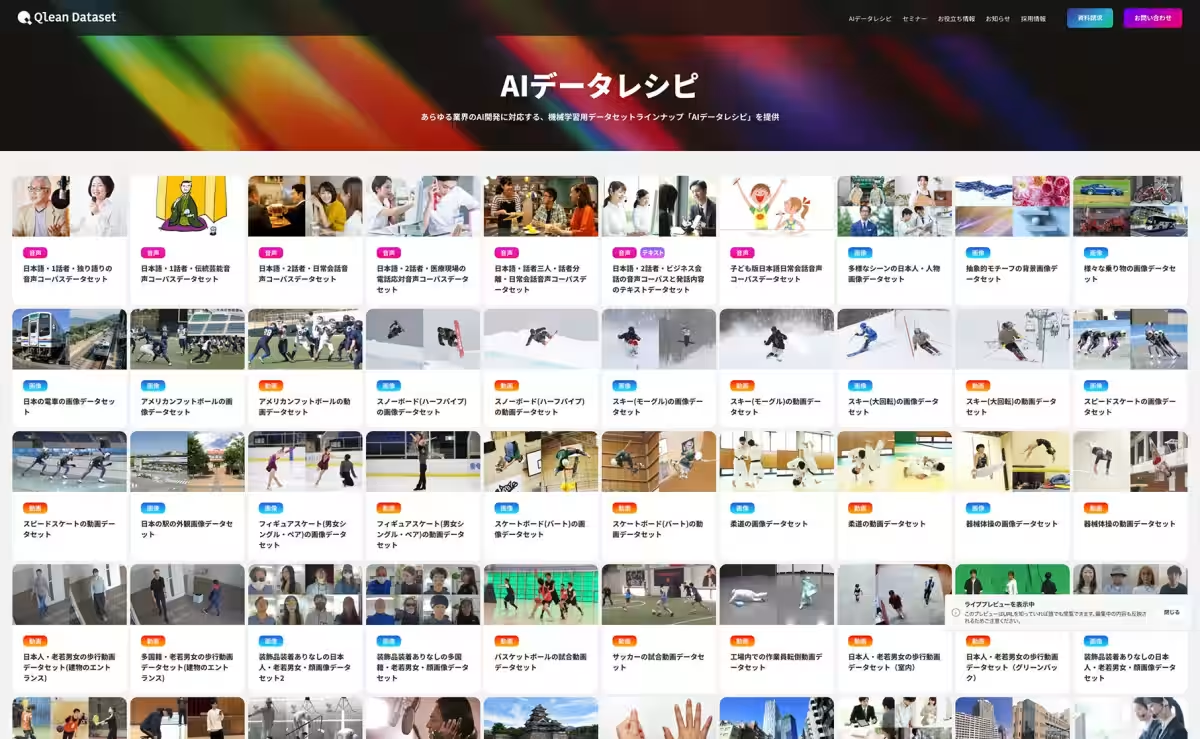
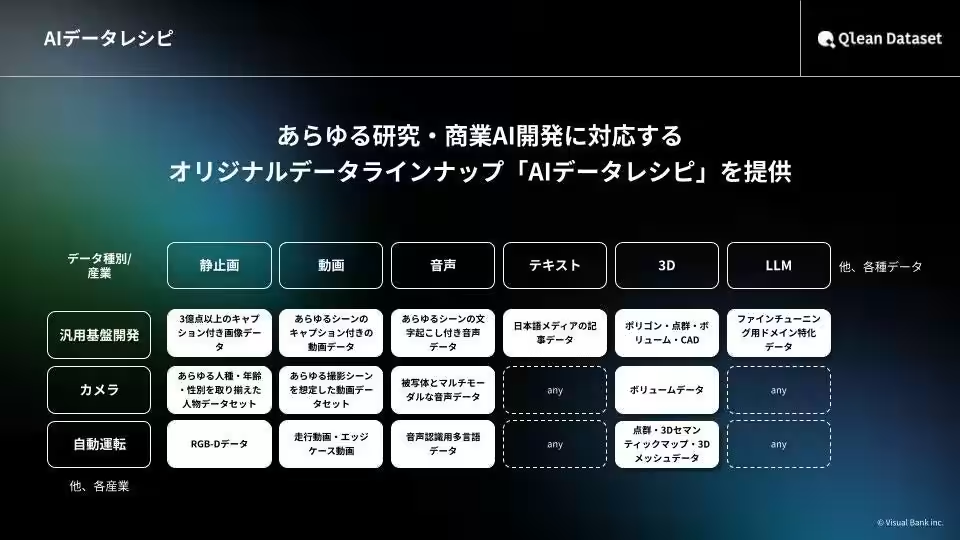
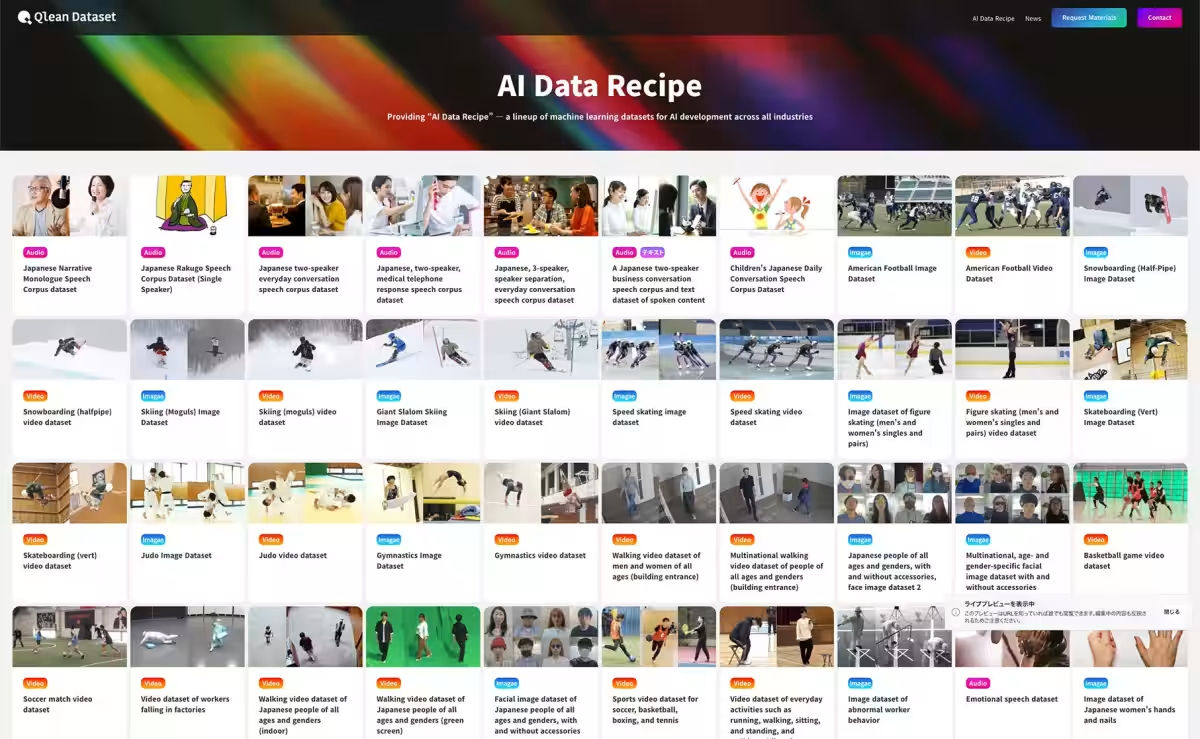
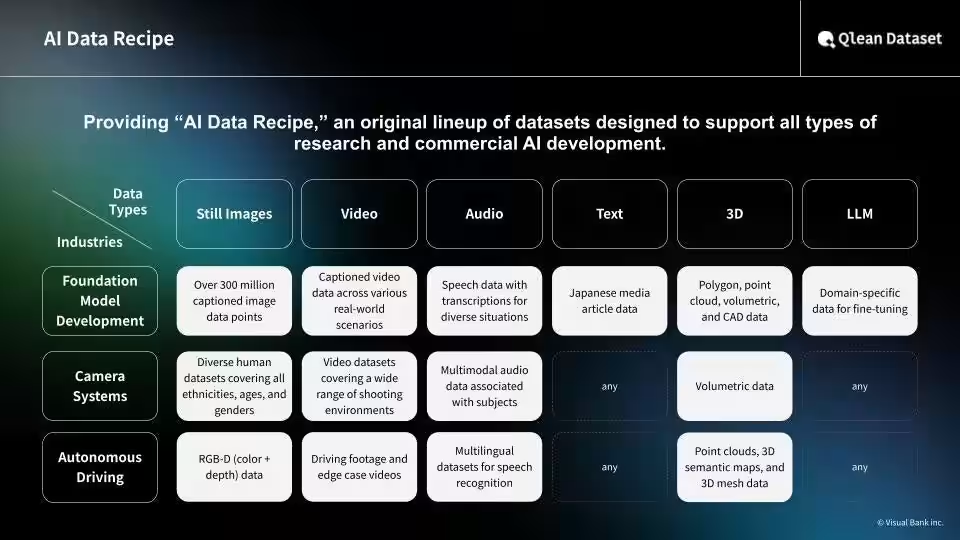
As an integral part of the AI Data Recipe, the Qlean Dataset is poised to assist in various developmental phases, from creating effective audio narratives to advancing context-dependent ASR engine validation. Visual Bank and amana images are committed to the ongoing supply of quality resources, focusing on supporting domestic and international AI research and development. The continuous release of high-quality data plays a critical role in fostering AI innovation aimed at transforming industries.
Conclusion
The unveiling of the Qlean Dataset marks a significant step in enhancing AI capabilities in creative fields such as literature and education. By providing a specialized, high-quality audio resource, Visual Bank and its subsidiary aim to bridge the gap between linguistic artistry and technological advancement, ensuring that AI solutions remain accessible, effective, and innovative for a variety of applications. With its commitment to quality and reliability, Qlean Dataset is set to redefine how AI interacts with language and literature, paving the way for new horizons in AI research.
Topics Consumer Technology)
【About Using Articles】
You can freely use the title and article content by linking to the page where the article is posted.
※ Images cannot be used.
【About Links】
Links are free to use.