



Exploring AI's Impact on the Travel Industry at JATA's Management Forum
AI's Role in Transforming the Travel Industry: Insights from JATA's Management Forum
The impact of artificial intelligence (AI) in the travel industry was robustly discussed at the recent Management Forum hosted by the Japan Association of Travel Agents (JATA). Yuta Ibaraki, CEO of And.Dot Co., made a significant presentation that underscored the profound implications of AI for travel businesses, emphasizing both operational efficiency and enriched customer experiences.
Key Takeaways from JATA's Management Forum
The forum welcomed various stakeholders from the travel industry, including executives from travel agencies, accommodation providers, and local governmental representatives. Ibaraki provided critical insights into leveraging AI, classifying its roles into two main axes: as a means to enhance operational efficiency in administrative tasks, and as an end goal to elevate customer experiences and overall travel value.
In an evolving landscape where AI's adoption is accelerating, the discussion focused on crucial questions about redefining business values: What aspects should companies entrust to AI, and where should human input remain essential? Ibaraki highlighted the need for clear demarcation between tasks technology can handle and those that require a human touch.
Introducing AX Production Business
And.Dot’s AX Production business is designed to support organizations in their AI-driven transformations. Often, companies grapple with implementation challenges when shifting to AI-centric operations. AX embraces a comprehensive approach that spans from strategy formulation to practical deployment and effectiveness measurements.
The training programs offered cover a wide range of departmental needs—from scaffolding basic AI understanding for all employees to specialized courses targeting development and sales teams. This multifaceted support aids in cultivating an AI-centric organizational culture poised to thrive in a digital economy.
Four Stages of AI Integration
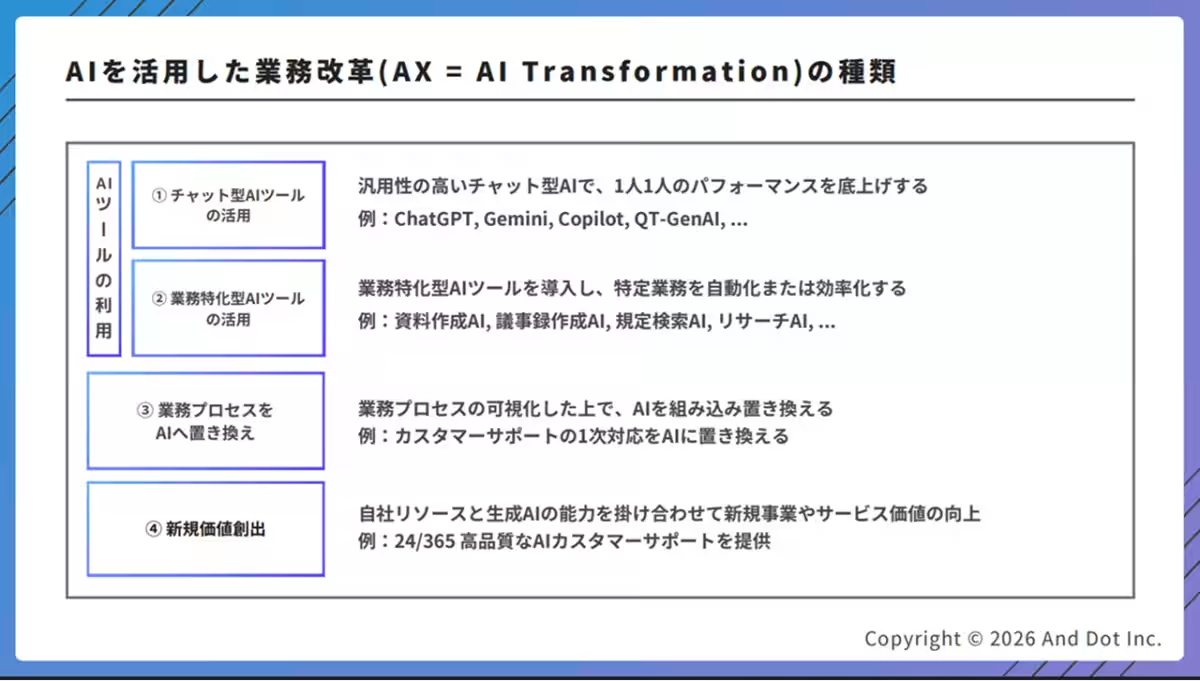
During his keynote, Ibaraki introduced a framework consisting of four development phases for effective AI utilization:
1. Utilization of Generic AI Tools: Enhancing individual productivity through the use of chat-based AI tools.
2. Specialized AI Tools: Streamlining specific tasks such as document creation and meeting minutes through tailored solutions.
3. Replacing Processes with AI: Automating entire processes, like first-level customer support responses, leveraging AI capabilities.
4. Creating New Value: Combining organizational resources with AI to elevate competitive advantages and improve service offerings.
Ibaraki drew upon successful case studies, such as Hoshino Resorts' automated email replies and JTB's data-driven management practices, to illustrate the transformative potential of these AI integrations. He stressed the importance of developing a sustainable ecosystem where technology continuously adapts to daily workflows while maximizing unique human contributions, ultimately providing exceptional value to customers.
Panel Discussion: Navigating Industry-Specific Challenges
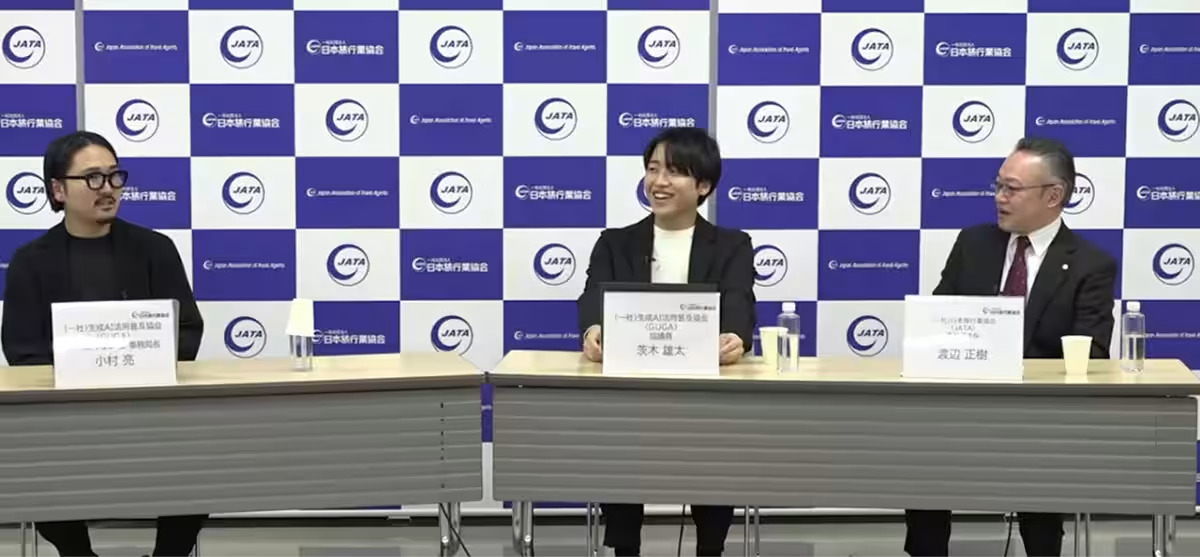
Following the presentation, a panel discussion moderated by JATA's Deputy Secretary-General Masaki Watanabe and GUGA's Executive Director Ryo Komura delved deeper into unique challenges facing the travel industry. They scrutinized issues like automation in document handling and customer inquiries, emphasizing the overwhelming burden of these tasks on travel professionals.
Ibaraki noted that many of these elements are at a point where technical automation is viable, advising that organizations must foster environments that allow employees to prioritize high-value tasks.
Furthermore, the panel tackled risks associated with AI integration, particularly concerning personal data management and copyright considerations specific to the travel sector. Clear organizational regulations and ongoing training related to AI literacy were underscored as essential components for effective adaptation.
Conclusion: Clear Role Allocation between AI and Humans
The overarching message from Ibaraki’s presentation was not merely about the adoption of technology but about clearly distinguishing between tasks suitable for AI and those requiring human intervention. By allocating routine, mechanical endeavors to AI, travel professionals can devote their time and creativity to delivering exceptional service, innovative ideas, and a unique value proposition that only humans can provide. This approach is the essence of maximizing AI’s potential in the travel industry.
Profiles of the Speakers
Yuta Ibaraki is the CEO of And.Dot Co. and serves on the board of GUGA. With extensive experience as a software engineer and business consultant, he has spearheaded numerous initiatives to drive digital transformation across various industries.
Ryo Komura leads GUGA, fostering the integration of AI into business practices. His background in communication design enhances his vision for AI's strategic deployment in diverse sectors.
Masaki Watanabe, as Deputy Secretary-General of JATA, has deep-rooted experience in the travel sector, contributing to regulatory and educational efforts that empower industry stakeholders.
Future Directions
Looking ahead, And.Dot is committed to continuing its contributions to the travel industry's challenges through practical AI solutions. By embracing evolving technologies, the company aims to establish environments that enable professionals to focus on delivering high-value services, facilitating a collaborative future where technology and human creativity thrive together.



Topics Other)
【About Using Articles】
You can freely use the title and article content by linking to the page where the article is posted.
※ Images cannot be used.
【About Links】
Links are free to use.