



Huawei Unveils iFTTO Solution to Accelerate Smart Campus Intelligence with Innovative Features
Huawei Launches iFTTO for Smart Campuses
At the MWC Barcelona 2026, Huawei unveiled its innovative iFTTO solution, tailored for accelerating the smart transformation of campus environments. This solution seamlessly integrates optical networks with advanced AI technologies, laying a robust foundation for the swift expansion of AI applications in campuses. The iFTTO incorporates multidimensional information convergence, intelligent operations and maintenance, alongside an open Internet of Things (IoT) framework, thereby paving the way for the establishment of genuinely intelligent campus environments.
The Evolution to Intelligent Campuses
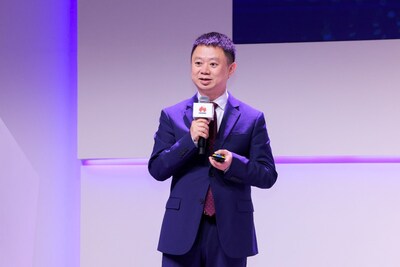
Perry Yang, President of Huawei's Enterprise Optical Domain, highlighted that as AI applications thrive within campuses, traditional physical spaces evolve into intelligent digital ecosystems. This shift necessitates improved network bandwidth and reduced latency while presenting new challenges for smart campus operations. Huawei has upgraded its FTTO solution to the new iFTTO, which transcends traditional connectivity by integrating multidimensional information convergence and IoT capabilities. Yang emphasized that this progression forms a unified foundation, amalgamating vision, computing, and control, thus accelerating the transition towards smart campus operations.
To address the evolving requirements of intelligent campuses, Huawei introduced the O-N.E.X.T concept within the iFTTO solution. This framework redefines campus network value, fostering a new intelligent campus ecosystem. Each dimension of N.E.X.T symbolizes a unique attribute:
- - N: Network Unified by Optics - direct connectivity of optical networks to terminals, transforming the architecture from dual-layer to single-layer.
- - E: Open IoT Ecosystem - accomplished through Huawei's premiere Wi-Fi 7 optical access point, which integrates NearLink and Bluetooth modules, allowing a unified setup and shared bus for both network and IoT connectivity.
- - X: X-Dimensional Information Fusion - supports multiple data sources such as vision, Wi-Fi channels, radio frequencies, and 3D LiDAR, enabling various AI applications via collaborative multimodal computing.
- - T: Towards Autonomous Operations - showcasing Huawei’s adoption of the first industry intelligent agent for managing fully optical campus operations, facilitating interactive and proactive maintenance for heightened operational efficiency.
- - O: Three-layer Open Computing Power - this aids AI application deployment across sectors like intelligent healthcare and energy-efficient hospitality through synergy between cloud, edge, and device layers.
Tailored Applications Across Sectors
Huawei's iFTTO solution delivers unique and differentiated value in various specific scenarios across education, healthcare, and hospitality sectors. In education, the solution employs passive optical aggregation and tri-band Wi-Fi 7 optical access points to ensure ultra-10G connectivity to every classroom, creating ultra-broadband campus networks. It also allows synchronized control of lighting and air conditioning in classrooms, contributing to energy consumption reduction. For university residences, AI algorithms prioritize critical services to enhance user experience. In the healthcare realm, the 50G PON technology accelerates AI-driven pathological analysis, while integrating optical terminals with IoT devices in patient rooms to support intelligent nursing and safeguard patient privacy. Within the hospitality sector, the groundbreaking technology that converts 2D video to 3D enhances guest entertainment experiences.
Huawei's previous FTTO solution has already served over 15,000 campuses and continues to play a key role in the evolution of smart campus environments.
Topics Consumer Technology)
【About Using Articles】
You can freely use the title and article content by linking to the page where the article is posted.
※ Images cannot be used.
【About Links】
Links are free to use.