



Concerns Over Children’s Cognitive Skills Amid Rising AI Use in Education
Concerns Over Children’s Cognitive Skills Amid Rising AI Use in Education
In a recent survey conducted by LUXGO Co., Ltd., a leading company in children's programming education, it was uncovered that more than a third of parents with children from elementary to high school are worried about the diminishing cognitive skills of their children due to the increasing use of generative AI in educational settings. This survey sheds light on parents' perspectives regarding generative AI's role in their children's education, revealing a complex interplay of optimism and concern that is prevalent among guardians today.
Background
The rise of generative AI marks a significant shift in digital environments, with reports indicating that middle school students are now outpacing their parents in AI utilization. This transformation prompts parents to hope for AI's potential benefits in learning while simultaneously fearing its negative impacts. Consequently, the Kids Programming Lab Akihabara Classroom sought to investigate this dichotomy by surveying parents to understand their values regarding education in this AI era.
Survey Overview
The survey, conducted from December 12 to December 15, 2025, targeted parents of students from elementary to high school. A total of 346 parents participated, offering insights into their knowledge of generative AI, its practical applications in learning, and their expectations and concerns about its long-term effects.
Some key findings from the survey include:
- - More than half of the parents either know little about generative AI or are completely unaware of it.
- - About 30% of parents recognize that their children use generative AI for learning purposes.
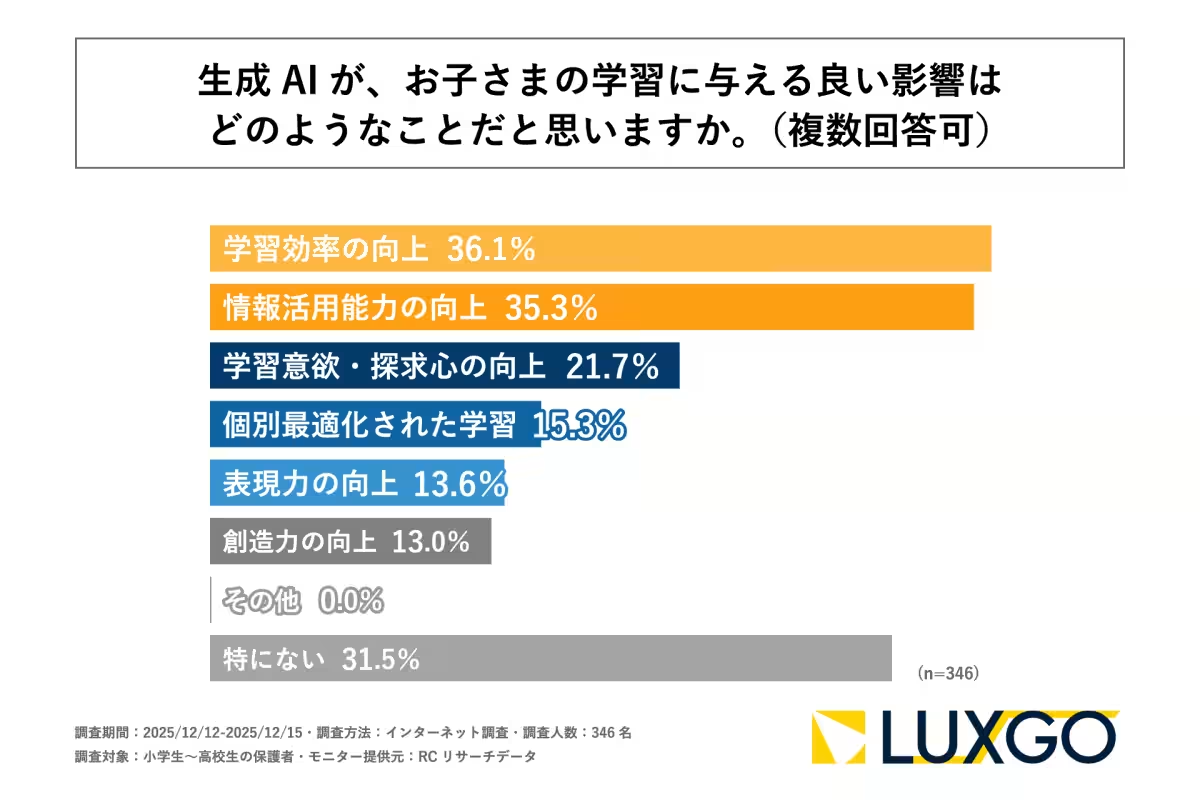
- - Parents generally believe that generative AI can enhance learning efficiency and information utilization skills.
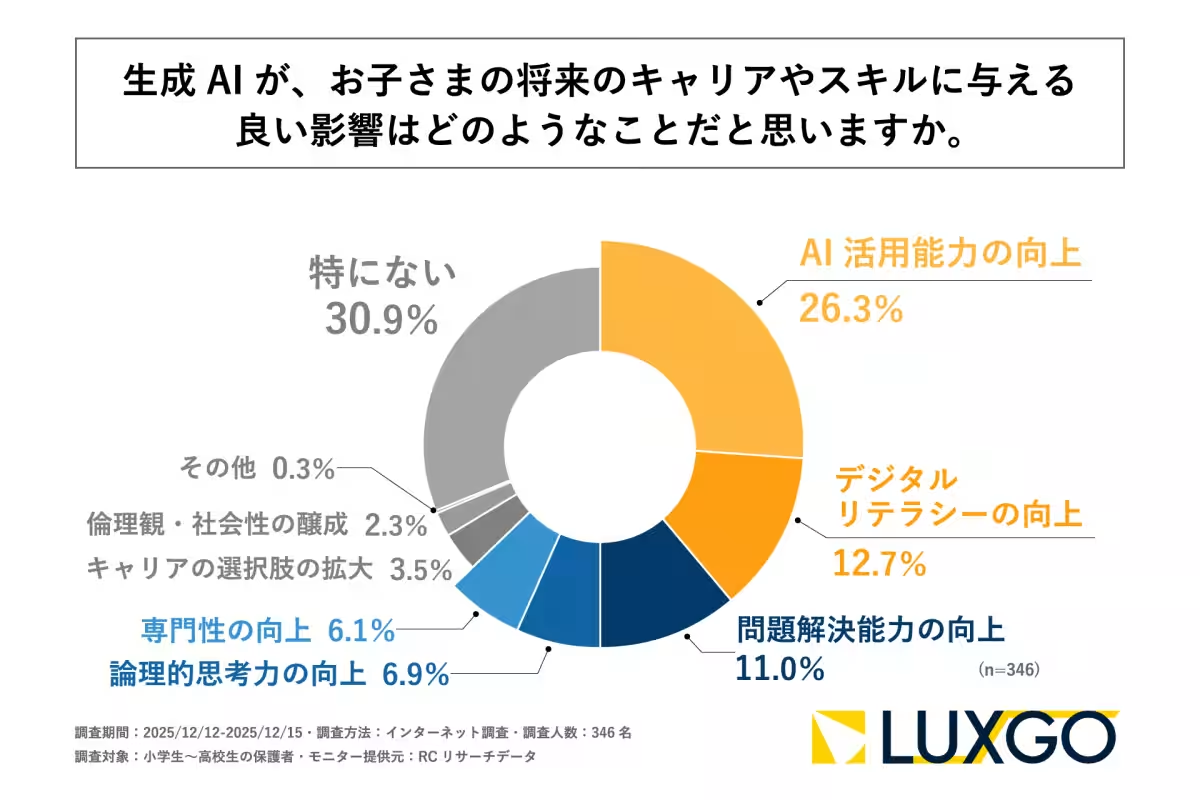
- - A quarter of parents express hope that generative AI will improve their children's ability to leverage AI in future careers.
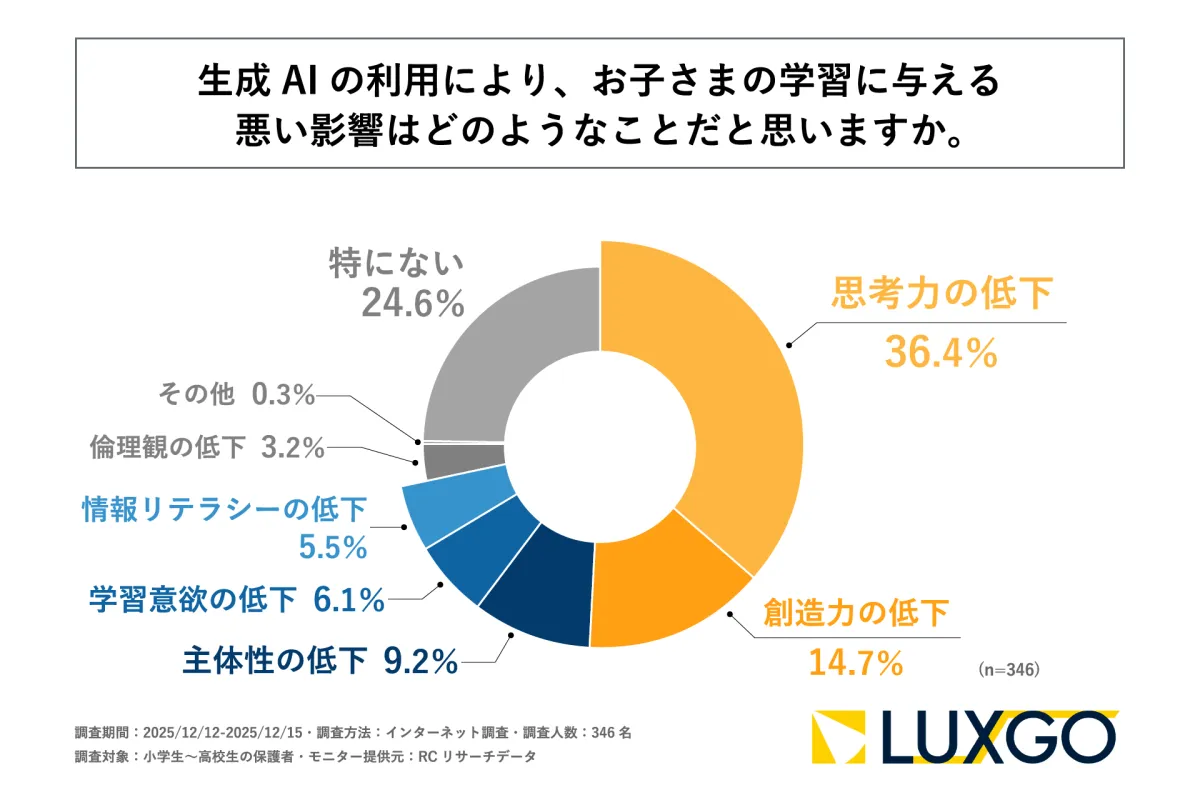
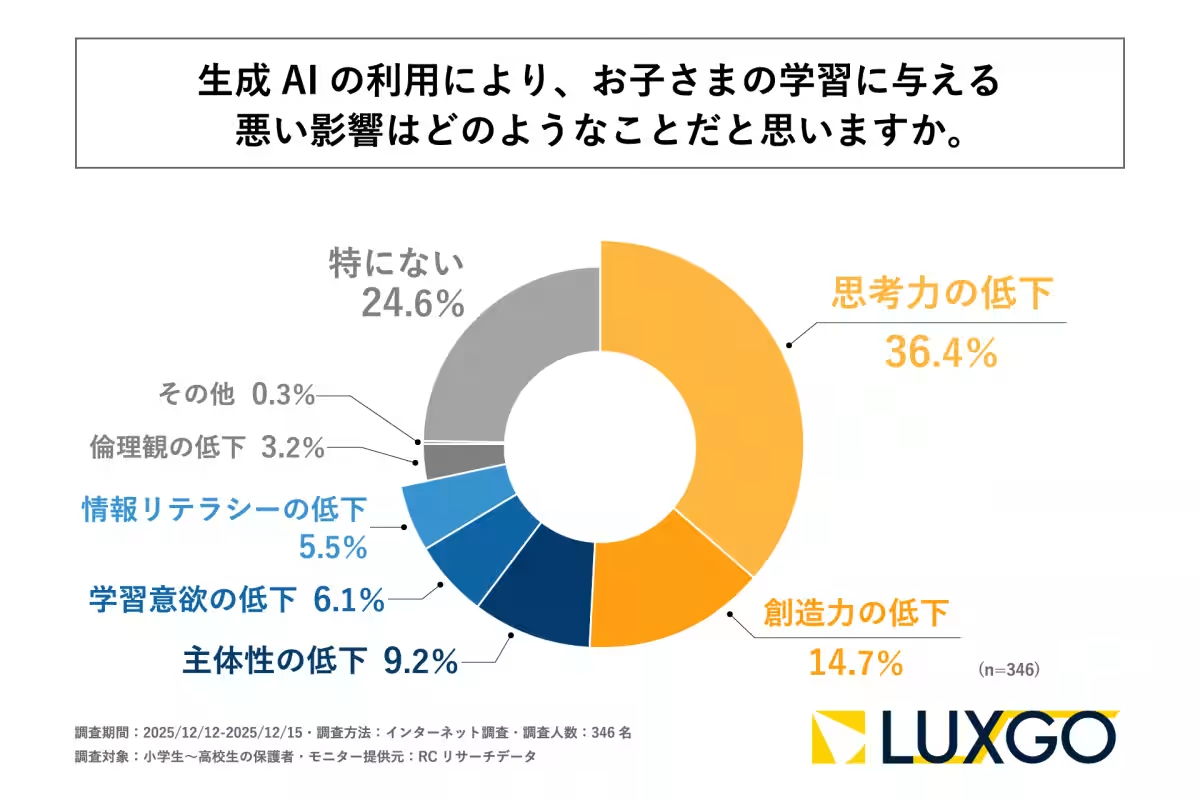
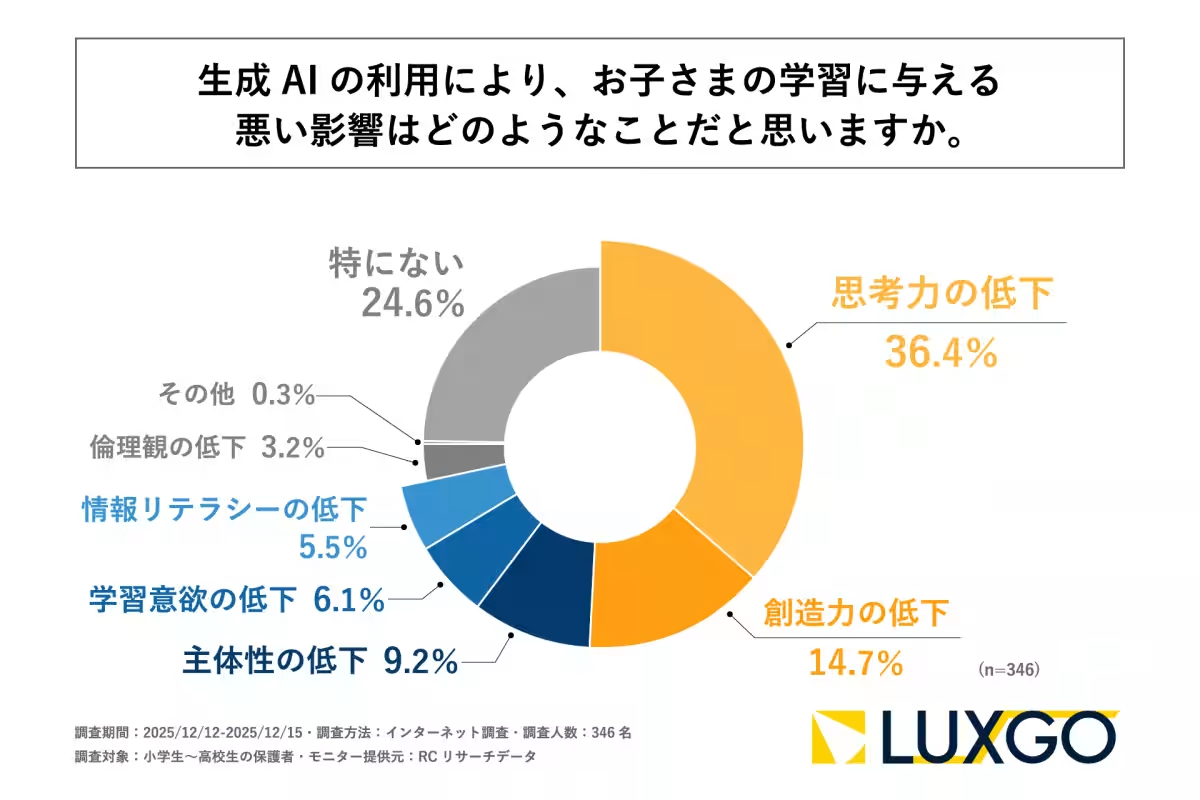
- - Conversely, over one-third of parents express concerns regarding the potential decline in their children's cognitive abilities due to AI use.
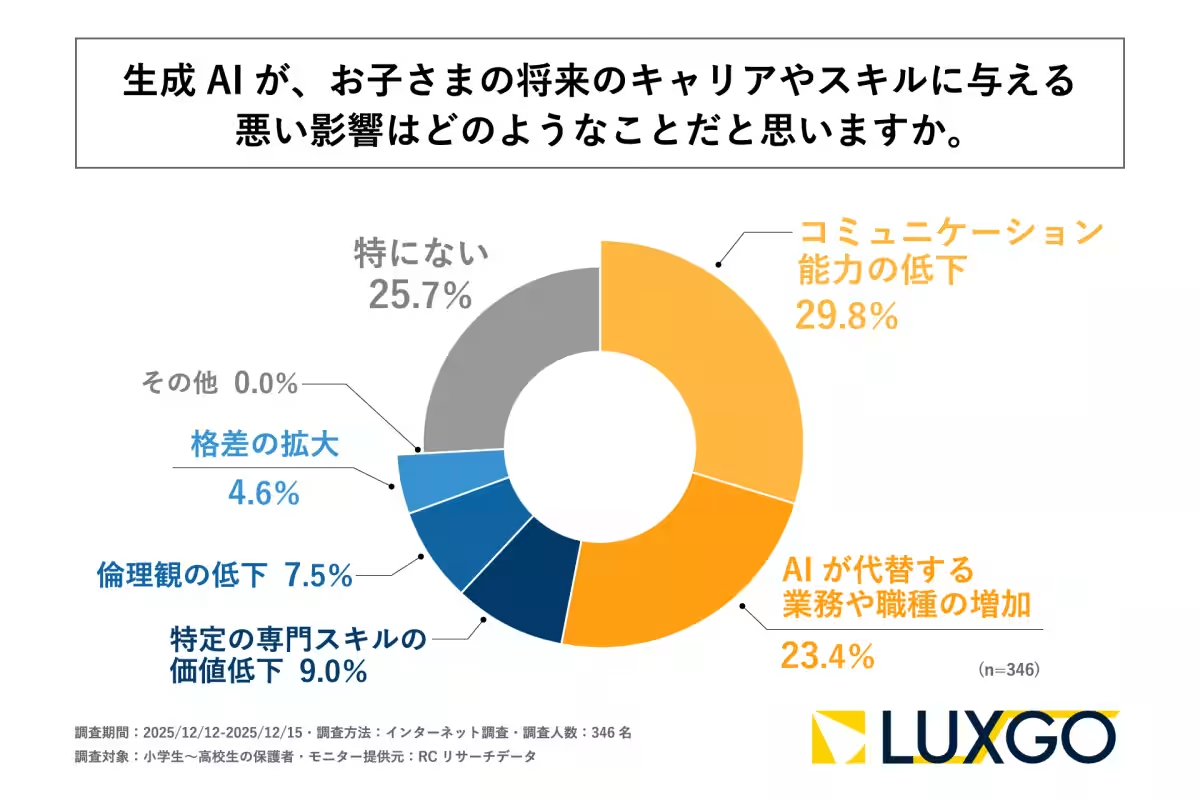
- - Approximately one-third of parents are also worried that AI could negatively affect their children's communication skills.
Detailed Findings
Limited Awareness of Generative AI
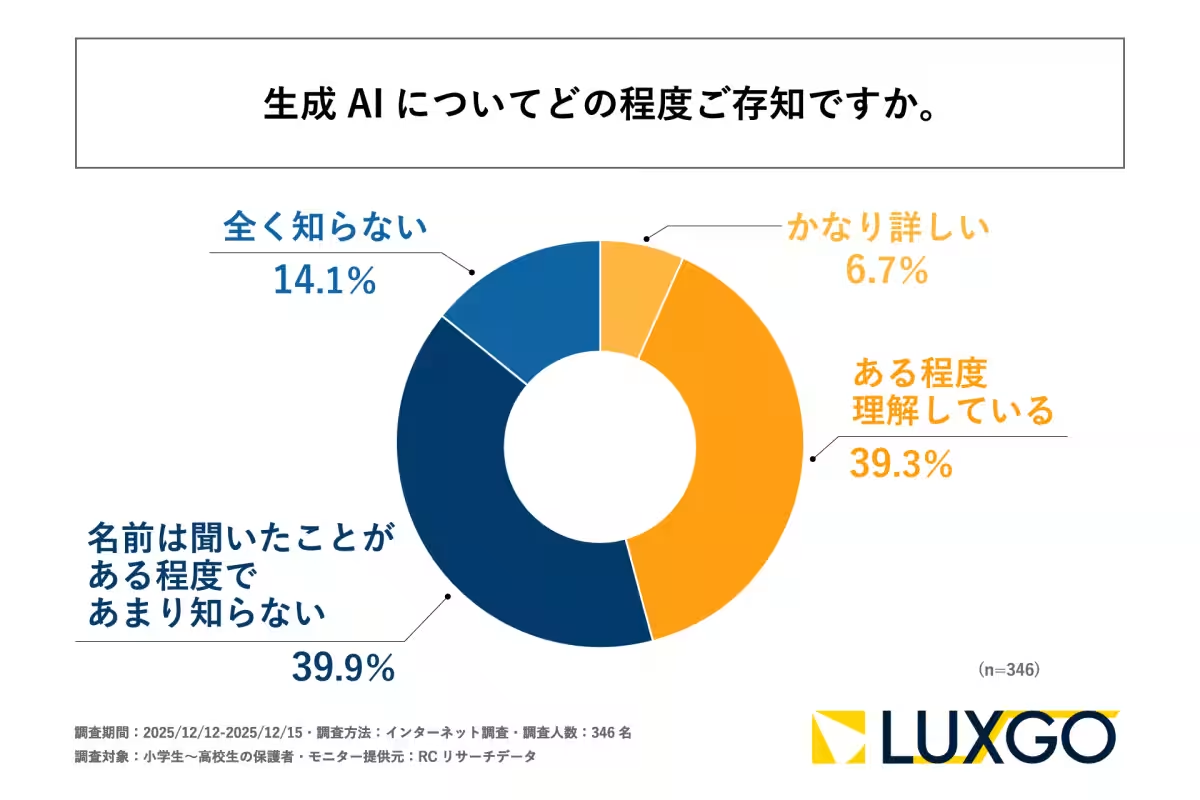
When parents were asked how familiar they are with generative AI, 39.9% reported only having heard the name, while 39.3% claimed to have some understanding. Alarmingly, 14.1% admitted they know nothing about it. This indicates a considerable gap in understanding among parents, with over half showing limited to no knowledge of generative AI.
Perception of AI in Learning
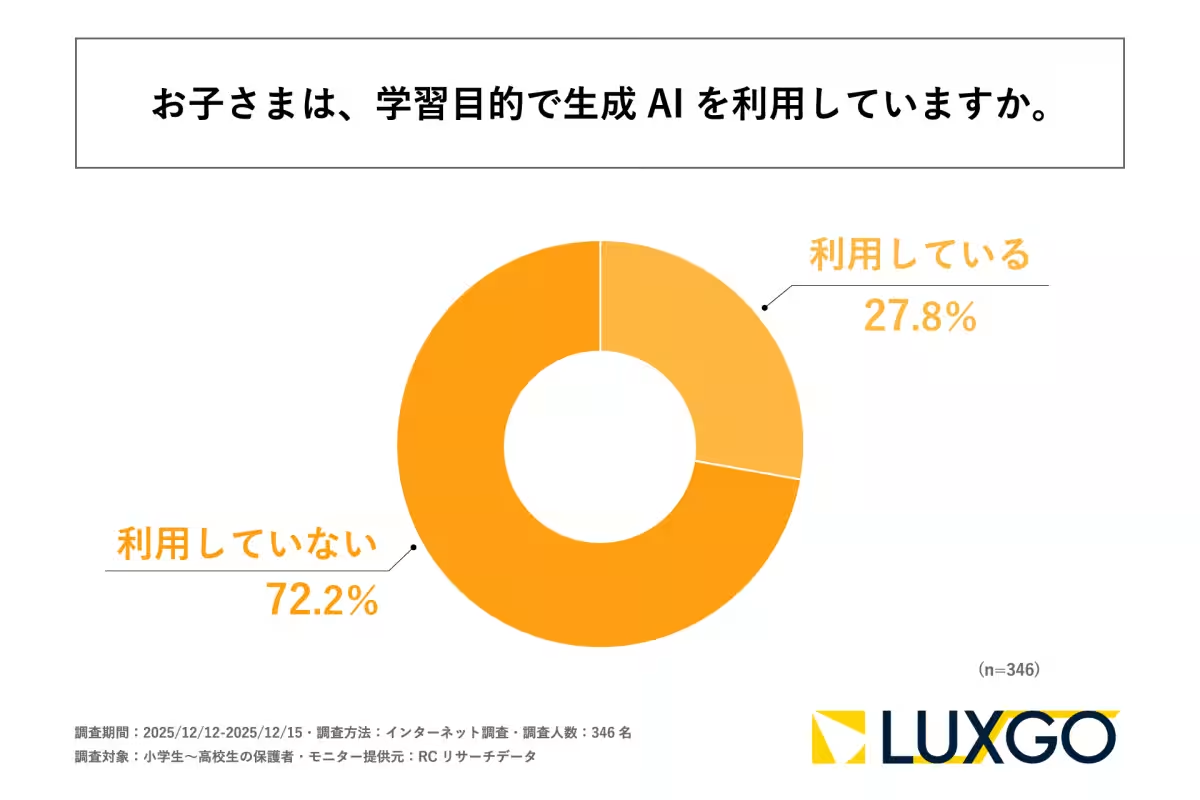
Regarding their children’s AI usage, a notable 72.2% of parents stated their children do not use generative AI for educational reasons, while only 27.8% acknowledged that they do. This reflects a disconnect, as a significant fraction of parents remain unaware of how their children might be utilizing AI in their learning processes.
Positive Influences of AI
In a more optimistic light, respondents acknowledged that generative AI could improve children's learning experiences, with the top reasons being enhanced learning efficiency (36.1%) and improved information utilization skills (35.3%). This is a hopeful outlook, suggesting that many parents see potential value in integrating AI into education.
Skills Development Concerns
However, amidst these positive remarks, significant worries also emerged. The survey revealed that 36.4% of parents are concerned about generative AI eroding their children's critical thinking ability, while 29.8% specifically worry about a decline in communication skills—both foundational elements for future success.
Summary and Conclusion
The dichotomy evident in the LUXGO survey outlines the tension many parents feel in the age of generative AI. On one hand, there is recognition of the technology’s potential to empower future skill sets, such as AI competencies. On the other hand, there is a palpable unease about the long-term impact of reliance on AI tools for learning, particularly regarding cognitive skills and communication abilities.
In response to these concerns, the Kids Programming Lab Akihabara Classroom aims to provide an educational environment that balances these conflicting perspectives. The program focuses on developing logical thinking and collaborative creativity, ensuring children can harness AI effectively while still fostering essential cognitive skills. Through small class sizes and hands-on projects, students are encouraged to think independently and work together, preparing them for a future where both AI literacy and critical thinking are essential.
About LUXGO Co., Ltd.
LUXGO Co., Ltd. is based in Taito, Tokyo, and operates programming education services targeting children. With a mission to equip young learners with the skills necessary for the digital future, their programming lab emphasizes individualized instruction coupled with practical learning experiences.
Learn more about Kids Programming Lab Akihabara Classroom here.

Topics Other)

【About Using Articles】
You can freely use the title and article content by linking to the page where the article is posted.
※ Images cannot be used.
【About Links】
Links are free to use.