



Transforming Feedback into Growth: The Essential Skills for Coachability Training
The Importance of Coachability in Today’s Work Environment
In an era defined by rapid changes, the ability to adapt and grow has never been more crucial for professionals. Recognizing the value of external perspectives is becoming essential in various fields, and the new training program launched by Reskill Corporation, titled "Feedback Skills (Coachability) Training," aims to equip employees with the necessary tools to turn feedback into tangible growth opportunities.
Why is Coachability Important?
In the modern business landscape, clinging to one's methods can be detrimental. Individuals often experience defensive reactions to feedback due to a fear of criticism or discomfort with their self-image shaped by past experiences. This can hinder one’s progress and restrict valuable insights from contributing to personal and professional development. Strengthening the ability to receive feedback gracefully is integral to enhancing overall productivity across an organization.
Overview of the Training Program
Title: Feedback Skills (Coachability) Training
Target Audience:
- - New Employees
- - Young Professionals
- - Mid-career Employees
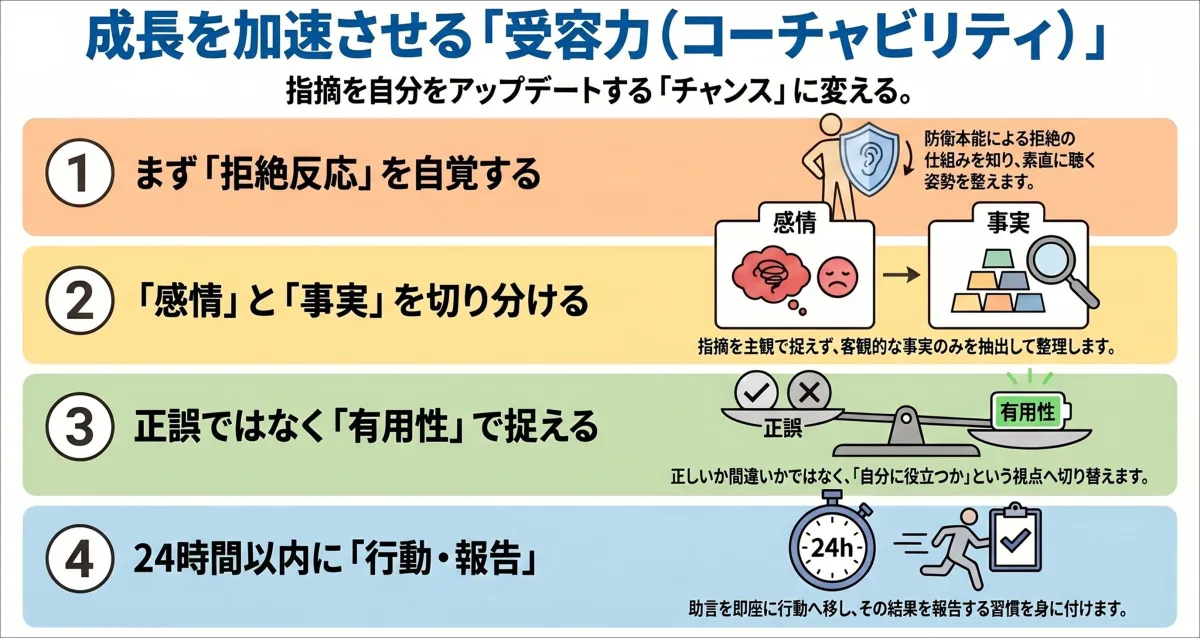
The primary objective of the training is to cultivate a more receptive attitude toward feedback. This involves developing an understanding of the refusal mechanisms that inhibit constructive criticism and learning how to transform feedback into a proactive tool for self-improvement. Participants will acquire the following skills:
1. Understanding Defensive Mechanisms: Grasping the reasons behind why individuals may reject feedback and fostering a humble approach when accepting advice.
2. Separating Emotions from Facts: Mastering techniques to objectively categorize feedback to minimize emotional conflict.
3. Embedding Inquiries and Reporting: Encouraging habits that support ongoing behavior changes while ensuring accountability through timely reporting and action.
Key Features of the Training
1. Building a Foundation for Feedback Reception: Understanding cognitive biases and emotional responses that lead to resistance allows for the cultivation of a more open mindset towards advice.
2. Objective Analysis of Feedback: Learning to differentiate between subjective feelings and the objective data of feedback helps prevent emotional clashes.
3. Habitual Change Implementation: The program emphasizes starting actionable steps within twenty-four hours of receiving feedback, ensuring that insights are translated into clear results.
Curriculum Highlights
Basic Understanding of Coachability
- - Defining coachability and its significance in the workplace
- - Analyzing common reasons for feedback rejection, including defense mechanisms and conflicts with self-image
- - Identifying traits of coachable individuals, such as listening skills, inquisitiveness, and dedication to action.
Methodologies for Reception
- - Techniques for listening that separate emotions from facts
- - Shifting mindset from “right/wrong” to “helpful/not helpful”
- - Self-management strategies for immediate emotional reactions.
Practical Skills for Growth
- - Steps for receiving feedback effectively, including listening, confirming, expressing gratitude, and committing to action.
- - Techniques for articulating and implementing necessary changes based on feedback.
- - Principles ensuring actions are initiated within twenty-four hours and follow-up actions are taken.
About Reskill Corporation
Reskill Corporation is committed to delivering comprehensive business training solutions tailored to diverse needs. The new Feedback Skills (Coachability) Training is part of a suite of programs aimed at improving workforce adaptability and performance. All training modules are priced transparently, ensuring value and accessibility.
Moreover, Reskill offers full support throughout the training process, including experienced instructors and comprehensive materials provided ahead of the sessions, thereby alleviating the burden on organizations while facilitating impactful talent development.
In conclusion, investing in the ability to receive feedback openly not only fosters individual growth but also enhances the collective productivity of organizations, bridging the gap between potential and achievement. By enrolling in the Feedback Skills Training, participants can unlock their potential for personal evolution and professional success.
Topics People & Culture)
【About Using Articles】
You can freely use the title and article content by linking to the page where the article is posted.
※ Images cannot be used.
【About Links】
Links are free to use.