



Rethinking Learning Methods: How Generative AI is Impacting Students
Understanding the Impact of Generative AI on Young Learners
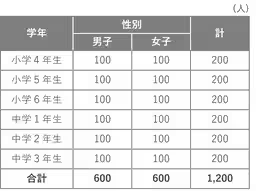
Recently, the Hakuhodo Educational Foundation's Children's Research Institute conducted a survey titled "Children and Generative AI," targeting elementary school students (grades 4-6) through junior high students (grades 7-9). Around 800 students across the nation were asked about their perceptions and experiences with generative AI. The findings are quite revealing, showcasing a shift in how young minds view learning in an age where technology is increasingly prevalent.
Key Findings from the Survey
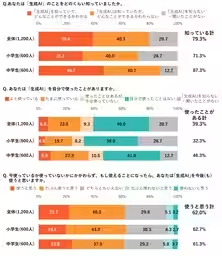
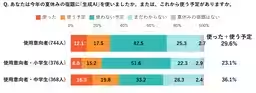
1. Awareness and Usage Rates: Overall, 80% of students are aware of generative AI, and 40% have used it. Interestingly, 60% of students anticipate continuing to use this technology in the future. As students advance from elementary to junior high, both awareness and usage increase, with nearly half of junior high students reporting experience with generative AI.
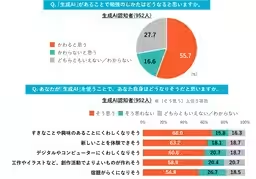
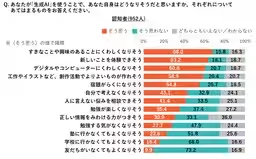
2. Shaping Interests: Among those aware of generative AI, 68% believe it can enhance their knowledge in areas they are passionate about. This view underscores a positive perception of AI as a companion in both personal interests and creative activities. Over half of the respondents recognize that generative AI could potentially make homework easier.
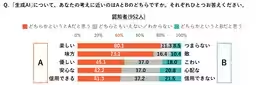
3. Emotional Reactions: The emotional responses to generative AI were predominantly positive, with 80% of respondents viewing it as "fun" and 73% considering it a "friend." However, confidence in its reliability remains low, with less than half feeling it is safe or trustworthy.
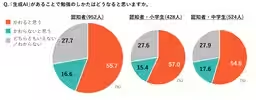
4. Change in Study Methods: Approximately 55.7% of students believe that generative AI will alter their learning methods. Common reasons cited include improved efficiency in obtaining information, such as "providing quick answers" and "time-saving benefits." Yet, some students express concern over potential downsides, including a risk of becoming overly reliant on technology, leading to less independent thinking.
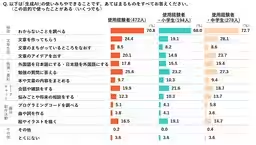
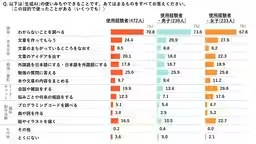
5. Usage Patterns: The primary purpose of using generative AI among students is for information searching, with 70% utilizing it to clarify doubts. Junior high students are significantly more likely than elementary students to use AI for generating written content, suggesting a trend towards enhanced academic application of AI technology as students grow older. Interestingly, girls seem to engage with generative AI not just for information but also for chatting and creating illustrations, reflecting a broader range of usage among female students compared to their male counterparts.
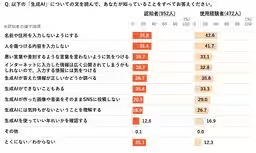
6. Awareness of Safety Concerns: Despite the increasing use of generative AI, awareness of safety precautions is notably lacking, with less than half of the respondents recognizing crucial guidelines, like avoiding the input of personal information.
Implications for Education
The findings from the survey point towards generative AI being more than just a tool; it's an influential force shaping how students view their education and creativity. The majority of children see itself as a vehicle to enhance their learning experience and engage with their interests more deeply. However, the potential for reliance on this technology poses challenges educators must address. As generative AI continues to evolve, understanding its impact on young learners is crucial for developing effective educational strategies.
Conclusion
In conclusion, generative AI is set to play a transformative role in the educational landscape. As students embrace this technology, both opportunities and challenges will arise. Educators and parents must work together to harness the positive aspects of generative AI, ensuring that it enhances rather than hinders the learning process. Encouraging critical thinking and promoting safe usage practices will be essential as we navigate this new frontier in education.
Topics Other)
【About Using Articles】
You can freely use the title and article content by linking to the page where the article is posted.
※ Images cannot be used.
【About Links】
Links are free to use.